State auditor slams ‘riverboat gamble’ with defunct Red Way Airline
Dec 14, 2023 | 2:26 pm ET
Description
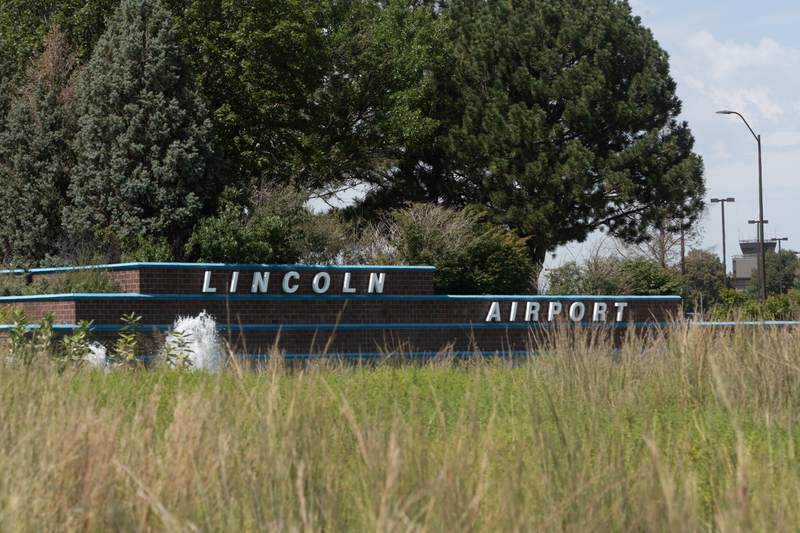
The Lincoln Airport's "Red Way Airlines" is the subject of a state audity. Red Way shut down Aug. 31 after just three months of service. (Zach Wendling/Nebraska Examiner)
LINCOLN — State Auditor Mike Foley, in a forensic audit released Thursday, slammed a “riverboat gamble” Lincoln officials made with the now-defunct start-up airline, saying it squandered $3.7 million in federal and local funds, and that dozens of ticket holders still haven’t been reimbursed for cancelled flights.
The Lincoln Airport Authority had contracted with Red Way Airlines to provide new flights from the Lincoln Airport, and arranged $3 million in pandemic-related, federal American Rescue Plan Act funds for the venture from the Lincoln City Council and Lancaster County Board.

But the Colorado-based startup shut down in August after only three months of operation, after flights drew far fewer passengers than projected, despite offering one-way tickets for as little as $9.
Foley, in an 84-page report to the Airport Authority, said that Red Way “clearly violated” federal regulations by draining a $1.5 million escrow account intended to refund customers for tickets on cancelled flights.
The audit also estimated that, despite a report earlier this month from the Nebraska Attorney General’s office, Red Way probably still owes jilted customers more than $100,000.
Overall, Foley said that the Lincoln Airport Authority provided more than $700,000 in local public funds under its control to assist Red Way, as well as waiving tens of thousands of dollars in fees that the airline would have been obligated to pay.
‘Unreasonably quick’ approval of invoice
The report also faulted the Airport Authority for an “unreasonably quick” approval of a June 23 invoice submitted by Red Way, and for not catching errors and omission of supporting documents.
“In the final analysis, Red Way was a failed riverboat gamble bankrolled by taxpayers,” the auditor said in a press release.
“Had the Red Way business plan been prepared for the eyes of a reputable commercial bank lender, its proponents would not have gotten past the junior teller,” Foley added. “The cavalier treatment of government funds as monopoly money paved the way for the plan to be sold as a worthy risk to elected officials, who accepted it with few questions asked.”
Calls and an email to Red Way CEO Nick Wangler were not immediately returned on Thursday afternoon.
Wangler formed Fly Next LLC, which used Red Way as its trade name, in February. He had worked for the Lincoln authority since 2016 as a consultant, according to the audit, via another company he owned, Forecast Inc.
‘We knew we had risks’
Officials with the Lincoln Airport Authority, meanwhile, said Thursday that they had asked tough questions of Wangler and that it appeared, after the consultant had done months of research of the Lincoln market, that he was presenting a viable, and desired, expansion of service.
“There was no malice here, no bad intent. It was an opportunity we knew had risks.… It didn’t work out,” said John Olsson, the chairman of the Airport Authority Board.
Adding new airline services is not “an exact science,” added David Haring, the airport’s executive director.
Olsson said the Lincoln airport lacked staff that had expertise in enhancing airline service, but that going forward, building that in-house expertise will be a priority.
Initially, Red Way offered flights to Orlando, Florida; Las Vegas, Nevada; Atlanta, Georgia; Dallas/Fort Worth and Austin, Texas; Minneapolis/St. Paul, Minnesota; and Nashville, Tennessee.
But the audit stated that only one flight operated by Red Way — the maiden flight to Orlando — was profitable, and only because it was able to utilize lower-cost fuel.
Revenue fell millions short
More than half of Red Way’s one-way flights had less than 50% of the seats occupied, and many passengers had deeply discounted tickets, leaving the airline earning only about one-fourth of its projected $8.8 million in revenue over its three months. That quickly drained the ARPA funds, the audit stated, because the airport had provided a “Minimum Revenue Guarantee” per one-way flight of $30,000 that covered any shortfall experienced by Red Way.
Instead of owning its own aircraft, Red Way used a unique approach, called “airline in a box,” in which it leased planes from a Florida charter company, Global Crossing. According to the audit, Red Way paid that firm $4.3 million by Sept. 12 under a lease agreement.
‘One of the first out of the box’
Haring said Lincoln was one of the first airports to use an “airline in a box” arrangement to expand flights, but hesaid other small airports are looking at it due to pilot shortages in the industry and other challenges.
“We were one of the first out of the box, which if you’re successful is a great place to be,” he said.
Haring said that airports are allowed to waive fees for things like landings, security and baggage handling as an incentive for new airlines, and the Lincoln Airport had agreed to do that, for 12 months, for Red Way.
Both Haring and Olsson said the bad experience with Red Way will not deter the Lincoln Airport from seeking new carriers. Just recently, they said, a consultant issued a report for the airport that identified “leisure travel” destinations — like those served by Red Way — as a potential opportunity for expansion.
Lincoln, NE