‘Sort of a nothing burger’: Oklahoma City mayor pans new law targeting cities that have homeless
Nov 23, 2026 | 6:30 am ET

Description
Crews use a front loader to clean up a former homeless camp on state property in Tulsa. (Screenshot of Operation SAFE video footage)
OKLAHOMA CITY – The mayor of Oklahoma’s largest city called moot a new law aimed at penalizing certain cities for failing to enforce ordinances and laws targeting homelessness in their communities.
Oklahoma City Mayor David Holt said House Bill 3985, dubbed the “Oklahoma Safe Neighborhoods Act of 2026,” will do little to address the root cause of homelessness in the state’s largest cities that it targets and will likely be unenforceable.
The law, which took effect Nov. 1, would let property owners seek monetary damages from cities with populations greater than 130,000 if those municipalities adopt a policy and follow a pattern of not enforcing ordinances or laws prohibiting public camping, obstructing public thoroughfares, loitering and panhandling, among other infractions.
Oklahoma City and Tulsa are among the cities with a population larger than 130,000.
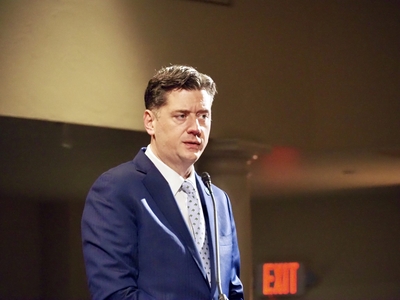
“We recognized it as just being a political bill, just a bill that has no actual effect, but makes somebody feel good,” said Oklahoma City Mayor David Holt, who also serves as dean of the Oklahoma City University School of Law. Holt is also a former state Republican senator.
In order to utilize the new law, a property owner would have to incur expenses to mitigate the damages caused by the failure to enforce or have seen a reduction in property value.
Holt said the way the law is written, there must be a papertrail that the police chief or city issued a directive to not follow the law or ordinance. The requirement that a city adopt a policy not to enforce laws and ordinances makes it “sort of a nothing burger,” Holt said.
“There’s simply no way in the world that the city of Oklahoma City is ever going to adopt a policy that says we are not going to enforce our laws,” Holt said.
Oklahoma City does enforce those laws and ordinances and still has homelessness, which is a complicated issue to resolve, he said.
“There’s 1,000 people right now speeding in Oklahoma City, right?” he said. “We’re doing the best to enforce the speeding laws, but nonetheless, people will get around it.”
House Appropriations and Budget Committee Chairman Trey Caldwell, R-Faxon, is the author.
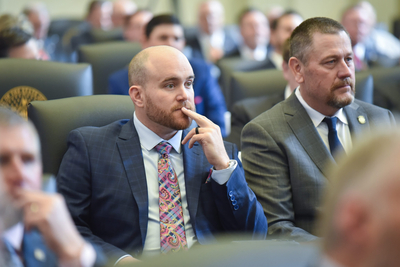
Caldwell said he strongly disagreed with Holt’s characterization of the law.
For companies considering where to locate, employee safety is a major consideration, he said.
“We have heard concerns from major businesses that have left Oklahoma City or reconsidered their presence here because they do not believe the city is adequately addressing these concerns,” Caldwell said. “Those concerns have real economic consequences for our community.”
In a statement, the City of Tulsa said it complies with all applicable state laws and ordinances and will continue to do so.
Meghan Mueller is president and CEO of the Homeless Alliance, which serves people experiencing homelessness in Oklahoma City.
Mueller said she has no problem with government accountability, but some methods don’t work, such as broad encampment sweeps.
“If we’re moving someone from one street corner to the next, it’s still a person on the street corner,” she said. “That’s not actually solving a problem.”
Senators spent about an hour discussing the measure before passing it by a vote of 30-16. The House passed it by a vote of 77-16.
Sen. Mary Boren, D-Norman, said lawmakers are targeting local governments instead of solving problems.
The Goldwater Institute, a conservative policy group based in Phoenix, said Oklahoma’s new law is based on model policy it developed.
Oklahoma City, OK