Some in Gator Nation are growling about UF presidential pick Stuart Bell and his positions on DEI
May 19, 2026 | 6:20 pm ET
Description
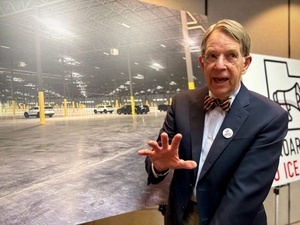
BOG Chair and UF Alumni Alan Levine encourages alumni to withhold judgement and give presidential finalist Stuart Bell an opportunity to explain his positions. (Photo by Jay Waagmeester/Florida Phoenix)
That escalated quickly.
Within hours of the announcement that former University of Alabama President Stuart Bell was chosen by a University of Florida presidential search committee as the one and only finalist to head UF, critics took to social media to call into question the academician’s 40-year career and position on diversity, equity, and inclusion policies.
“WOW — major red flags here,” Lake County Commissioner and former state Rep. Anthony Sabatini wrote on X and Instagram.
Sabatini, a Republican running for Congress, has earned two degrees from UF, including his law degree.
“Why is @UF pushing a pro-DEI administrator?”
Sabatini’s post continued: “UF Board of Trustees must pump the brakes on this ASAP.”
The quick backlash to Bell’s selection means that yet another choice to lead the state’s flagship university could become contentious and result in political infighting among Florida Republicans.
DEI at UA
Bell opened the Division of Diversity, Equity, and Inclusion (DEI) at the University of Alabama in 2017 according to media reports, and ordered it shut in 2024 to comply with legislation banning any state or local municipality support for DEI.
After the law took effect Bell, replaced the division with a Division of Opportunities, Connections, and Success (OCS).
G. Christine Taylor, who had previously headed the DEI division, was named director of OCS.
According to the UA student-run news outlet, The Crimson White, Bell announced the changes in an email to students and faculty and in it said the OCS would work to ensure access to higher education and foster campus connections through “initiatives on free speech and civil discourse.” The email said the new division would focus on preparing students to work in a global workforce by helping them understand and effectively work with individuals from varying backgrounds.”
“Differences, including differences of opinion shared with civility, strengthen our campus community,” Bell wrote in his email, the student news outlet reported. “Our faculty, staff and students will continue to engage in free speech, exercise academic freedom, and join in wide-ranging thought and discussion on issues that impact our world.”
More criticism
Sabatini wasn’t alone in his criticism of the UF presidential search and the sole candidate it yielded for the post.
“University of Florida board leadership is breaching protocol to push Stuart Bell, former president of U of Alabama, as the SOLE finalist for the UF Presidency. It’s a blow to UF’s reform record as Bell founded the DEI office at Alabama and refused to fire DEI officers even when the legislature banned it,” John D. Sailer, a senior fellow, and director of higher education policy at the Manhattan Institute, said in a post on X.
Bell served as president of the Tuscaloosa campus for a decade and, according to UF, in that time he worked to increase Alabama’s graduation and retention rates, raised the university’s profile as leading research institution, and held leadership positions in the powerful Southeastern Conference, a college football division.
The university said he understands the tumultuous world of college football and how to navigate image and likeness deals with athletes. The UF press release announcing the search committee’s pick even quoted former Alabama head coach Nick Saban.
Déjà vu
UF has been without a permanent full-time president since Ben Sasse unexpectedly stepped down in July 2024.
Following Sasse’s departure, former UF president Ken Fuchs agreed to return in an interim position as the university launched a presidential search to replace Sasse. That search recommended Santa Ono for the post in May 2025.
Ono, who had been at the University of Michigan, appeared poised to become the next UF president after being unanimously approved by UF trustees. The BOG in a lengthy meeting following the UF trustees’ vote pressed Ono on his positions on DEI. Ultimately the BOG voted 6-10 against Ono.
Had he received the job, Ono’s contract would have provided him about $3 million annually.
Following the contentious process, Fuchs agreed to extend his stint as interim president until a search committee could recommend a new interim president. The UF interim president search search committee then announced it was recommending Donald Landry of Columbia University as the sole candidate for the interim job.
Landry was paid a $2 million base salary and a $500,000 performance incentive. The contract included language that required the university to pay him $2 million if he wasn’t offered the presidency on a permanent basis — which he wasn’t.
Withhold judgment
While social media is buzzing with comments about Bell’s positions on DEI, he enjoys the support of Gov. Ron DeSantis.
“Dr. Bell did much to elevate the University of Alabama when he was the president in Tuscaloosa and I have no doubt that he will help UF reach new heights during his tenure in Gainesville,” DeSantis said in a post on X. “He is a great selection and has my full support.”
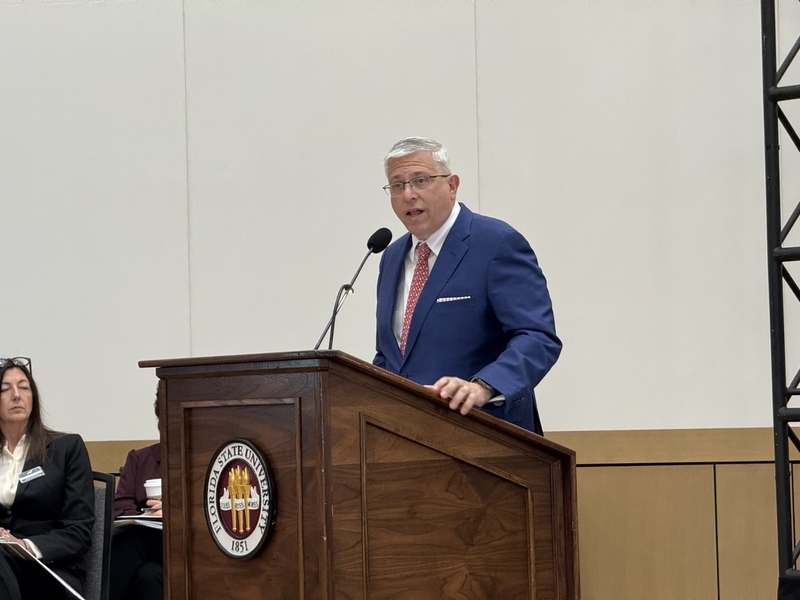
Board of Governors chair and Florida politico Alan Levine told the Phoenix that Bell’s name couldn’t have been forwarded by the search committee for approval by the UF Board of Trustees without his prior approval.
Levine’s love for UF is renowned. He holds three degrees from the university and has served on its board of trustees.
“There appears to be opposition to the candidate. What I would say to people is, ‘You know, let the people have a right to weigh in. They have a right to give their opinion,’ “ Levine said.
“I would only ask that people rely on the facts and that the trustees do their diligence, and that’s their job now. This is 100% right now the responsibility of the Board of Trustees at UF to go through their process, do their diligence, ask the hard questions, and let everybody see how the man answers the questions, and then, and then pass judgment.”
Levine noted that having experience with DEI shouldn’t sink a candidate.
“It’d be very difficult to find a president who had zero exposure to DEI,” Levine said, adding that the Board of Governors had a DEI policy on the books until it was rescinded.
“We saw the damage it was doing and what it turned into, we couldn’t pull it back fast enough,” Levine said.
Levine voted against offering Ono the UF position but told the Phoenix it wasn’t because of his initial support of DEI programs at the University of Michigan.
“I voted the way I did on Ono because, I mean, he sat in front of us and disavowed every belief he had ever had. And that indicated to me he was not a leader. It’s OK to disagree with me. I mean, I want a [university] president who’s confident enough in their experience that they can tell me why they believe what they believe. And Ono just fell short on that.”
Tallahassee, FL