Some advice for South Dakota legislators before their next session
Nov 28, 2026 | 8:00 am ET
Description
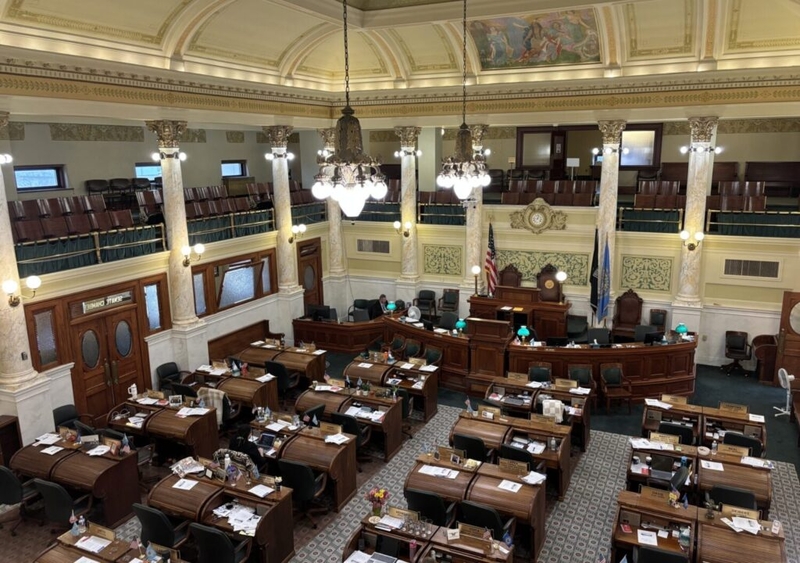
The South Dakota Senate chamber on Feb. 3, 2026, at the Capitol in Pierre. (Photo by Seth Tupper/South Dakota Searchlight)
The next session of the South Dakota Legislature starts on Jan. 12. Between now and the start of the session, lawmakers will need to think about what they want to accomplish. This state’s Legislature doesn’t typically have much extra money available. That’s too bad, because there is plenty that needs funding.
There’s no backing away from recidivism reform
Now that South Dakota leads the league in new prisons, it’s time for some long overdue funding to help get inmates ready for life on the outside to ensure that they don’t end up back behind bars.
A task force on that subject has recommended 34 reforms and programs at an estimated annual cost of $1.92 million. That’s almost $2 million a year in a state where the Legislature often doesn’t have much extra money to spend. The $1.92 million figure doesn’t take into account the cost of additional staff needed for the programs.
As much as it pains Republican legislators to consider new forms of revenue, that may be what’s needed to create real, ongoing reform in the prison system.
It’s best to revisit property tax reform
It’s unclear if the property tax reforms approved in the last session are all that popular or effective. So far, the results are mixed. At least seven counties — Custer, Fall River, Hughes, Lawrence, Lincoln, Meade and Pennington — have implemented the county half-percent sales tax with the revenue going to homeowner property tax relief.
South Dakota always ranks among the least taxed states in the nation, yet the thought of adding a county sales tax for property tax relief was rejected by voters in Brown, Codington, Clay and Charles Mix counties. The Charles Mix results may be the subject of a recount.
So far, at least 11 out of 66 counties have taken action, one way or the other, on the new sales tax for property tax relief. It’s not as if the homeowners in the other 56 counties feel comfortable with their property tax bills. Perhaps they’re of a mind that there has to be a way to approach property tax relief that doesn’t depend on taxing renters who won’t reap the benefits of a lower property tax bill.
Follow the law and fully fund schools
There will be plenty of new legislators in Pierre this January. Their mission is to create laws that benefit the citizens of the state. However, if they are anything like the lawmakers that came before them, it won’t be long before they show their true colors. They may have run for the House or Senate, but the job they really want is that of school superintendent.
Their secret identities are revealed in the myriad bills they offer aimed at schools. Last year lawmakers tried, with varying degrees of success, to start charter schools, curb cellphone use in schools, require the state motto on school walls and mandate that students be required to learn about prenatal human growth.
Podcast: Economy, affordability are big issues for session, new state Senate leaders say
On the Legislative Research Council’s website, under the “education” tab in the subject index for bills, there are 59 pieces of legislation. Look closely at the website and there are also tabs for “higher education,” “scholarships,” “school curriculum,” “school districts,” “schools” and “teachers.” Some of the bills are listed under multiple tabs, but it’s obvious that lawmakers have their sights set on the state’s schools.
Under the “education” tab there are 14 bills that deal with school finances or changes to the school funding formula. It’s ironic that so much attention would be paid to school finances because in the last session, the governor’s original budget called for no funding increase for education. Appropriators eventually came through with a 1.4% increase, sidestepping a law that mandates schools get an increase at the rate of inflation or 3%, or whichever is less.
In addition to the last session, lawmakers have used their legislative wiles four times since 2010 to circumvent the law.
Sure, some bills may clean up language in old laws and some may ensure that South Dakota law is in line with new federal regulations. Other than that, lawmakers should leave curriculum changes to the experts, write a check for the funding that’s required by law and then get out of the way.
Figure out the right approach to data centers
Lately, any major project that comes along inspires a group of vocal opponents. No matter the need, the opposition is there for power lines, pipelines and now, data centers. For some reason, new infrastructure seems to bring out the naysayers.
Data center technology is evolving quickly. Innovation in power use, water needs and noise reduction are being made every day because the data center people know that, right or wrong, they are being presented as the bad guys.
South Dakota lawmakers can’t sink into this river of negativity just because it’s the easiest path. Data centers need a cool-headed approach with a clear understanding of what they could mean for the state’s resources and the state’s economy.
Lawmakers have to guard against taking the easy way out and unilaterally opposing data centers just because those who oppose the centers currently have the loudest voices. Leadership means doing what’s best for the citizenry, not what’s easiest.

Pierre, SD