Another form of resilience can be seen through volunteering and charitable giving. In my own neighborhood, a food bank that started during the COVID-19 pandemic has helped many in the community over the past five years. Across the country, food bank donations and charitable giving continue to rise despite economic challenges.
According to Giving USA, charitable giving rose to US$617 billion in 2025, surpassing the $600 billion mark for the first time. This increase addresses a growing need for food banks to feed Americans who can’t afford basic groceries anymore. At the same time, the number of donors is dropping.
Shoppers are hitting the limit
Consumers are now running out of levers to pull.
Wealthier Americans are continuing to spend at a strong clip, which is why official consumer spending data suggests the economy is steady. But it’s a different picture for the rest.
One in four families are spending more than they make, as seen by rising credit delinquency and auto repossessions, according to the Atlanta Federal Reserve. Whether it’s food, healthcare, rent or cars, Americans are spending a much larger share of their income on necessities than they did 10 years ago.
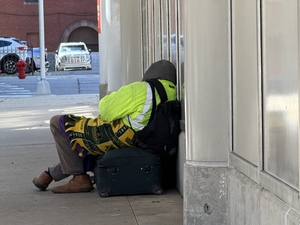
For especially strapped Americans, like those facing the double whammy of a car payment and a student loan, these trade-offs are especially challenging. A good example are auto loan delinquencies, now near a 10-year high. Losing a car can mean losing a job, with devastating financial consequences. Frontline workers also miss more shifts as gas prices rise.
And this gets to a core lesson for understanding today’s economy: The bedrock for consumer spending remains employment. The stable job market we see right now — with unemployment at 4.1% — is critical. If this healthy job market holds, and interest rates and energy prices ultimately ease, the average consumer will still tread water. But if inflation continues to run hotter than the Federal Reserve would like, and rates rise, Americans’ disposable income will likely shrink — and hurt economic growth in the process.
That could lead to a domino effect: Unemployment rises, reducing the discretionary spending that had been keeping economic growth steady.
The holiday season isn’t necessarily an accurate forward-looking indicator. Shoppers often go to great lengths to make family and friends happy. The big challenge for consumers will start in early 2027. Will the Fed hike rates? Will inflation stay high? Will gas prices come down?
Until these questions are answered, we’re in the “bend but don’t break” phase. Many consumers faced challenging times in 2026, but their resilience has been a surprise on the upside. I’d like to be surprised again in 2027 — but that’s far from a sure thing.
This article is republished from The Conversation under a Creative Commons license. Read the original article.
Chris Gaffney is an Edenfield executive in residence and a professor of the practice in the H. Milton Stewart School of Industrial and Systems Engineering at the Georgia Institute of Technology. Through its opinion section, Kansas Reflector works to amplify the voices of people who are affected by public policies or excluded from public debate. Find information, including how to submit your own commentary, here.