Solutions to solve pharmacy deserts are elusive
Sep 30, 2025 | 6:30 am ET
Description
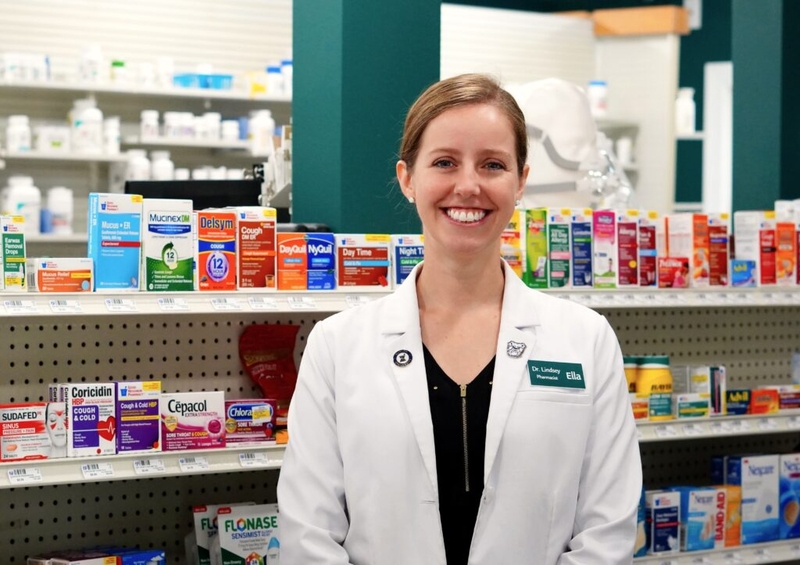
Lindsey Angelotti, one of the owners of Ella Community Pharmacy in Hamilton County. (Courtesy photo)
The role of a community pharmacy remains vital when it comes to serving the most vulnerable populations. That rings true, even in places many wouldn’t expect it to be, according to Lindsey Angelotti, one of the owners of Ella Community Pharmacy in Hamilton County.
That operation has two well-established locations in Westfield and Sheridan with young owners who are committed to the long haul. Angelotti owns the pharmacies with her husband, Erik. They took over ownership of Ella Community Pharmacy in 2017.
“If you took both of our pharmacies off the map, I can assure you that Sheridan would be bordering on the official definition of a pharmacy desert,” Lindsey Angelotti said. “In (both) our communities, we attract the patients who have complex medical needs … we provide access to patients that don’t have the resources or means or technology or family members or the support that your average, affluent adult in Hamilton County would take advantage of.”
There have been plenty of pharmacies that have gone away, both within the state of Indiana and across the country. The Indiana Professional Licensing Agency reported 1,354 licensed pharmacies in November 2024 and that is down to 1,328 in July 2025.
What’s causing many of these closures? It comes down to money. For many, it’s just not worth keeping the doors open from a financial standpoint anymore.
Plenty in the industry and outside of it point the finger in one direction when it comes to who is to blame – toward PBMs, which is short for Pharmacy Benefit Managers. These companies work, as representatives of the drug plans that hire them, with insurance companies and pharmacies to administer benefits and negotiate drug prices. Issues about how those prices are set – and how much money should return to the pharmacy – are at the heart of the debate.
The vast majority of their business is still dispensing prescriptions. And when you're taking a heavy loss on the vast majority of their business, you can't survive.
PBMs aren’t new to the industry – these groups have been around since the 1950s, starting in the role of claims processors for the industry. However, especially in the last 15 years, being a PBM has became big business. While there are many PBMs in operation, most of the business is handled by three major groups, which collectively do more than 75% of the industry’s business, according to the National Community Pharmacists Association. The largest one of these PBMs? CVS Caremark, which, as its name suggests, is part of the same family of companies as CVS Pharmacy and the health insurer Aetna.
Though PBMs are often labeled as middlemen when it comes to setting drug prices, many consider themselves a professional service that represents the interests of the health plans they represent – and the people covered by those plans. The Pharmaceutical Care Management Association, a national trade organization that represents many of these PBMs, says these groups are often at odds with drugmakers, too.
“PBMs are committed to lowering prescription drug costs by taking on Big Pharma to provide Indiana patients with greater access to medications and empower employers in the state to offer high quality pharmacy benefits,” said Phil Christofanelli, the senior director of state affairs for PCMA, in a statement.
It’s hard to track how many pharmacies have closed across the country, but one advocacy group said more than 325 did so from mid-December 2024 through mid-March 2025 alone. Most of those were independent operations. Another group said pharmacy closures in 2024 averaged eight per day nationwide, representing a 3% drop in total locations throughout the country. One of the main culprits? PBMs are reimbursing pharmacies below the market cost of many drugs, sometimes even at a net negative, advocates and community pharmacy owners say.
How much under reimbursement is happening? Darren Covington, executive vice president at the Indiana Pharmacy Association, says some pharmacies are losing money on about 40% of their medicines after factoring in the amount of money it costs to dispense a drug.
“If you can imagine any other retailer or business that would undersell 40% of their products or services, it’s just not sustainable,” he said. “And so that’s why you see so many closures.”
What is a pharmacy desert?
All those shuttered pharmacies in Indiana and beyond contribute to so-called pharmacy deserts, and it’s not just the independent pharmacies that are shutting their doors. Many big pharmacy chains, including Walgreens and CVS, have closed hundreds of locations nationwide over the last few years, too. In 2025 alone, two Walgreens stores and one CVS closed in Indianapolis.
Similar to the term food desert, the pharmacy version refers to the lack of any type of pharmacy in a community or area. The typical measurement is neighborhoods and homes that are further than one mile away from a pharmacy for urban areas, two miles for the suburbs and 10 miles for those who live in rural areas. A 2024 Ohio State study found that nearly half of the counties in the U.S. had at least one pharmacy desert. A 2021 study showed that 60% of Indianapolis neighborhoods fit the qualifications of an urban pharmacy desert.
But the risks caused by pharmacy deserts are more than a few extra minutes of travel time.
Researchers, advocates and pharmacists themselves argue that almost every place is at risk of being harmed by a potential pharmacy closure, at least when it comes to adequately serving the most vulnerable populations. That would include those who are homebound, low-income, elderly and those residents who don’t speak English as their first language. To those groups, an engaged and caring pharmacist can become a steward of that patient’s health care in ways that most wouldn’t understand.
“Most people don’t understand that retail pharmacy is more than just a drive-thru experience. It’s compared to fast-food in a negative way sometimes, but in reality, (pharmacists) are a very important part of your health care needs,” Lindsey Angelotti said.
What is the blueprint of a successful community pharmacy?
Even in the face of closures and conflicts, independent pharmacies can find success. The key is the willingness to change and to explore other revenue streams, according to Covington.
“Independent pharmacies – the ones that are still making it – they’re adapting,” he said. “They’re finding their own niche markets, but the vast majority of their business is still dispensing prescriptions. And when you’re taking a heavy loss on the vast majority of their business, you can’t survive.”
For Ella Community Pharmacy, the goal has always been to be the best two pharmacies in Hamilton County for its customers and the community, but how the team achieves that mission has certainly changed, even during the span the Angelottis have owned the place.
While providing medication is still at the core of what its team does, the operation has diversified its offerings over the last few years. The Angelottis expanded the pharmacy’s packaging services and have gotten into the medical equipment and consultation side of things, too.
“We’ve pushed ourselves to push the envelope and be more cutting edge than we once were because without that cutting edge right now in community pharmacy, you can’t stay alive,” Lindsey Angelotti said.
She acknowledges that the current reality of a community pharmacy profit model is hard to overcome. Ella has more than a few prescriptions that it takes a loss on once they go through the claims process. But she said the key to being a vital — and financially successful part of the community – is being on the cutting edge.
She’s thankful to serve a customer base that appreciates everything a solid independent pharmacy can mean to those around it. Ella’s Sheridan operation traces its roots back to the turn of the 20th century, and the Westfield location was added in 1981, so history is on their side. Customers often share stories of older family members visiting the pharmacy decades ago, but they have also embraced its next chapter, too. To her, the patients her team serves on a regular basis have become an extension of her family, and she always assures them that they’re in it for the long haul, no matter what obstacles come next.
“I tell my patients that we’re going to stick around as long as this community will keep us. If we have support from them, we’ll be here for them,” she said.
Interest in pharmacy careers is also waning
Coupled with the decline of actual brick-and-mortar pharmacies is the fact that not as many students want to be pharmacists as two decades ago, either. Purdue University’s College of Pharmacy’s numbers remain strong – 146 candidates graduated from its professional program in May, according to Patti Darbishire, the executive associate dean of Purdue’s College of Pharmacy. She said the school hasn’t had issues filling its 150-person class size each year, mostly thanks to a popular pre-pharmacy undergraduate program.
However, declining applications for the last 10 to 15 years is a national trend that is often talked about in her educational circles, she said. Other high-paying opportunities for those involved in health fields have contributed to more competition for interested students.
Like with many health care professionals, some established pharmacists left the profession during the pandemic, adding to the shortage, too. But pharmacy, which offers other avenues other than a career on the community/retail side of things, remains a solid career choice, especially for those wanting that interaction with the public. Darbishire also pushes back on the money aspect — saying the starting salary of a pharmacist is still around six figures per year — despite all the current obstacles.
“We need better branding about what a pharmacist looks like and what they do,” Darbishire said. “We’ve always had a good starting salary… it pretty much holds at about $125,000 for a new grad so that’s pretty appealing.”
Could there be a legislative solution?
Lawmakers at both the federal and state levels have PBMs on their radar, though real action steps by most have been less than swift. In fact, Indiana’s 2025 legislative session was proof of that. However, in Arkansas — like Indiana, is run largely by Republicans — lawmakers recently took aim at PBMs by banning these entities from owning pharmacies. Though the new law is currently not in effect due to a federal court injunction, the move was lauded by state officials and pharmacy owners themselves as one that will cut costs and improve accessibility.
Indiana’s Senate Enrolled Act 140, which was authored by state Sen. Ed Charbonneau, R-Valparaiso, in its original form, would have, like the new Arkansas law, banned PBMs from owning their own pharmacies or health insurance companies.
The proposal, which caught the attention of the country’s largest PBMs, was dialed back before being passage. Some of the language that did male it into law were provisions aimed at PBMs who have been under-reimbursing pharmacies through a practice known as price spreading. That is when these groups charge an insurance company one price for a medication dispensed, but send much less money for that same medication to pharmacists for reimbursement, while pocketing the profits. A recent Indiana audit found that nearly $323 million had gone to PBMs through this practice during a five-year period from taxpayers covering state employee health plans and Medicaid. Those plans spend a total of over $2 billion per year for prescription drugs.
Though he had hoped for more reform and called the Arkansas law the “North Star” of reform, Covington said banning PBM ownership of pharmacies here in the Hoosier State is likely not in the cards at this time. For example, he said, there are many areas of Indiana that are only served by a CVS Pharmacy, complicating the matter.
Whether there will be more proposed PBM reform at the Statehouse level next year or beyond is yet to be seen. However, House Rep. Julie McGuire, R-Indianapolis, who was the House sponsor of Senate Enrolled Act 140, hopes to continue to do what she and other lawmakers can to preserve the relationship people have with their pharmacist and do what she can to help drive down the cost of health care.
“We’re just going to keep moving the needle and chipping away on this issue,” McGuire said.
While this pharmacy access and billing issue may feel at an arm’s length for many Hoosiers, McGuire also points to one that is hitting many Hoosier workers in their pocketbooks – the cost of their health insurance through an employer’s plan. She specifically called out the amount of money PBMs make from their price-spreading practices, citing that state audit and said she’s talked to as many PBMs as possible, trying to see some justification for these money levels. However, she still believes there’s a lack of transparency from these groups.
“I think employer groups got a little concerned about us trying to get involved in their contracting, because they think they’re getting a good deal and they’re not getting a good deal,” she said.
The PCMA pushes back on the idea that PBMs are anti-community pharmacy. It points to data that shows the number of independent pharmacies grew 4.9% in the state over the last decade, and new findings from a 2025 research study that showed 9,098 independent pharmacies closed during this time and 10,974 new independent pharmacies opened nationwide from 2010 to 2023. However, the authors of that study wrote themselves that the sheer amount of openings and closings may be of concern even if the percentages showed a “healthy churn.”
“PBMs recognize the valuable role of pharmacies in Indiana to provide access to medications, Christofanelli said in his statement. “PBMs are not putting independent pharmacies out of business. Independent pharmacies are opening and closing across the country, representing a normal churn that many businesses experience.”
But Covington says things must continue to change in favor of pharmacists regarding profit models and more for them to do their job effectively. For example, people should know about the professional services every pharmacist puts into the job. When the latest legislation passed with a dispensing fee, critics immediately called it a “pill tax,” which Covington rebukes.
That fee, as well as changing reimbursement rates to a medication’s invoicing costs, were steps in the right direction for many of his members, he said. The new law does not specify a fee amount; instead, it directs it to be “fair and reasonable.’
“It’s not a tax, first of all. The government doesn’t collect the money,” Covington said. “There’s a cost to perform a service, and either that cost gets paid or pharmacies will continue to be under-reimbursed and will continue to close – and there’s a societal cost to that, too.”
Indianapolis, IN