Slot machine gamblers will face more scrutiny as NM tries to nix federal food program errors
Jul 08, 2026 | 4:18 pm ET

Description
The New Mexico Health Care Authority is in the early stages of establishing an agreement with the New Mexico Gaming Control Board to collect data on slot machine winnings by federal food assistance recipients. (Aaron Black for Getty Images)
As New Mexico Health Care Authority officials try to avoid a massive federal penalty by reducing errors in the state’s management of the federal Supplemental Nutrition Assistance Program, they are increasingly seeking data to help verify that every SNAP dollar goes to people who need it.
The authority’s latest target for that data collection is slot machine gambling.
HCA officials, along with ones at the New Mexico Gaming Control Board, told Source NM they are in the early stages of establishing a data-sharing agreement that will alert the authority if a SNAP recipient collects substantial winnings at slot machines in one of five racetrack casinos or several dozen small gambling halls across the state.
Once they establish the agreement, a substantial win at a slot machine — defined in federal regulations as $4,500 or more — may render a recipient ineligible for SNAP, HCA Secretary Kari Armijo told members of the Legislative Finance Committee at a hearing in mid-June.
Armijo mentioned the burgeoning partnership during her testimony regarding the LFC’s long-awaited evaluation of how the state could reduce errors and combat fraud in SNAP, a program on which roughly one in five New Mexicans rely.
The collection of gambling data represents a broader effort by the state to move away from “self-attestation” by SNAP recipients of their incomes and household sizes, a COVID-19 era practice that state officials acknowledge results in payment errors, Niki Kozlowski, director of the HCA’s Income Support Division, told Source NM.
The authority’s current aim is “essentially to get as much data electronically into our hands,” she said, including from the state motor vehicle and tax departments, as well as from Medicaid and gambling establishments, to verify SNAP eligibility during interviews with recipients.
“Then we can execute interviews at a different level of saying, ‘Hey, I see that you received these winnings, do you have a record of that, so that we can put that within your income?” she said.
Bringing down the error rate
New Mexico’s 16.8% SNAP error rate — defined as over- or underpayments to recipients — ranks as the third-highest in the country, behind only Alaska and Washington, D.C., according to the latest United States Agriculture Department data.
If the state fails to bring its rate below 6% by October 2027, it could be forced to pay up to 15% of statewide SNAP benefits, which LFC analysts estimated would be roughly $173 million.
The LFC’s mid-June report noted that New Mexico has failed to comply with federal regulations requiring state agencies that administer SNAP to collect data from gambling entities, and included establishing such an agreement as one of 10 main recommendations to reduce SNAP errors.
The 2014 federal Farm Bill, which includes policies and funding for the food assistance program, first established the requirement that states include gambling winnings in their determinations of SNAP eligibility, but the USDA, which oversees SNAP, did not codify the policy into regulations until last August.
Those regulations estimate that on average, 460 SNAP recipients in each state will receive substantial winnings, based on U.S. Census and other data. The USDA also estimated that the new requirement will require state caseworkers to spend between four and six additional minutes determining eligibility per SNAP household.
As of June, approximately 434,000 New Mexicans receive SNAP, according to HCA data. Kozlowski said the state has no data on how many of them might have received gambling winnings.
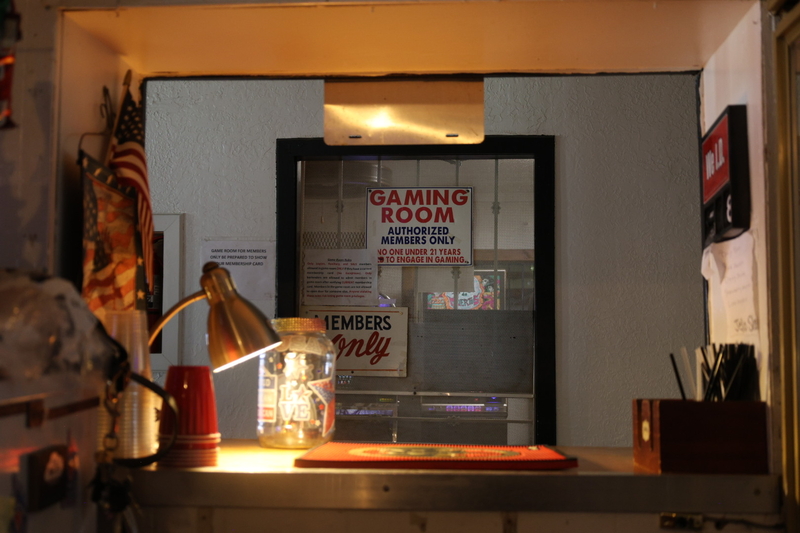
Michelle Pato, the Gaming Control Board’s lead attorney, told Source NM the data collection will be limited to the race track casinos and approximately 50 veteran and fraternal organizations like Elks Lodges and American Legions that are authorized to operate 15 machines in their halls.
Tribal casinos, which are not subject to the federal Farm Bill regulation, will not be part of the data sharing agreement, Kozlowski said. The HCA would have to establish individual data agreements with each New Mexico tribe and pueblo that operates a casino and potentially would have to reopen inter-tribal gaming compacts to legally strike those agreements, she said.
Kozlowski also said unreported gambling winnings do not appear to be a major factor in the state’s overpayments to SNAP households. The biggest factors include incorrect determinations of a household’s size, income and shelter costs, which factor into SNAP benefit offers, according to the agency’s analyses.
NM smoke shop owner says food desert, not fraud, the reason for his high SNAP revenue
Still, Kozlowski said the HCA is doing all it can to collect readily available gaming data. She said she has asked HCA lawyers whether they can replicate a similar HCA program, which intercepts New Mexico lottery winnings to those who owe child support payments, for SNAP recipients who win at slot machines.
New Mexico Center on Law and Poverty Public Benefits Director Sovereign Hager criticized the federal gambling data requirement and the error rate penalties more broadly as a waste of caseworker time and an unnecessary burden on SNAP households.
She noted that often modest, one-time payments like slot machine winnings do little to help a household free itself from food insecurity. Once they’ve “spent down” the winnings, she said, they must then re-apply for benefits, she noted.
The policy “may kick a family off for a month or two,” she said. “Then they reapply. It’s burdensome for the agency, and there’s no data it makes a meaningful difference in solving hunger or food insecurity for families.”
Santa Fe, NM