Shoreline, water quality improvements to West Okoboji Lake
Jul 29, 2026 | 6:10 pm ET
Description
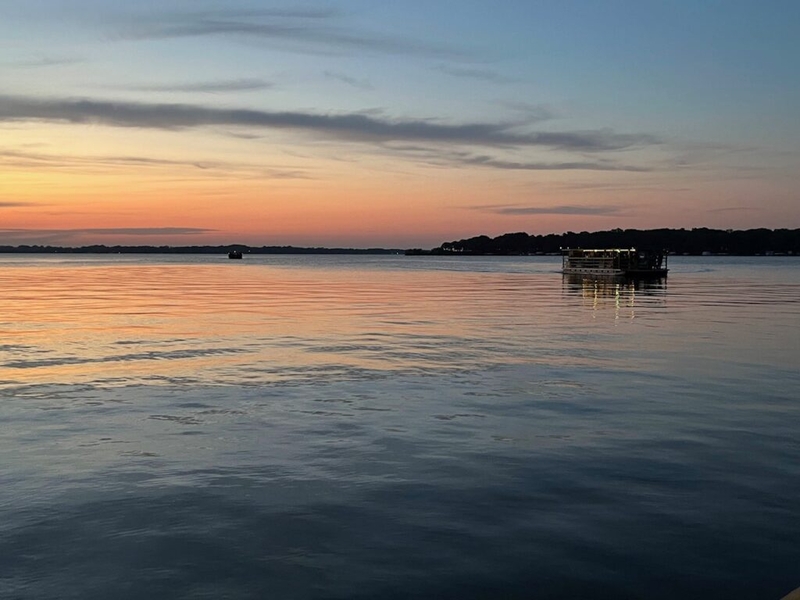
An excursion boat at sunset on West Okoboji Lake near Arnold's Park. (Photo by Kathie Obradovich/Iowa Capital Dispatch)
The Iowa Department of Natural Resources announced Wednesday it had treated an area of West Okoboji Lake for Eurasian watermilfoil, an invasive aquatic plant, and that it will host a public meeting to discuss forthcoming shoreline restoration efforts.
Nearly 100 segments of shoreline along the Iowa Great Lakes were damaged by flooding in 2024, including seven segments of Pillsbury Point’s shoreline on West Okoboji Lake.
DNR said the construction along the small Pillsbury Point urban park will commence in the fall, primarily via barge, and take about a year to complete.
The public meeting, scheduled for Aug. 6 at 6 p.m. at Maser Monarch Lodge in Okoboji, will allow the public to share comments and ask questions about the restoration following a presentation about the project.
A news release from the department said the shoreline work will regrade the slopes along the point, armor them with rock and seed native plants with deep roots, all to “stabilize and protect” nearly the 1,200 feet of “steep” public shoreline.
According to a news release from DNR, the department has worked with local homeowners to repair and stabilize the toe of the slope and to develop a long-term plan to prevent future erosion and flooding issues at Pillsbury Point.
DNR’s 2026 lake restoration plan noted the department has already restored shoreline at more than 30 sites in the Iowa Great Lakes and planned to work on additional sites in 2026.
The department said lake users can expect increased boat traffic during the repairs around the point and at Gull Point State Park.
DNR and the Iowa Lakeside Laboratory – located along West Okoboji Lake – recently treated a “small, isolated population” of the invasive species Eurasian watermilfoil in the lake canals south of Miller’s Bay in West Okoboji Lake.

The department has found the tall-growing aquatic plant in the canals of West Okoboji Lake in the past, along with brittle naiad, another invasive plant species. DNR uses targeted herbicide applications to clear kill Eurasian watermilfoil before it spreads to the lake where it can choke out native species and impact lake recreation.
Andrew Carlson, fisheries biologist for DNR, said the team “acted swiftly” to control the plant after it was discovered deep in the canals.
“With required permits already in place, we were in a prime position to respond rapidly to control this highly invasive plant and protect the aquatic ecosystem,” Carlson said in a news release. “We are thankful for community funding and staff at the Iowa Lakeside Laboratory for helping isolate the plants.”
DNR executed a $300,000 campaign to treat East Okoboji Lake, the Upper and Lower Gar Lakes and Minnewashta Lake in 2023 when the department discovered Eurasian watermilfoil was present in the waterbodies.
The department began treatments for the plant in Clear Lake — which is out of the Iowa Great Lakes system, but another popular recreational lake — in December.
According to the Wednesday news release, DNR did not find the invasive plant in the main body of West Okoboji Lake, nor in any of the other Iowa Great Lakes.
Eurasian watermilfoil needs only a small fragment to take root, reproduce and form thick beds in a lake, which is why DNR said boaters need to follow the “clean, drain, dry” protocol when moving boats from one water body to another.
The spread of Eurasian watermilfoil and other invasive species can be prevented by lake visitors who stop to clean their boats and equipment, drain all motors, live wells, bilges and bait buckets and dry anything that comes in contact with water, including dogs and clothing, before leaving the area.
“The DNR is asking boaters and other users in these areas to be extra vigilant to help prevent the spread of these invasive aquatic plants elsewhere in West Okoboji or the other lakes in this chain,” the news release said.
DNR said that since Eurasian watermilfoil was found in the canal, boat users should check their boat props for any vegetation fragments before moving into the main lake.
Des Moines, IA