Feds pick Louisiana for potential nuclear campus
Jul 29, 2026 | 11:24 am ET
Description
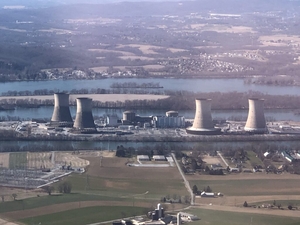
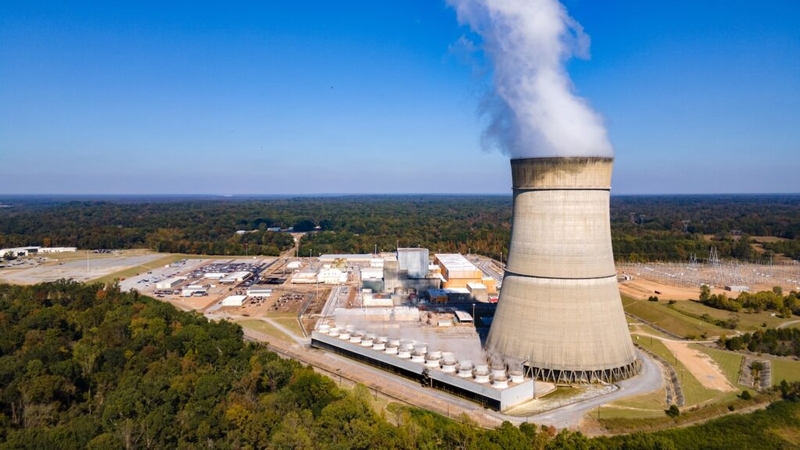
Steam rises from the cooling tower at Entergy's Grand Gulf Nuclear Station, located just south of Vicksburg, as it generates electricity for Mississippi, Louisiana and others on the MISO grid. (Photo courtesy of Entergy Corp.)
Louisiana could be home to one of a handful of new locations the Trump administration envisions to manage the full life cycle of nuclear energy.
The U.S. Department of Energy has selected Louisiana and four other states as potential sites for Nuclear Lifecycle Innovation Campuses. Each would handle the enrichment of radioactive materials, deployment of reactors and the recycling or disposal of nuclear waste. The program is part of an effort by the Trump administration to spur investment in atomic energy, a sector that has long been saddled with high costs and lengthy build times for reactors.
U.S. Energy Secretary Chris Wright announced Tuesday that he signed memorandums of understanding with Louisiana, Utah, Tennessee, Oklahoma and Idaho to continue exploring opportunities to host the campuses. The five states were among the 26 that applied, according to a Department of Energy news release.
The state Department of Conservation and Energy applied to be part of the federal program. Spokeswoman Anna Johnson said Louisiana is proposing three potential “hubs” for key functions of the nuclear fuels life cycle. She stressed they are initial concepts and are not part of any final plans.
The first is the Baton Rouge area, which has the chemical manufacturing infrastructure and research capabilities through LSU to support uranium enrichment and testing.
The second is Northwest Louisiana, which Johnson said is an ideal region for deploying small modular reactors or even smaller microreactors at facilities such as data centers. The region is also home to Barksdale Air Force Base, which some have envisioned as a possible site for the military’s plans to test SMRs and microreactors as a source of self-sufficient, off-grid power for their domestic installations. Although the military could eventually bring SMRs or microreactors to its Louisiana bases, the armed forces have so far selected other sites for these efforts, according to recent announcements from the U.S. Army and U.S. Air Force.
The third hub is Port Fourchon, which would handle disposal options such as storing nuclear waste in offshore salt domes under the Gulf of Mexico.
Louisiana’s application pointed out that storing the spent fuel in federal waters would allow companies to bypass state restrictions on nuclear waste disposal, including a state law that generally prohibits storing radioactive waste in salt domes within state territory.
Louisiana wants to pave the way for small nuclear reactors, an untested technology in the U.S.
Johnson said the agency plans to work with Gov. Jeff Landry’s office and the Louisiana Economic Development to flesh out the ideas and eventually try to attract companies that want to invest in the atomic sector.
“We kind of already have all the tools in our toolkit, so we’re ready to launch,” Johnson said.
Louisiana currently has two utility-scale nuclear power plants: the River Bend Station in St. Francisville and the Waterford 3 reactor in St. Charles Parish. The Grand Gulf Nuclear Station, located just south of Vicksburg, Mississippi, also feeds electricity into Louisiana. All three, owned by Entergy Corp., have a collective generation capacity of roughly 3.5 gigawatts, about 15% of the state’s net power supply, according to U.S. Energy Information Administration data.
Although Louisiana wants to roll out the red carpet for the nuclear industry, Louisiana Public Service Commissioner Davante Lewis, D-Baton Rouge, said utility companies could still be reluctant to invest in traditional nuclear plants due to the high costs. The state’s current reactors are each more than 40 years old.
A 2026 analysis from the investment firm Lazard found utility-scale nuclear power to be among the most expensive sources of electricity in the U.S., more than double the cost of solar or natural gas. It estimated it costs an average of $214 per megawatt hour to build a traditional nuclear plant compared with a range between $40 and $98 per MWh for a utility-scale solar power facility and $107 for a natural gas turbine.
Recent investments have instead focused on small modular reactors and microreactors that can power a single large facility or small group of adjacent facilities. Most microreactors are prefabricated, making them readily available at a fraction of the cost and small enough to be transported by a commercial truck. Their prices start at around $50 million, and they cost between $70 and $90 per MWh to operate, according to the Nuclear Energy Institute.
Companies like Amazon have invested more than $500 million into microreactor technology, according to a Utility Dive report.
“This invitation for Louisiana to advance our nation’s energy security and dominance is a clear sign that our state is well aligned with President Trump’s vision for powering America’s future,” Gov. Jeff Landry said Tuesday in a news release. “In launching our Nuclear Strategic Framework, Louisiana signaled we were ready to lead the next era of nuclear energy. This announcement reaffirms our position as a leader in the nuclear renaissance.”
Baton Rouge, LA