Senate advances healthcare pricing reform, amendments dilute impact
May 20, 2026 | 6:00 am ET

Description
Photo courtesy of Spotlight Delaware
Why Should Delaware Care?
Delaware has among some of the highest healthcare prices in the country. In recent years, lawmakers have become frustrated with the growing burden on not only patients, but also on the state budget. As one of Delaware’s largest employers, the government is now looking to reduce the pinch on its own health insurance benefits plan.
More than two months after lawmakers introduced Senate Bill 1, a primary care reform bill that also includes price caps for government-regulated insurance plans, state senators unanimously passed the legislation on Tuesday.
But the bill’s prime sponsor, Senate Majority Leader Bryan Townsend (D-Newark), filed two substitute versions of his original bill — changing some of its most controversial provisions — before the legislation was brought to the Senate floor.
Those changes would delay the implementation of price caps on hospital procedures, limit some state oversight in setting those caps, and completely exempt some hospitals from the law altogether.
Disapproval from the state’s hospital systems led to extended closed-door negotiations between lobbyists and legislators over the amendments to the bill.
On Tuesday, Townsend said a vote on SB 1 was a “long time coming,” and the goal of the bill is to prevent unnecessary illnesses. Additionally, he said investments in Delaware’s primary care infrastructure within the bill would help to lower costs to the state.
“You actually save money by keeping people well, and we have got to have that be a key focus,” Townsend said.
Prior to the vote, Brian Frazee, CEO of the Delaware Healthcare Association, a trade group that represents the state’s hospitals, said his organization supports the amended version of SB 1.
He said in a statement the amended bill addresses healthcare costs, while also acknowledging “headwinds” faced by hospitals in delivering care.
“The status quo is unacceptable, and Delaware hospitals are once again leading the way with collaborative solutions,” Frazee said. “We’re proud to lead because so much is at stake for our patients and communities.”
Changes to the bill
For months, the fate of SB 1 sat in limbo as lawmakers and hospital lobbyists negotiated amendments to the controversial reform.
But lawmakers introduced changes to the bill in recent days, many of which delay the enactment of its most contested provision to regulate hospital prices.
The original bill introduced reference-based pricing to medical services covered under both insurance for state employees and some commercial plans regulated by the Department of Insurance. Essentially, this would limit the amount of money a provider could be reimbursed by insurers, tying that amount to a predetermined benchmark.
Prior to the amendments, Delaware intended to set that benchmark at 250% of what the federal government pays providers through Medicare.
Now, those price caps would not go into effect until 2029. Price caps for both inpatient and outpatient procedures would also take effect on a phased basis, with costs not scaling down to that 250% of Medicare level until 2033.
Senate Bill 1 also prioritizes investments for primary care and is aimed at preventing costly trips to emergency rooms.
By taking aim at how high Delaware healthcare providers can negotiate their prices with insurers in addition to making those insurers spend 11.5% of their medical costs on primary care, the state hopes to better compensate providers proactively working to improve Delawareans’ health outcomes.
The substitutions maintain those investments in primary care services from insurers, in addition to the controversial price caps that hospitals had staunchly opposed earlier this year.
Still, the amendments carve out exemptions for hospitals that are dependent on patients who pay for care using Medicare and Medicaid, which would include TidalHealth in Seaford, Beebe Healthcare in Lewes and Saint Francis Hospital in Wilmington, Townsend said.
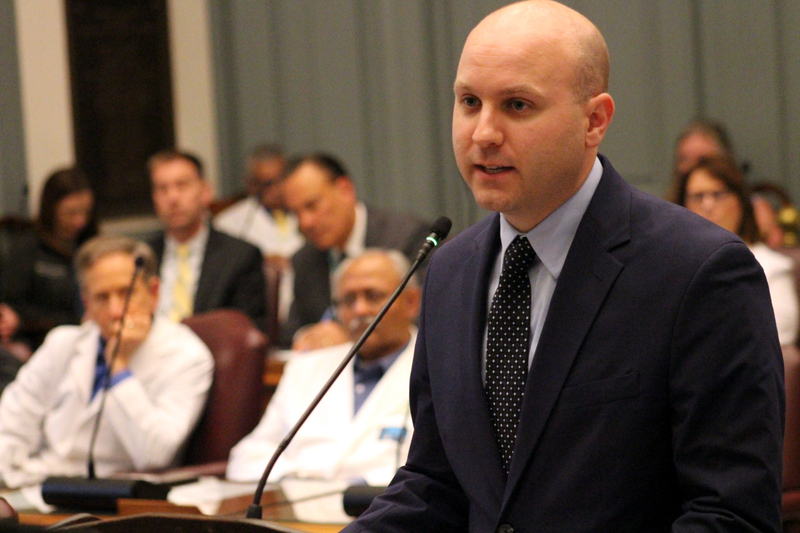
Asked if these provisions would apply to ChristianaCare, Frazee said the exemptions would not include the health giant’s Wilmington campus.
A separate provision that hospitals took exception to, which allowed a state board to set rates for procedures that did not have a comparable Medicare rate, like pediatric care, was also removed in the amendments.
The amendments maintain price cap exemptions for hospitals and other healthcare providers if they use a “global budget model” that is approved by the state insurance department.
Global budget models set annual fixed prices for inpatient and outpatient procedures, meaning hospitals are paid on the front end to deliver services at a cost set by their previous Medicare and Medicaid reimbursements from previous years.
In neighboring Maryland, the state implemented global budgeting for all of its acute care hospitals in 2014, according to a report from Mathematica.
Under the revised bill, hospitals would also have a say in the regulatory process to determine any adjustments to their federally managed Medicare rates. According to the bill, the Delaware Department of Insurance is required to establish this regulatory process within 18 months of the bill’s enactment.
That process would see the insurance department and State Employee Benefits Office, which manages state employee insurance plans, develop a methodology to “determine any appropriate annual inflationary or other applicable adjustments” to a hospital’s Medicare rate, which is set by the federal government.
By adjusting a hospital’s Medicare rate, its price cap would also then be adjusted, since it is based on a hospital’s Medicare reimbursement rate.
According to the bill, the state also would work “in consultation with Delaware hospitals” to determine how any annual adjustments from Medicare rates are calculated – giving hospitals a voice in a process meant to regulate them.
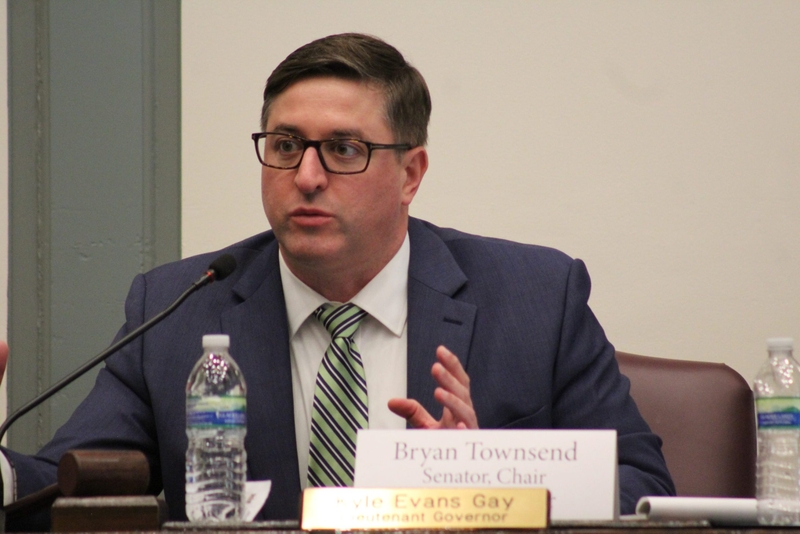
Asked how the law would ensure that hospital systems do not help to write regulations that would be favorable to themselves, Townsend said he expects them to try.
But still, he said he believes the Department of Insurance have been “absolute pit bulls” and would ensure the regulations are appropriate.
He also explained that the bill’s amended language would allow for flexibility in later years if the federal government decided to raise the Medicare reimbursement rate. The state would then be able to examine those rates and determine whether they would follow suit, Townsend said.
“We want a mechanism here in Delaware to float up or float down accordingly,” Townsend said.
The vote
The vote on the floor was relatively uneventful, as lawmakers seemed to be in agreement over the bill’s provisions and its potential impact on healthcare in the state.
State Sen. Ray Seigfried (D-Claymont) said prior to the vote patients pay “too much” for care in Delaware right now, and the state has an obligation to hold hospitals accountable for high costs.
Seigfried, a former ChristianaCare executive, said costs in Delaware exceed those of neighboring states like Pennsylvania, New Jersey and Maryland. When people believe hospitals prioritize profits over patient wellbeing, hospitals begin to be viewed as “predators,” he said.

“It is our chance to stand up to recognize public dissatisfaction, to offer a solution, a remedy to this situation,” Seigfried said on the Senate floor.
In addition to Seigfried’s remarks, State Sen. Eric Buckson (R-South Dover) asked to be added as a co-sponsor of the bill.
Following the unanimous approval, state and hospital officials mingled in the statehouse lobby after what had been a monthslong negotiation process.
Now, the bill will be considered by lawmakers in the House of Representatives, likely beginning with a hearing in the House Health and Human Development Committee. Townsend said he believes the bill would pass in the House and that he is hopeful Gov. Matt Meyer supports the legislation.

Dover