SC Republicans advance bill that targets telehealth abortions
Jan 15, 2026 | 7:30 am ET
Description
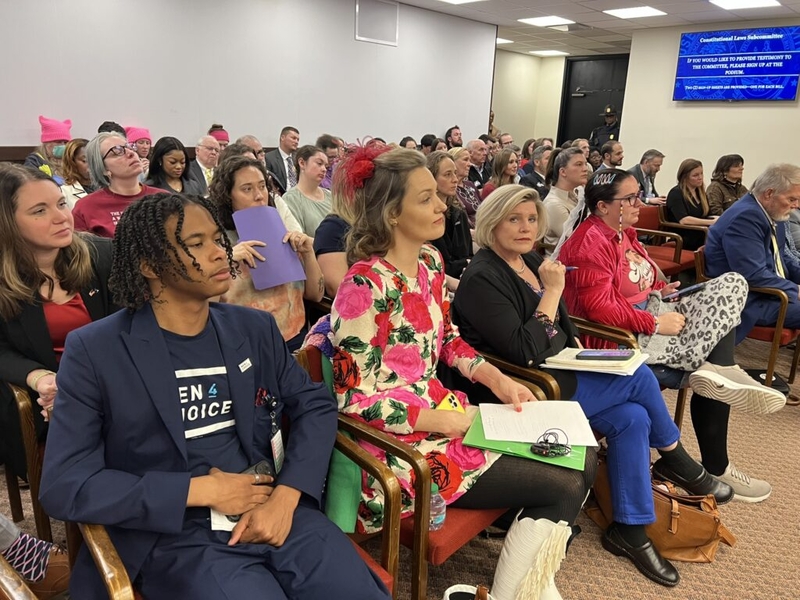
Speakers against legislation to reclassify abortion medication drugs in South Carolina included former Sen. Penry Gustafson of Camden (who's looking toward the camera) in the House office building's largest hearing room Wednesday, Jan. 14, 2026, in Columbia. (Photo by Seanna Adcox/SC Daily Gazette)
COLUMBIA — Republican legislators’ latest attempt to further limit abortions in South Carolina would put drugs used for medication abortions in the same category as Valium and Xanax.
A 3-2 vote Wednesday along party lines advanced the bill to the full House Judiciary Committee, where it’s certain to win approval: Its chairman, Rep. Weston Newton, is the main sponsor.
The proposal would classify mifepristone and misoprostol as Schedule IV drugs, making possession legal only by prescription.
Violators could be fined up to $5,000 and sent to prison for up to five years. Anyone who gives the drugs to a pregnant woman without her knowledge intending to cause an abortion could be sent to prison for 10 years. However, the bill specifies that a pregnant woman could not be prosecuted for having the drugs for her own use.
The other bill
A second bill taken up by the panel would do the opposite. It would intentionally punish women for having an abortion by extending all legal protections to the womb from fertilization. Abortion would be legally on par with murder.
Its sponsor, Rep. Rob Harris of Spartanburg County, said he wants to end abortions by erasing women’s “complete immunity” from prosecution.
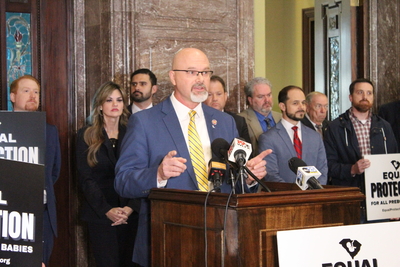
“Murdering anyone should be illegal for everyone,” said the father of 10 and member of the hardline Freedom Caucus.
Harris’ bill, titled “Prenatal Equal Protection,” is not expected to get any traction. Other than Harris, the subcommittee heard from two speakers on his bill, one for and one against, before adjourning without a vote.
“The reality is, you’re going after women making the most traumatic decision of their life. … You’re going after women trying to become mothers. You’re going after me,” said Tori Nardone of Charleston, who said she had to go out of state for an abortion after her doctor diagnosed a fatal fetal anomaly. Under the state’s abortion ban, her situation should’ve been an allowed exception, but her doctor feared making that call. “I couldn’t get care” in South Carolina, she said.
“Bills like these do nothing but terrify women out of wanting to get pregnant,” she told the panel. “Please don’t make it worse than it already is.”
Harris’ bill is unlikely to get a second hearing. Even some of the state’s most strident abortion foes say it goes too far.
It’s largely the same proposal he introduced in 2023.
That bill never got a hearing, but the House rejected it when he offered it as an amendment during a floor debate. National headlines followed about South Carolina potentially allowing the death sentence for women, prompting 12 GOP co-sponsors to remove their names. The bill died with the end of the 2024 session. But Harris, an emergency room nurse, was undeterred and reintroduced the proposal ahead of the 2025 session’s start. House rules guaranteed him one hearing, which occurred Wednesday.
‘Let’s move on’
A companion bill was introduced Tuesday by Sen. Lee Bright, the former senator who won a special election in December to retake the seat he lost in 2016.
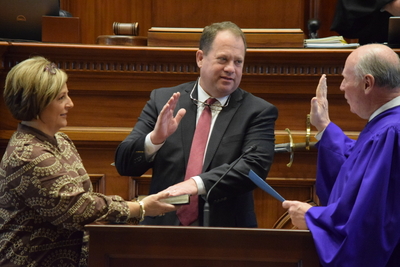
At a news conference with Harris ahead of session’s opening, the Spartanburg Republican recognized the bill’s slim chances.
“I know we’ve got hearts and minds to change,” he said. “God’s in the hearts-and-minds-changing business.”
Two months ago, a Senate panel rejected legislation that would ban abortion from the onset of pregnancy and criminalize women for getting an abortion. In a panel chaired by the bill’s author, even one of its co-sponsors ultimately couldn’t support it.
Asked about the chances of an abortion debate again this year, Senate GOP leaders indicated wanting to move on.
“We don’t need to do it,” said Senate Education Chairman Greg Hembree of Horry County, noting it’s been debated 11 of his 13 years in the chamber.
Referring to the six-week ban that took effect in 2023, he said, “We passed a bill. We need to let the bill work. We need to see how it goes. We need to let it play out a bit, and if we need to — two, three, five years from now — evaluate, OK, let’s do that. In the meantime, the Senate’s spoken. Let’s move on for a while.”
Sen. Tom Davis of Beaufort went further, emphatically promising to block any bill that bans abortion from conception, saying that’s “so far out of touch” with most South Carolinians’ opinions. If the proposal is revived in committee, he will work to stop it from advancing. And if it manages to get to the floor anyway, he will use Senate rules to ensure it gets no further.
“I’m committed to making sure that doesn’t happen,” he told the SC Daily Gazette after the Senate GOP Caucus’ question-and-answer session with reporters. In fall 2022, it was Davis’ promised filibuster that ended debate on a proposed ban from conception.

But a bill that targets mailed abortion medication drugs is different, said Senate Majority Leader Shane Massey.
“If we can focus on that, we can probably get strong support,” said the Edgefield Republican, who called the drugs mailed from another state an “end run” to state law.
The bill that advanced
The bulk of Wednesday’s two-hour House hearing was spent on Newton’s bill.
It’s already illegal for providers in South Carolina to mail the two pills that end a pregnancy. The two-step regimen is approved by the Food and Drug Administration to end a pregnancy through 10 weeks’ gestation. In South Carolina, that option remains legal through six weeks. But the drugs must be handed over at the clinic.
Other states, however, allow providers to mail drugs for a medication abortion following a telehealth visit — including to patients in states with abortion bans — and shield them from prosecution. That’s led to lawsuits filed in Texas and Louisiana against doctors in New York and California.
Data from Aid Access, one of the nation’s largest online providers, shows that 84% of its prescriptions over 15 months went to patients in abortion-ban states, according to a report last August by researchers at the University of Texas at Austin.
Advocates of Newton’s bill said it would help South Carolina in court.
“What this bill does is gives another arrow in your quiver when you go to the courts to enforce the state of South Carolina’s law,” former GOP Rep. Garry Smith, who represented a Greenville County seat for 19 years, told his colleagues. ‘This is another mechanism to support your case.”
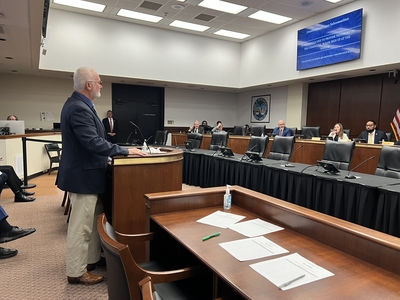
But opponents of the measure said changing the drugs’ classification will further endanger women in a state with already high death rates for women dying during pregnancy, childbirth or soon after.
Newton stressed that the drugs would remain available by prescription. Nothing in the bill bans the drugs, he said.
But opponents countered it will still be harder for women to access the drugs for non-abortion health care.
Dr. Tricia Seal, an OB-GYN in Columbia, said the drugs’ safe and effective gynecological uses include miscarriages and other emergencies. She keeps them available in her office, but she couldn’t do that if the drugs were reclassified as Schedule IV. Requiring her to write a prescription the patient must get filled elsewhere would delay care, she said.
“The impact on miscarriage and stillborn care is so profound, harm is guaranteed,” she said.
Dr. Rebecca Haskell, an OB-GYN resident in Columbia, said the bill will cause more doctors-in-training to avoid South Carolina. This spring, she and her classmates will travel to New York for a two-week crash course on maternal care that can’t be part of their training in South Carolina, she said.
The bill “will continue to drive away the next generation of eager, capable, confident physicians,” she said. “I urge you to put ideology aside. Women in South Carolina already can’t find an OB-GYN.”
Former Sen. Penry Gustafson called the bill unwise, unkind, and cruel. She accused the sponsors of being “pro-forced birth and pro-forced surgery.”
“I’m not talking about family values; I’m talking about miscarriage,” said the Camden Republican, one of the “sister senators” who lost her re-election bid in 2024 after uniting against the six-week ban.
“Your continued push to ban all abortions and anything related will cause real women standing beside us to die,” she said. “You have the opportunity to take a real concerted long pause on this one. This bill has not been thought through.”
Reporter Skylar Laird contributed to this report.

Columbia