SC Ports getting behind Jasper warehouse project as that county’s cargo terminal remains in limbo
Jan 29, 2026 | 2:04 pm ET
Description
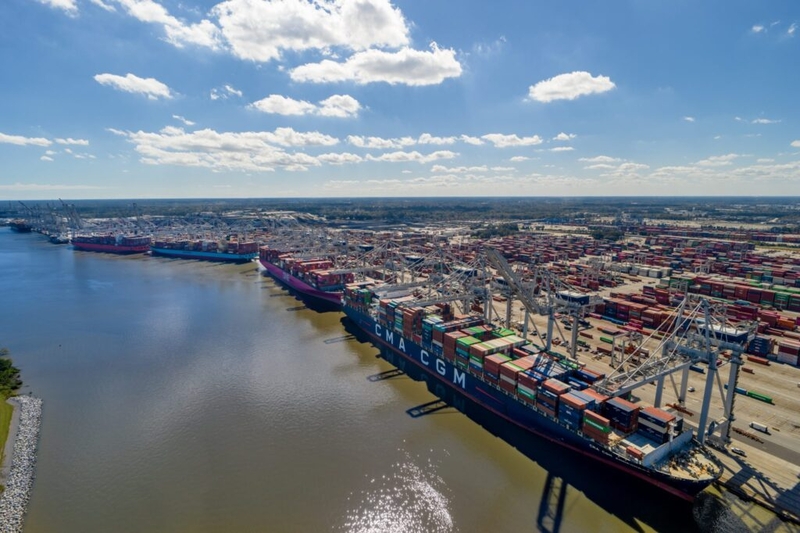
The Georgia Ports Authority is looking to Jasper County as a potential site for a cold-storage warehouse serving a new terminal on Hutchinson Island. South Carolina officials see the project as a way to bring economic development to a rural part of the Lowcountry. (Photo courtesy of the Georgia Ports Authority)
With a seaport terminal in Jasper County still at least decades in the future, efforts are underway to bring economic development of another type to thousands of acres along the South Carolina side of the Savannah River.
The S.C. State Ports Authority on Wednesday asked state legislators to transfer $2 million from a fund for the Jasper Ocean Terminal to a group that’s looking to bring a cold-storage warehouse facility to land adjacent to the proposed terminal site.
While built in South Carolina, the cold-storage facility would largely serve cargo moving through a new terminal the Georgia Ports Authority is building on Hutchinson Island in that state.
“There’s been a shift in focus away from, in the immediate future, building a terminal in Jasper County and, instead, building warehouses, distribution centers and other port-related facilities that would benefit the Georgia Ports Authority, in particular Hutchinson Island,” said Sen. Tom Davis, R-Beaufort, a longtime proponent of the Jasper terminal.
The Georgia Ports Authority, a partner in the Jasper Ocean Terminal project, plans to develop three container ship berths on Hutchinson Island as part of a long-term expansion of its cargo capacity. Those ships will need access to cold-storage warehouses to keep cargo such as meat and produce.
Davis said the Jasper site’s close proximity to Hutchinson Island makes it more attractive to cold-storage shippers than sites that would be farther away in Georgia.
“This is seen as a way to get more immediate port-related development down in that area” of Jasper County, he said.
The $2 million in state funds were set aside in previous years, but legislators would need to approve any change in how the money is used. An economic development panel of the House’s budget-writing committee heard the proposal Wednesday as part of a State Ports Authority presentation.
If approved, the money would eventually go to the Southern Carolina Regional Development Alliance, which is working to get permitting and infrastructure for the project. Danny Black, president of the alliance, referred questions to Davis.
There is still a lot of work to be done before a cold-storage facility could be built.
The property is part of 10,000 acres the Georgia Department of Transportation bought in the 1930s to store debris removed from the Savannah River during dredging. Georgia officials and the Army Corps of Engineers would have to sign off on using the property on the north bank of the river for any other use.
Roads, utilities and other infrastructure would have to be built, and Davis is hoping CSX Corp. could extend a rail spur to the site.
Georgia officials have been receptive to the idea, largely because it would benefit that state’s port, and they are joining South Carolina in asking the Army Corps for permission.
It’s not clear how South Carolina legislators will feel about building a facility to help another state’s port.
State Rep. Leon Stavrinakis, the panel’s chairman, asked Micah Mallace, the State Ports Authority’s president and CEO, during Wednesday’s meeting whether the facility would serve cargo moving through Charleston or Savannah.
When Mallace responded “Savannah,” the Charleston Democrat replied: “Alright, I appreciate your candor on that.”
Efforts to build a cold-storage facility in Jasper County don’t mean the 1,500-acre cargo terminal project is dead, Davis said, but it wouldn’t be until mid-century or later when it’s needed.
Both states have given lip service to the terminal — estimated to cost at least $5 billion — for nearly two decades, but neither authority has made it a priority.
Instead, they have focused on expansions near their home bases: for example, the new Hutchinson Island terminal in Georgia and new phases of the Leatherman and North Charleston terminals in South Carolina.
“I think that the Georgia Ports Authority has been clear in their intention that they wish to deliver more infrastructure, more capacity that they control individually on the Georgia side of the river,” Mallace told the subcommittee.
Jamie McCurry, chief administrative officer of the Georgia Ports Authority, said in a statement that the agency “remains committed to the Jasper Ocean Terminal Joint Venture and to regional economic development.”
McCurry said the terminal “will be demand driven and the project remains a unique opportunity for the future growth and prosperity of the Lowcountry and Coastal Empire,” the nickname for Georgia’s coastal region.
Mallace said the Jasper terminal is still on the drawing board, but not until the authority’s planned expansions reach capacity.
“Our infrastructure is well built; it is adequate for the business we have today and really for the foreseeable future,” he said. “We are reprioritizing cap-ex (capital expense) dollars on growth initiatives rather than on infrastructure development. We have to fill what we have.”
SC Ports still sees a future in barges, but rail yard getting first focus
Andrew Fulghum, Jasper County’s administrator, called the shift toward a warehouse project a “realistic adoption of current market conditions.”
Fulghum said he’s thankful the state is “granting additional resources to advance the exploration of economic development” in the rural county.
Jasper County’s location near the Port of Savannah and its access to U.S. Highway 17 and Interstate 95 have helped to attract manufacturers and new warehouses in recent years.
The development alliance is already marketing nearly a dozen industrial parks totaling nearly 3,000 acres countywide. The county also announced more than a year ago the South Atlantic Logistics Terminal in Hardeeville, which will include up to 6 million square feet of industrial and warehouse space in 15 buildings when completed.
Long-range plans for the Jasper Terminal include a wharf that could accommodate eight large container ships, a container storage yard and a rail yard where containers would be loaded on and off trains.
New timeline for SC Ports’ Navy Base rail yard
Micah Mallace, the SC Ports president, also told legislators that the Navy Base Intermodal Facility under construction next to the Port of Charleston’s Leatherman Terminal in North Charleston won’t open until at least 2028.
The $690 million, 118-acre rail yard, where trains will eventually move cargo containers to and from the port, was supposed to partially open this month.
Mallace said the port, challenged by global tariff and trade woes, needs to build more demand for the publicly funded facility before it can operate successfully.
“We have slowed construction,” Mallace told the House subcommittee.
“We are working on delivering operating agreements with the railroads — CSX and Norfolk Southern,” Mallace said. “We need to, of course, make sure we work with our partners, the railroads, to ensure we deliver that infrastructure at the right time.”
The authority had originally set a July 1, 2025, opening date for the rail yard, but the project has busted both its budget and schedule.
Mallace, who took over the authority on Oct. 13 after former CEO Barbara Melvin abruptly resigned, has said it makes sense to take a more deliberate approach toward the rail yard’s construction so demand for the facility is there when it opens.
Legislators set aside $550 million of taxpayer funds for the project, with the authority picking up the rest of the costs.
Columbia