Officials take another look at hospital use of offshore captive insurance companies
Oct 10, 2026 | 6:00 am ET
Description
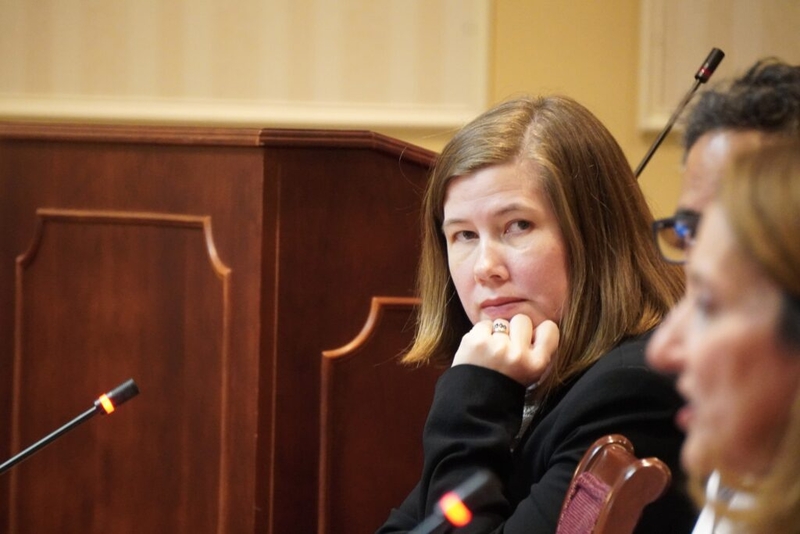
Maryland Insurance Commissioner Marie Grant sits on a panel to discuss insurance with Maryland legislators. (Photo by Danielle J. Brown/Maryland Matters)
State officials are taking another close look at how Maryland’s nonprofit hospitals store billions of dollars in “captive insurance” companies domiciled in the Cayman Islands to determine if those funds should be subject to state taxes.
Hospital representatives, a national whistleblower and Maryland Insurance Administration officials met virtually this week in first public information gathering session on the question: How can Maryland officials ensure that nonprofit hospitals are not skirting state tax laws through the offshore insurance accounts?
It’s a question that state officials studied more than 10 years ago, but renewed attention to the potentially billions in untaxed that could be owed to the state came after a national whistleblower revived the issue during the 2026 session.
Most hospitals believed they were not subject to the tax. But some other nonprofit organizations may have been paying that tax, raising questions on whether the insurance administration was enforcing the tax or might have been missing millions owed to the state.
“It is very hard for the MIA to detect these in-house transactions, and paying the tax is essentially on the honor system,” Jason Schupp, the whistleblower largely responsible for the awareness of nonprofit hospitals using captive insurance, said during his testimony Wednesday.
Economic policy experts, whistleblower urge House to oppose captive insurance tax pause
“While a handful of captive owners faithfully report their captive insurance transactions and pay the premium tax … most do not,” said Schupp, who was largely anonymous until he publicly testified in April on the issue before the House Ways and Means Committee. He asserts that as much as $3 billion of nonprofit hospital funds are sitting in those offshore captives.
Captive insurance is when a business forms its own insurance company — a captive — to help cover financial losses that are not covered by commercial insurance. Hospitals may form a captive for the purpose of covering the costs of medical malpractice claims and cybersecurity risks, for example.
Maryland is one of 15 states that do not have a regulatory framework to let companies establish captives within the state. That’s why decades ago Maryland nonprofit hospitals set up captives in offshore locations such as the Cayman Islands.
But in the years since, there have been questions about whether the Maryland Insurance Administration should have been collecting money from nonprofit hospitals with offshore captive insurance, under a statute that subjects other nonprofits to those taxes.
Most hospitals believed they were not subject to the tax.
“It is really the hospital setting aside their own money and the amount of money that they set aside is based on actuarial assessments of the hospital’s risks,” said Andrew Nicklas, senior vice president of government affairs and policy and general counsel at the Maryland Hospital Association, in Wednesday’s meeting.
Nicklas told state officials that hospitals did not gain a tax deduction advantage by using captives. He also said that because Maryland restricts their rates, hospitals have limited avenues to raise money for insurance coverage against unique risks that they face.
That’s why they funnel their own money into captive insurance accounts in the first place.
“This is not something that is necessarily new, or novel, or certainly not nefarious,” he said, suggesting that state officials could ensure hospitals register their captives with the state to give greater transparency to those operations.
But Schupp said that the use of captive insurance left him “a bit uncomfortable” during his years working within the insurance industry.
He explained that there were “two major benefits” when nonprofits like Maryland’s hospitals create captive insurance accounts.
“One is that the money can be brought outside of the nonprofit perimeter, so that accountability that we normally think of in a nonprofit, around things like executive spending, on travel, all that disappears because that’s kept down in the Caymans,” he said. “The other reason that we see here is that the transactions are extremely difficult for tax enforcement authorities to identify, and so, effectively, reporting of a captive transaction is on the honor system.”
The Wednesday conversation will inform a future study due to lawmakers by Jan. 1, 2027, which will also include recommendations from MIA about how to settle the issue. Those recommendations could inform legislation if deemed necessary.
Wednesday’s meeting is not the end of the conversation, said Insurance Commissioner Marie Grant.
“This public meeting is part of our informational gathering and consultation,” Grant said. “It is not the exclusive mechanism by which we are gathering information or consultation.”
The study grew out of a bill that would have required nonprofit hospitals to pay the tax going forward. Senate Bill 890, sponsored by Sen. Dawn Gile (D-Anne Arundel), would originally have clarified the issue by making hospitals’ captives exempt from the tax. That was amended to require that hospitals pay a 3% tax going forward, but economic policy advocates pushed to require back taxes.
Lawmakers then amended the bill to pause tax collection completely for two years while the MIA studied the issue. After additional pushback, lawmakers agreed to remove the moratorium on the tax, solely requiring the Maryland insurance Administration to study the issue, formalizing in law efforts that state insurance officials said they were already leaning toward.
Annapolis, MD