SC colleges pushed to trim expenses, degree programs in preparation for ‘enrollment cliff’
May 05, 2026 | 8:55 am ET
Description
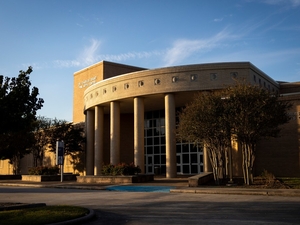
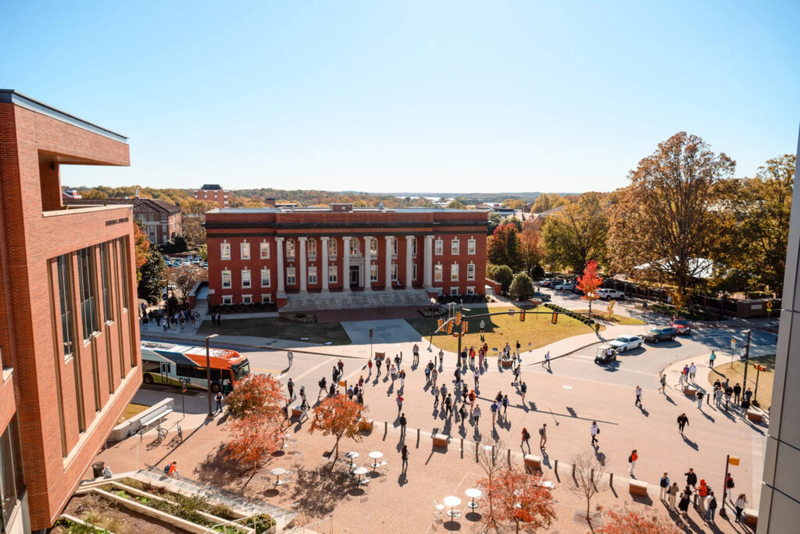
Clemson University Board of Trustees, during its most recent meeting Thursday, April 23, 2026, directed college leadership to come up with a plan to cut costs and focus spending. (File photo courtesy of Clemson University)
COLUMBIA — As the state considers how to fund its public colleges while keeping attendance affordable, particularly for South Carolinians, both Statehouse and university leaders are pushing schools to control their costs rather than continuously rely on taxpayer dollars to make up the difference.
Earlier this year, legislators proposed requiring the state’s four-year universities, as well as all University of South Carolina satellite campuses, to phase out academic programs that lose money.
And at one of the state’s largest colleges, it’s the governing board telling administrators to tighten their belt.
“We don’t want to just say, ‘Here’s the money, don’t raise tuition,’” said Rep. Nathan Ballentine, R-Irmo, chairman of the House’s budget-writing panel for higher education. “We need to start looking at this a little bit closer.”
How (and whether) the General Assembly ultimately does that will be part of budget negotiations.
SC governor calls for study to consider consolidating colleges ahead of ‘enrollment cliff’
Meanwhile, the Clemson University Board of Trustees, during its most recent meeting, directed college leadership to come up with a plan to cut costs and focus spending on programs where the school could get the most bang for its buck.
‘We have to adapt’
The mandate comes after Clemson’s financial chief sent up flares in January 2025 as spending at the college appeared to outpace revenues by about 3%, The Post and Courier reported. Faculty were asked to cut back on hiring, travel and any expenses not deemed “mission-critical” in an effort to save between $63 and $73 million as the school prepared to take on more construction debt.
At the end of the year, the books balanced, as revenues came in higher than expected and expenses lower than predicted.
Then last month, Chief Financial Officer Rick Petillo issued another warning: the rate at which expenses are growing year over year is outpacing revenue.
School year expenses rose about 9% between graduating the Class of 2024 and 2025. Revenues were up just 5%, according to the college’s latest annual financial report.
It’s not the first time this has happened over the years, the report shows. But trustees want to prevent a trend, especially as higher education experts warn about a pending “enrollment cliff” due to a declining national birth rate that has colleges competing over a shrinking pool of potential students.
SC’s largest colleges celebrate record applicants for fall 2025. Most aren’t from SC.
“What we’re seeing at Clemson and across higher education is not a temporary shift,” said trustee David Dukes, a Columbia lawyer on the board since 2012. “The higher ed environment has fundamentally changed. It’s not going back to where it was.”
Dukes emphasized that while Clemson is financially sound and has a healthy endowment, staying in the black is going to require changes.
“We have to improve and we have to adapt,” he added. “This will not be easy. It will require difficult decisions, including reducing or reshaping programs and services across the enterprise.”
The ‘enrollment cliff’
The board’s unanimous vote April 23, which called for a spending control plan in time for its meeting next month, followed pointed comments from others on the board, including former Gov. Nikki Haley.
“Enrollment is going down across the board across the country. And real reforms have to happen,” she said.
Clemson, her alma mater, has seen modest growth rather than a dip in enrollment.
Like the state’s other research universities and coastal schools, Clemson has received a boost as students from northern states have flocked to southern schools in recent years. More than 3,800 freshmen in 2024 came from the five-state area including New York, New Jersey, Pennsylvania, Massachusetts and Connecticut alone, according to the state’s higher education agency.
But other four-year schools in the state have struggled.
What happens to an empty college campus? Gaffney grapples with future following Limestone closure.
“We’ve been saying, over and over again, get in front of it, get in front of it, get in front of it,” Haley added. “We need real solutions. And it’s okay if we have to hurt for a little bit, because if you don’t hurt a little bit now, you’ll hurt a lot later.”
Requests by Clemson administrators that the board raise tuition and fees, rather than cut expenses, Haley said, are “beyond frustrating.”
South Carolina’s public colleges, including Clemson, have taken taxpayer dollars in exchange for not raising tuition or class-related fees for in-state students since 2019. Several colleges last raised tuition in 2018. Lander University in Greenwood has kept tuition steady the longest. It hasn’t changed since 2017.
However, schools have increased students’ fees for housing and meal plans, and they’ve upped tuition for those coming in from outside the Palmetto State.
“You’re putting us in a predicament, that for years, we just keep going through,” Haley said.
Freezing tuition
It’s a difficult balancing act for public colleges as legislators have pushed them to keep their out-of-state student enrollment low. It’s those out-of-state payers, undeterred by a price tag more than double that charged to their in-state peers, who ultimately subsidize the tuition of South Carolinians.
SC colleges have frozen tuition for several years. University presidents say that’s not sustainable.
Last year, College of Charleston President Andrew Hsu told House budget writers that the practice is not sustainable.
Tuition freezes at the state’s colleges came after years of stagnant state funding.
Colleges took deep mid-year budget cuts amid the Great Recession. Legislators didn’t restore the funding in the aftermath, and GOP governors (Haley included) blocked their attempts to borrow money to pay for building repairs, causing colleges to up their rates to the highest in the region.
To reverse that trend, the Legislature began pumping more money into the schools in 2019 in exchange for promising not to raise in-state tuition. That funding has grown annually since.
For the coming fiscal year, both the House and Senate have agreed to spend $26.3 million across 16 public colleges and universities for what lawmakers call “tuition mitigation.” Both chambers’ budget plans separately send $6.7 million to the Medical University of South Carolina.
That spending is locked in for 2026-27, since they’re in both chambers’ plans.
That means colleges will receive roughly $400 million more in the upcoming fiscal year compared to 2018 specifically for “tuition mitigation.” The University of South Carolina’s Columbia campus accounts for $94.4 million of that, while Clemson accounts for $78.4 million, according to state budget documents and the Commission on Higher Education.
That doesn’t include hundreds of millions of nonrecurring dollars legislators have provided colleges over the last seven years for specific projects, maintenance and new construction.
In all, universities (including all USC satellite campuses) are slated to collectively receive more than $1.5 billion in state tax dollars in the coming fiscal year.
Still, state funding to South Carolina colleges — averaging $10,438 per full-time student — is below the national average and most of the Southeast. Only Mississippi and Louisiana are lower in the region, according to the State Higher Education Executive Officers Association.
A legislative push
Ballentine cheered the Clemson board and Haley specifically for her remarks.
The House’s initial budget plan, passed in March, sought to force spending cuts by requiring colleges to suspend at least half of their programs that lose money for four consecutive years. The chamber also routed money to degrees in science, technology, engineering and math fields, which tend to have more job openings.
Senators, however, removed those requirements from its budget proposal. They pointed to the unintended consequences of tying cuts to a degree program’s profitability.
Looking at numbers alone could inadvertently sweep in in-demand careers, such as nursing, that have high operating costs, they said.
“We can’t do away with nursing,” said Sen. Ronnie Cromer, R-Prosperity, the Senate’s higher education budget chief.
SC spending $30M to tackle nursing shortage predicted to be nation’s 7th worst
Senators’ budget requires only that colleges review their programs and report which they cut or consolidate.
Most college budgets don’t break down spending by degree program. But USC does separate out for some of its schools, such as music, pharmacy and social work, which offers a glimpse into costs.
Of these schools, USC’s law school ran the greatest deficit — $21.5 million — between operational costs and revenues (not including state funding), budget documents show. The business school, on the other hand, had a nearly $28 million surplus.
The teaching and nursing schools saw a $4.9 million difference between costs and revenues — the first in the red, the second in the black — meaning at least some nursing programs would be safe from cuts but some teaching degrees could wind up on the chopping block. Engineering broke nearly even.
Nationally, a handful of GOP-controlled state legislatures have sought to rein in college spending another way.
Indiana, Ohio and Utah passed laws in 2024 eliminating degree programs that graduate few students. And Texas passed a law going after minors and certificates with low enrollments.
In Indiana, for example, 210 low-enrolled degrees will be eliminated, including a Master of Science degree in architecture at Ball State University, a master’s in industrial technology at Indiana State University and an associate’s degree in liberal studies at Indiana University, the state’s higher education agency announced in April.
Another 374 degrees will be merged or consolidated within similar degree programs, according to reporting by the Indiana Capital Chronicle, a States Newsroom affiliate.
Columbia