Sales tax growth, drought and labor shortages shape SD’s budget outlook, economic advisers say
Aug 27, 2026 | 5:40 pm ET
Description
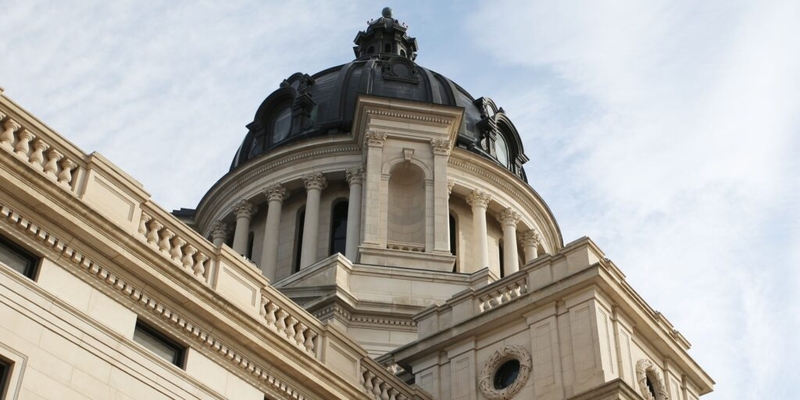
The South Dakota State Capitol in Pierre. (Photo by Makenzie Huber/South Dakota Searchlight)
The South Dakota Governor’s Office is entering the state’s next budget-writing season with a rosier revenue picture than feared earlier this year, but advisers warned Thursday of uncertainty around federal policy, drought and workforce shortages.
The Governor’s Council of Economic Advisors met by video conference to give state financial officials ground-level economic insight as they work to prepare the annual budget that Gov. Larry Rhoden will propose to lawmakers in December. The budget is influenced by economic factors that affect various tax revenues.
Revenue reports and sales tax growth
The state finished last fiscal year with revenue that was $29.7 million, or 1.08%, above predictions.
State sales tax revenue in July, the first month of fiscal year 2027, was up 12.8% compared to the same period last year.
Marnie Herrmann, of Rapid City and chief banking officer at Security First Bank, said average debit card transactions exceeded $50 for the first time this summer. Those payments generally reflect gas and grocery purchases, she said.
“That’s a little bit of a harbinger, if you will, of price pressures,” Herrmann said.
Agriculture and manufacturing
Farm income has rebounded from a difficult stretch based on first-quarter 2026 reports, said Derek Johnson, state economist with the Bureau of Finance and Management.
Beef prices have risen, and grain prices have increased recently, creating some optimism among farmers, Herrmann said.
Governor celebrates surplus as Democratic lawmaker says state missed opportunities to help people
Other advisers warned that outside factors, especially shifts in federal policy and climate, are creating uncertainty.
Drought is affecting roughly 75% of the state, and extreme heat during corn’s pollination stage will impact yields, South Dakota economics professor Evert Van der Sluis warned. Federal farm program payments make up between 25% and 30% of net farm income, he added, and federal budget pressures could put those payments at risk.
“We’ve seen these federal payments fluctuate quite a bit in response to trade policies, especially,” Van der Sluis said.
Tariffs have cut into the agriculture and manufacturing industries. An ongoing dispute with Canada is increasing costs for some manufacturers and limiting sales for others, said Carla Gatzke, a former executive at Daktronics, a Brookings-based manufacturer of scoreboards and other electronic displays. Gatzke said the “swings in tariffs” over the last year discouraged development and capital investment in the Brookings area.
Labor force, housing and childcare
South Dakota’s unemployment rate was 2% in July, with roughly three job openings per unemployed person, Johnson said. But labor force participation is declining, and advisers tied that trend to childcare and housing challenges in the state.
People can’t work if they can’t find someone to care for their children or find a place to live, said Doug Sharp, owner of Sharp Automotive in Watertown.
South Dakota governor’s economic advisers bemoan Trump’s tariff policy
Several advisers shared stories of young family members staying home after having children. Sharp said a lack of data on childcare across the state makes it difficult to quantify the shortage or propose solutions.
Efforts to address the childcare shortage in recent years have stalled in the state Capitol, including a bill offering financial assistance to childcare workers that Gov. Larry Rhoden vetoed.
Housing, advisers said, is an easier challenge to address, though the costs remain a significant barrier to new single-family development. The cost of construction, said Karl Adam of the South Dakota Bankers Association, has “gone through the roof.”
“We still need single-family homes that are affordable in central South Dakota,” Adam said, “but we just don’t seem to be able to get that process started. The cost of construction is an impediment.”
Multifamily construction is making a “huge comeback” in Sioux Falls after a lag in recent years, city Finance Director Shawn Pritchett said.
Sharp said communities are working to incentivize builders.
“Every city will pull out all the stops to figure out how to build out the market,” Sharp said.

Pierre, SD