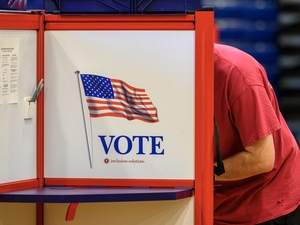
Sagging poll ratings, soaring gas prices put GOP in a fix for keeping US House control
May 21, 2026 | 5:00 am ET

Description
Missouri Governor Mike Kehoe, left, talks with U.S. Vice President JD Vance after he arrived at Kansas City International Airport, May 18, 2026 in Kansas City, Missouri. Vance on his visit pitched voters on keeping Republicans in control of Congress. (Photo by Eric Lee-Pool/Getty Images)
KANSAS CITY, Missouri — When Vice President JD Vance pitched voters on electing Republicans to Congress this November during a trip to a Kansas City manufacturing plant on Monday, he delivered the message while standing in a newly gerrymandered U.S. House district.
"If you want congressional leadership that fights to lower your taxes, that fights to put more money in your pockets and fights to protect your jobs, the only game in town is Donald J. Trump and congressional Republicans," Vance said.
But the Trump brand is hurting — placing Republicans’ miniscule U.S. House majority at high risk, despite a GOP rush to redistricting in Southern states this spring following a landmark U.S. Supreme Court decision and earlier gerrymandering.
Public polling shows most voters are dissatisfied with President Donald Trump’s job performance and historically, the party not in the White House wins seats in the midterms.
The GOP gerrymandering could offset some losses, analysts say. But whether voter displeasure with the president translates into enough Democratic gains to retake the House and usurp the GOP trifecta in Washington also remains to be seen, five months out.
Vance’s visit to Democratic-leaning Kansas City underscored the extraordinary effort Republicans have undertaken to give the party a chance at retaining control of the House in the midterm elections. The GOP now holds 217 seats to 212 for Democrats, with one independent and five vacancies.

GOP states, including Missouri, have engaged in a blitz of gerrymandering over the past nine months, dividing areas like Kansas City in hopes of securing additional seats as the party faces political headwinds ahead of November.
Without the redistricting war that Trump triggered last year, Republicans could lose no more than three House seats and keep their majority. Redrawn lines push that number up slightly, in the eight-to-10 range, Erin Covey, an editor who specializes in U.S. House races for the elections forecaster Cook Political Report, said in an interview.
“That is still not going to be enough to protect (Republicans) from a difficult national environment,” Covey, who specializes in House races, said.
Brandon Rottinghaus, a political science professor at the University of Houston, said redistricting may be more beneficial to Republicans in the long term than in the 2026 election.
“Because of the economic problems that the country is confronting, and the fact that a lot of that blame is going to be at the doorstep of the White House, it’s going to be a challenge for Republicans,” he said. “Republicans are playing the long game, and it'll eventually pay off, but it's going to be a tough ride this cycle.”
The case for Democrats
The president’s party has gained House seats in a midterm cycle only three times in the last century. Twice, after the 9/11 terrorist attacks and at the height of the Great Depression, history-shaping events explained the exception.
Not only is there no comparable event this year, but the political environment strongly favors Democrats.
A Quinnipiac University poll published Wednesday showed 50% of voters preferred Democrats won control of the House, while only 39% preferred Republicans.
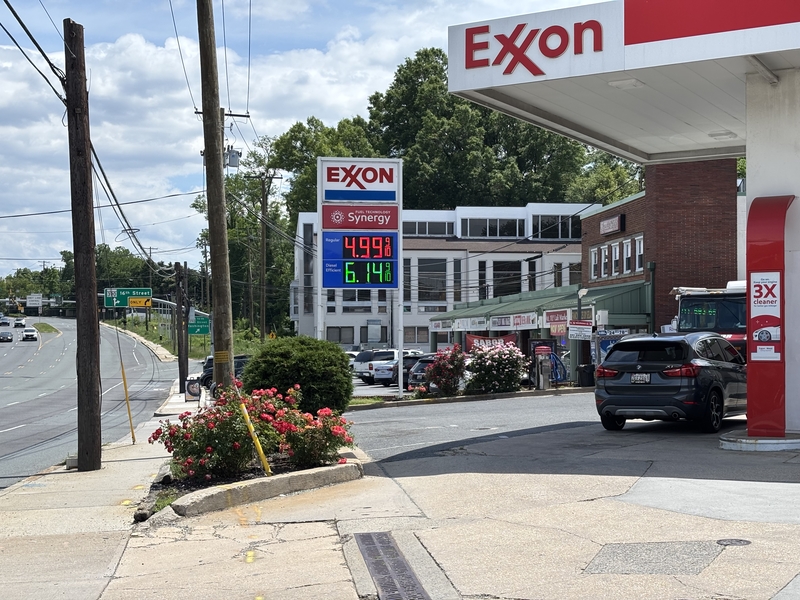
The same survey showed Trump’s approval rating at a second-term low, 34% approval with 58% disapproving. On economic issues, as the price of gas has skyrocketed during the war with Iran, nearly twice as many voters disapproved of Trump’s handling than approved.
Other polls show similar attitudes. Both the preference for Democratic House control and disapproval of Trump have risen steadily.
“Midterms are typically a referendum on the party in power,” Covey said. “So the fact that Trump's approval rating has been under 40% for the past several weeks, and it has obviously been made worse by the war in Iran, is going to be a really significant issue for Republicans.”
Redistricting might cap Democrats’ best-case scenario, but it doesn’t change the underlying conditions, Democratic campaign strategist Tom Bowen said in a Tuesday interview.
“It's going to change some outcomes for sure,” said Bowen. “But the environment is what shapes these races more than anything else. Voters aren’t going to vote on redistricting. What they're going to vote on is high gas prices, and that's going to make seats where Trump did well… it's gonna put some of those seats in play.”
Republicans in the Trump era have also struggled to get their voters to the polls when Trump himself is not on the ballot.
“Your base is depressed,” Bowen said of Republicans. “Sure, you theoretically drew yourself, you know, 10 points of margin. It doesn't matter if the environment is that terrible.”
US House redistricting arms race
Republicans did have a plan to prop up their House majority.
At Trump’s urging last year, a handful of Republican states redrew their congressional lines, beginning with Texas. Missouri, North Carolina and Ohio followed. States traditionally enact new maps once a decade following the census, but that norm has now been shattered.
Democrats responded with a California gerrymander approved by voters. In Virginia, voters also approved new lines but the election was invalidated in May by the Virginia Supreme Court.
California and Virginia are the only Democratic-controlled states to have advanced the new maps. In conservative Utah, state courts have forced adoption of a new map that could allow a Democrat to win a race to represent the Salt Lake area.
Democrats are actively weighing action in Colorado, Maryland, New York and other states, but their ability to act this year is restricted by state limits on gerrymandering and other procedural barriers.
The U.S. Supreme Court’s decision on April 29 in Louisiana vs. Callais then set off a new round of Republican-led gerrymandering. In a 6-3 decision, the court’s conservative majority sharply weakened the federal Voting Rights Act, which had protected districts where a majority of residents belonged to a racial minority group.
The Callais decision only explicitly struck down Louisiana’s congressional map, which contained a second majority-Black district that the conservative justices found unnecessary.
But GOP-controlled states in the South interpreted the decision as a green light to eliminate majority-Black districts, often centered on major cities, that reliably elect Democrats.
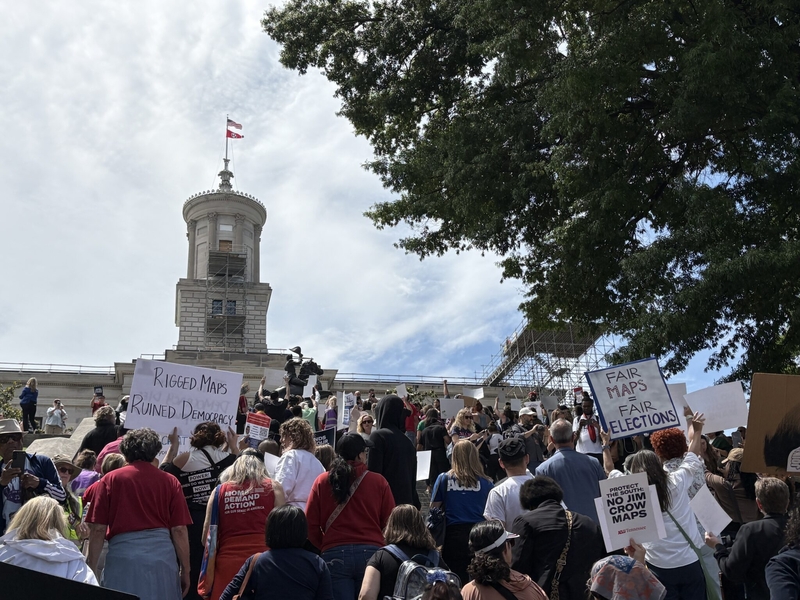
Florida lawmakers passed a new map within hours of the Supreme Court decision. Alabama and Tennessee advanced gerrymanders, with Louisiana expected to follow soon. South Carolina lawmakers are also advancing a new map.
Federal and state court lawsuits have been filed against the maps, leaving open the question of whether judges could eventually block some of the gerrymanders. But opponents of Republican gerrymanders have not fared well in their legal challenges up to this point.
The U.S. Supreme Court has cleared the way for Southern states to act quickly to redraw maps, including lifting a lower court order that had stopped an Alabama gerrymander from taking effect. The justices also sped up paperwork to allow Louisiana lawmakers to move forward on developing a new map.
At the state level, the Missouri Supreme Court last week refused to block a gerrymander of the Kansas City region. Opponents had wanted the court to halt the map until state officials decide enough signatures have been gathered to force a statewide vote over the redrawn lines.
The dust is still settling on redistricting this year, but it so far has given Republicans a moderate edge.
The case for Republicans
While it would take a historical anomaly for Republicans to keep their House majority, the party’s campaign apparatus argues that some variables are in its favor.
Notably, the GOP holds an edge in fundraising and a map with few Republicans running for reelection in districts Democratic presidential nominee Kamala Harris won in 2024.
“House Republicans are on offense and well-positioned to defy history thanks to strong candidates, a historic fundraising advantage, and a message that’s connecting with voters in battleground districts across the country,” Mike Marinella, a spokesman for the National Republican Congressional Committee, wrote in a statement.
“While Democrats remain bogged down by messy primaries, a weak national brand, and a shrinking battlefield, Republicans are building the infrastructure and momentum needed to grow the majority in November.”
Even without redistricting, the 2026 House map favored Republicans: Sixteen Democrats won 2024 races in districts Trump carried, and only three Republicans came from districts that voted for Harris.
Those so-called crossover districts provide a starting point for the number of competitive districts, which continue to shrink as the country becomes more polarized and lawmakers draw U.S. House districts to favor incumbents.
Chris Pack, a Republican campaign strategist, said the situation was reversed in Trump’s first-term midterms, when Democrats gained 40 seats.
“I don't think it’s fair to compare this (year) to 2018,” he said. That year, 23 Republicans represented districts that Democratic presidential nominee Hilary Clinton won. “Now, it's three.”
In fundraising, the two House campaign committees, the NRCC and the Democratic Congressional Campaign Committee, have raised similar amounts this cycle and have roughly equivalent cash on hand.
But the Republican National Committee’s cash on hand dwarfs the Democratic National Committee’s, $117 million to $14 million, according to Federal Elections Commission records filed April 30.
The president’s super PAC, MAGA Inc., has also raised more than $300 million this cycle, which it could spend on congressional races.
Pack also said the party could compete, despite the environment, by emphasizing Democratic positions outside the mainstream.
“It's just really reminding voters that, again, Democrats are far more out of touch with everyday Americans than Republicans are,” he said.
Analysts maintain it is still the GOP at a disadvantage.
“Republicans do have a path — more of a path, certainly, than they did before the Virginia and U.S. Supreme Court decisions,” Covey said. “But they’re still the underdogs.”
All States Newsroom content is free to republish. Read our republishing policy for more information.