RI federal judge strikes down HUD’s 2025 restrictions for Housing First initiatives
Jun 30, 2026 | 3:53 pm ET

Description
A sign displaying the need to protect permanent housing is afflixed to a podium outside the Harold Lewis House in West Warwick on Nov. 20, 2025. (Photo by Nadia Engenheiro, Half Street Group)
A Rhode Island federal judge on Monday ruled that the Trump administration’s attempt to overhaul a key federal homelessness grant program last year violated federal law because officials failed to adequately consider its consequences.
But U.S. District Court Judge Mary S. McElroy stopped short of blocking the Department of Housing and Urban Development (HUD) from slashing the amount of funds that can be spent on permanent housing under its latest Notice of Funding Opportunity for Continuum of Care grants — at least under the existing lawsuits challenging the administration.
Still, plaintiffs are hailing McElroy’s order.
“We see every day that stable housing changes lives,” Michelle Wilcox, CEO and president of plaintiff Crossroads Rhode Island, said in a statement Tuesday. “This decision reinforces what housing providers have known for decades: permanent housing, paired with supportive services, works.”
R.I. housing leaders warn HUD policy change could increase homelessness across the state
HUD had sought to move providers away from the “housing first” model, which prioritizes stable housing before offering case management, mental health treatment, substance use services, and supported employment services.
A coalition of states co-led by Rhode Island Attorney General Peter Neronha filed suit over HUD’s plan on Nov. 25. On Dec. 1, a group of cities and nonprofits led by the National Alliance to End Homelessness and the National Low Income Housing Coalition filed a separate 85-page lawsuit. The coalition includes Crossroads Rhode Island and Youth Pride as well as Santa Clara County, California, and King County, Washington, and the cities of San Francisco; Boston and Cambridge, Massachusetts; Nashville; and Tucson, Arizona.
Both coalitions had sought a permanent injunction after HUD sought to cap how much of the $3.9 billion grant program could be used for permanent supportive housing.
Federal housing officials had planned to divert 60% of the funding historically dedicated to “housing first” programs like permanent supportive units, which provide long-term housing with no preconditions, toward temporary transitional housing.
HUD had framed its updated funding policies as a way to promote “self-sufficiency among vulnerable Americans” and align with President Donald Trump’s July 2025 Executive Order “Ending Crime and Disorder on America’s Streets.”
But plaintiffs argued the Trump administration violated the Administrative Procedure Act since the 2025 grants were already appropriated by Congress. Critics warned the changes would jeopardize the housing of more than 170,000 people across the nation, including over 1,000 in Rhode Island.
McElroy, a first-term Trump appointee, similarly found the policy update was arbitrary and capricious because officials failed to consider the impact that its decision to eliminate the Housing First approach would have on the existing system.
“HUD failed to meaningfully balance its new emphasis on fostering a competitive environment for grantees to seek funding against HUD’s prior concern with housing stability,” McElroy wrote. “The actions undertaken by HUD in attempting to hastily eliminate its Housing First approach serve as the hallmark of unreasoned decision making.”
A spokesperson for HUD did not immediately respond to request for comment.
The department had attempted to make the lawsuits moot by rescinding its initial notice just an hour before a Dec. 8 court hearing. A new notice was issued Dec. 19, hours after McElroy issued a preliminary injunction forcing HUD to maintain the status quo in its funding for the Continuum of Care program.
“While HUD may alter its approach, identify new goals, and award funds in support of achieving them, it may do so only after conducting research and undertaking a public notice and comment process,” McElroy wrote Monday.
McElroy’s latest ruling means Housing First will be prioritized for the time being. HUD issued a new funding notice for federal fiscal year 2026 that again attempts to shift funding guidelines for homelessness services away from the Housing First model to “treatment, recovery and achieving self-sufficiency.”
“The ‘Housing First’ experiment failed Americans by warehousing the vulnerable without results,” Housing Secretary Scott Turner said in a June 1 statement. “This ideology promised to end homelessness. Instead, billions of taxpayer dollars were spent while homelessness increased to record levels.”
The actions undertaken by HUD in attempting to hastily eliminate its Housing First approach serve as the hallmark of unreasoned decision making.
Homelessness across the country has decreased 3% over the last year, according to HUD’s latest Point-in-Time census. Rhode Island saw a 6% decrease in homelessness between 2025 and 2026.
In the wake of HUD’s latest attempts to shift grant funding away from permanent supportive housing, the plaintiff coalition of communities and organizations filed a supplemental complaint on June 22 challenging that funding notice.
But McElroy in her order ruled against the filing, writing the claim would “unduly elongate the court’s resolution of the NOFOs (Notice of Funding Opportunity) at issue.”
“The plaintiffs are undoubtedly free to file a separate action challenging the conditions contained within the June 2026 NOFO should they choose to do so,” McElroy wrote.
Neronha said in an emailed statement to Rhode Island Current his office “won’t hesitate to act if necessary.”
“While the Trump Administration will almost certainly continue to target the most vulnerable Americans, we will continue to fight for those who can’t fight for themselves,” he said.
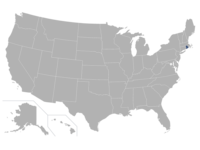
Providence, RI