Rhode Island to receive at least $49.4 million in landmark Meta settlement over addictive features
Aug 26, 2026 | 6:39 pm ET

Description
A smartphone shows Instagram's settings page. The photo-sharing platform's owner Meta agreed to pay nearly $18 billion to an array of U.S. states over claims its platforms intentionally addicted teens. (Photo by Alexander Castro/Rhode Island Current)
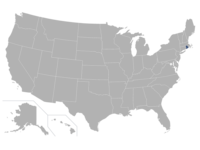
A yearslong court battle against Meta will see Rhode Island receive a payout of at least $49.4 million as part of the windfall won by a multistate effort alleging the social media behemoth knowingly designed Instagram to addict young users while misleading the public about the risks involved.
Rhode Island Attorney General Peter Neronha joined his counterparts in 46 other states and several U.S. territories Wednesday in announcing the approximately $17.1 billion settlement.
Rhode Island’s share of what Neronha’s office called “one of the largest state consumer protection settlements in history” will be at least $49.4 million but could be as high as $64.5 million
“While there is still much work to be done, this agreement is a significant step forward safeguarding our children from the well-documented harms of social media use by young people,” Neronha said.
The much higher ceiling on Rhode Island’s payout is not a sure thing. The settlement has a guaranteed portion and a contingent portion, and notes Meta will disburse about 70% of the money over 10 years — the guaranteed portion.
The internet is putting kids at risk. These mom lawmakers want to force tech firms to make it safer.
But the payout for the remaining 30% or so depends on if “all Core Industry Members with annual profits above $10 billion” — or Snap, TikTok and YouTube, per the settlement text — adopt comparable protections and settlements with participating states.
“The ways in which our children engage with social media, and technology generally, are constantly changing,” Neronha said, “and as such, we must continue to adapt our approach to online safety.”
In addition to the cash, Meta must also make changes to its flagship platforms, Facebook and Instagram, for users ages 13 to 17.
New limits on use
The 130-page consent decree will have Meta introduce a number of stipulations on teens’ use of its platforms, including a combined two-hour daily time limit across the company’s products for most uses. If a teenager uses up all their allotted time, they will be locked out until midnight, barring the intervention of a parent or guardian, who will be able to link their account to their child’s and unlock a less (or more) restrictive setting if desired.
Messaging, account settings and “longform content” — which the settlement defines as “a piece of video or audio content with a duration of at least 22 minutes that Meta has determined with a high degree of reliability to not have been artificially extended” — are all exempt from the two-hour time limit.
Should Meta’s competitors and “core industry members” Snap, TikTok and YouTube also enter into similar agreements, the time allotment would drop to an hour daily — and also trigger the remainder of Meta’s payment.
Messaging will also remain available between midnight and 6 a.m. in the user’s local time, when access to most functions of the platforms are otherwise blocked. Most push notifications, meanwhile, will be blocked daily from 10 p.m. to 7 a.m., as well as during school hours.
Within four months, Meta must provide teens with the option for a non-personalized home feed. The settlement also mandates that teens not be allowed to use certain beauty filters on their photos, which the settlement specifically defines as an “effect that distorts, sculpts, redefines, or idealizes a user’s face in a way that cannot be achieved without cosmetic surgery or extreme makeup.”
Meta will need to fortify its age verification process, and can draw on methods including identification documents, facial age-estimating technology, third-party verification services and Meta’s own age-prediction models. Accuracy benchmarks for those systems — as well as a separate set of standards to detect accounts belonging to children under 13, which the company already prohibits — are specified in the settlement.
As for enforcement, the attorneys general are not leaving it up to Meta, at least not without an additional watchman providing oversight. Per the settlement terms, an independent auditor will be given access to relevant company data, documents, systems and personnel as part of a regular assessment of compliance.
The nationwide investigation began back in 2021, when dozens of attorneys general banded together to scrutinize Meta’s platform design. Over the course of the suit, the states alleged that Meta knew Instagram’s design could harm young users and their mental health.
As is the case with many settlements, Meta’s agreement to the terms does not “constitute an admission by Defendant of any liability, wrongdoing, or violation of any local, state, federal, or international law,” according to the settlement.
Providence, RI