Restraining Orders Can Fail Abuse Victims. These States Have Ideas
Sep 09, 2026 | 6:01 am ET
Description
Photo courtesy of Honolulu Civil Beat
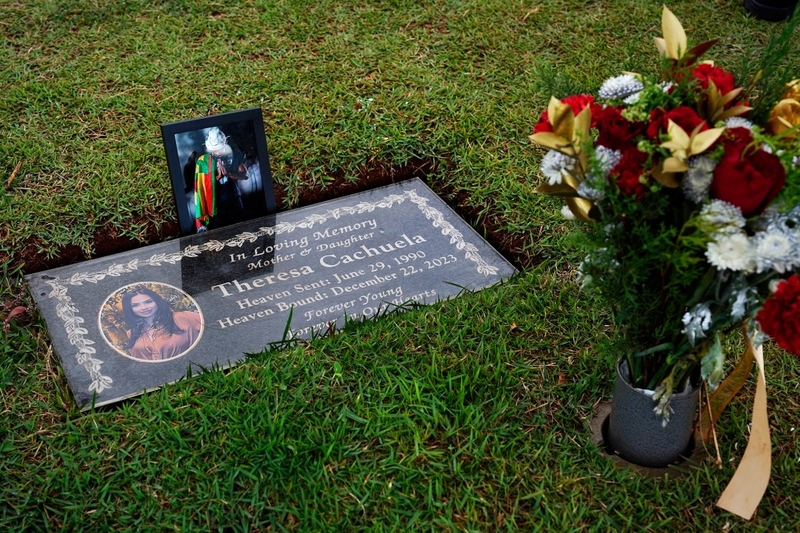
Theresa Cachuela was killed by her estranged husband at a Central O‘ahu mall parking garage in 2023 despite having a temporary restraining order against him.
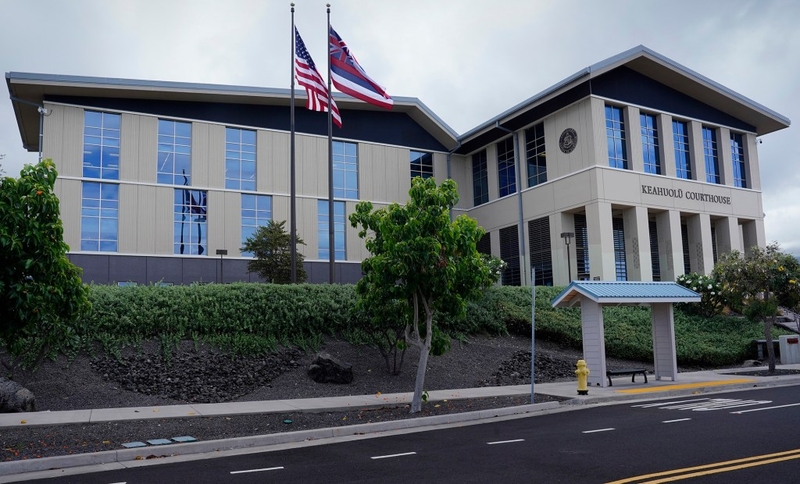
Just over a week later, Elizabeth Fernandez was killed by her ex-boyfriend at her Big Island home. She also had a temporary restraining order.
Later that year, Janinekara Sturgeon was granted a temporary restraining order against her boyfriend after he grabbed her by the neck and shoved her up against a wall. He killed her four months later.
In each of these cases, women tried unsucessfully to seek protection from their abusers.
Domestic violence advocates and law enforcement officials from across the state have been studying the shortfalls of Hawaiʻi’s temporary restraining order and domestic abuse protection order laws as part of a working group formed in 2025. They are also seeking input from survivors of domestic violence through an anonymous survey that will be open through Oct. 1.
“The more input that we can get, I think the more robust understanding of the experience will be,” said Llasmin Chaine, executive director of the Hawaiʻi State Commission on the Status of Women, who is part of the working group. “And those lived experiences will help inform the changes that get pursued.”
Gaps in the system include weak enforcement of temporary restraining order — or TRO — violations, a confusing and complicated court filing process, and a lack of legal aid and advocacy services for survivors, said Kerrie Urosevich, executive director of the Domestic Violence Action Center. There is also a dearth of other needed supports, like safe, affordable housing for victims who need to flee.
Cachuela's mother, Lucita Ani-Nihoa, said she's glad a group is looking for ways to improve Hawaiʻi's laws for domestic violence victims. She's been frustrated in the past by slow-moving processes that seem to weigh the rights of abusers over the safety of victims. From her point of view, her daughter was failed by a system that didn't make her feel supported and, ultimately, didn't protect her.
"Everyone is right when they say it's only a piece of paper," she said of TROs. "It won't stop the abuser from getting a gun, and it won't stop them from using it."
The group, which has met almost monthly since fall 2025 and includes police chiefs, prosecutors and advocates from around the state, will submit a report to the Legislature at the beginning of next year outlining recommendations to improve survivor safety, Chaine said.
In the meantime, Civil Beat spoke with officials in three different states who have been working on their own innovative ways to address domestic violence.
Firearms Enforcement In Washington
When a temporary restraining order is filed in King County, Washington, a specialized unit ensures all firearms are removed from the accused abuser.
The Regional Domestic Violence Firearms Enforcement Unit, which includes police officers, prosecutors, victim advocates and other specialists, was created in 2018 to help solve a major problem in the state: Despite having active restraining orders against them, many accused abusers were holding onto their firearms.
A study published by the Washington State Coalition Against Domestic Violence in 2015 found that in 54% of fatal domestic violence shootings, the perpetrator was prohibited from having a gun.

Federal law mandates that anyone subject to a long-term domestic violence protection order must relinquish their firearms, but in Washington, enforcement of that law was operating on an honor system. Even after a state law was passed in 2014 allowing courts to issue “orders to surrender weapons” in domestic violence protection order cases, law enforcement was still relying on people to relinquish firearms themselves. They weren’t doing follow-up investigations.
“Like, ‘Hey, you can’t have your guns, turn them in,’ and that was it,” said Sandra Shanahan, program manager for the firearms enforcement unit. “For a lot of people, they were like, ‘Well, nobody's going to do anything, nobody's checking.’”
Under Hawaiʻi law, the targets of temporary restraining orders and domestic abuse protection orders must relinquish firearms to police when they are served. Officers can confiscate firearms and ammunition in plain view when serving the orders, but they cannot search a property without consent. If the person being served a restraining order has registered firearms that they have not handed over, police can apply for a search warrant to try to find them, but if someone has hidden, unregistered firearms, there isn’t much police can do.
The Washington unit is focused on getting hidden firearms out of abusers’ hands by investgating all restraining order and protection order cases where victims say firearms are present.
The advocates dig into each case and review documents including victim testimony, bills of sale, pawn shop records, police reports from various jurisdictions and other court records that may contain evidence of the abuser’s firearm ownership and submit them to the court.
“When the court is reviewing each of these cases for compliance, they can say, ‘Hey, it looks like you purchased a pistol in 2022,” Shanahan said. “‘Tell me what happened to that firearm.’”
If an accused party claims the gun was lost, stolen or sold, the judge will follow up and ask for corroborating evidence such as a receipt of sale or police report documenting it was stolen.
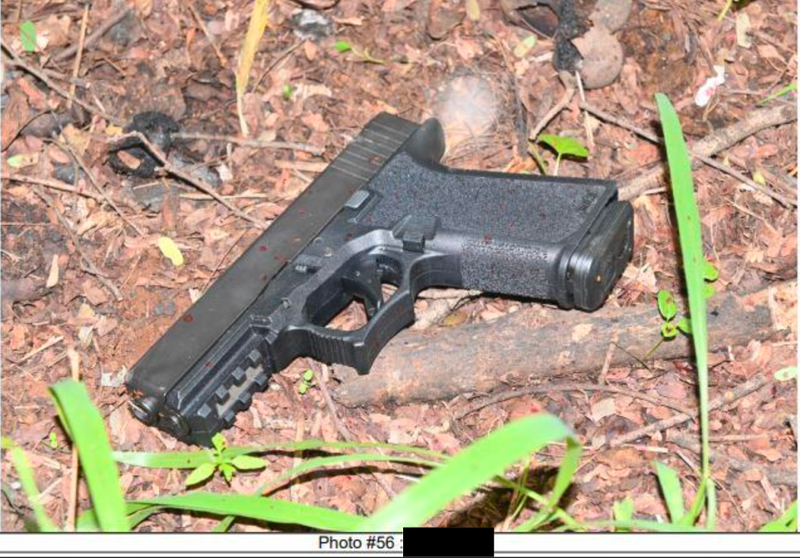
Ultimately, the firearms enforcement unit faces the same limitations cops have always faced in these cases. If the firearm isn’t in plain sight of a police officer, they can’t go rummaging through people’s closets to look for it, Shanahan said.
Despite the limitations, King County officials say having a unit focused on firearms has created a culture of compliance. For people served a restraining order, just knowing that someone is looking into their firearms history can be enough to make them turn over a weapon that may have otherwise been left sitting in a drawer.
A University of Washington study on the firearms enforcement unit found that the number of firearms relinquished in domestic abuse protection order cases dramatically increased after the creation of the unit.
The study, published in the Journal of Criminal Justice in February, analyzed domestic violence protection order cases in the two years before and after the unit was created. Researchers found the number of cases in which at least one firearm was relinquished nearly quadrupled from 56 before the unit’s creation to 210 in the years that followed. Researchers also found that accused abusers were 27% less likely to be arrested for new crimes in the two years following their protection order.
“The needle is moving, and the culture is changing,” Shanahan said. “We recognize that these are dangerous, volatile situations, and if we remove the firearm from that situation, we can save lives.”
GPS Tracking Of Violent Abusers In Oklahoma
Starting in November, people who have been charged with certain domestic violence offenses will need to wear GPS ankle monitors in Oklahoma as a condition of bail.
“A judge said this would have saved at least three women’s lives in the last six months,” said Oklahoma Sen. Bill Coleman, who introduced the bill establishing the requirement.
Any defendant charged with strangling a domestic partner or pointing a gun at them will be required to wear a monitor, Coleman said. Strangulation in domestic violence situations is a common precursor to murder, according to a 2008 study published in the National Library of Medicine.
Victims can also sign up to receive text alerts if the abuser comes within a specified distance of their home or business. Local law enforcement will also be alerted.
Coleman said he wanted to author the bill after a member of his own family was the victim of domestic abuse.
“They were very worried about where this person was, what this person would do next,” he said. “I just felt that was not very fair at all.”
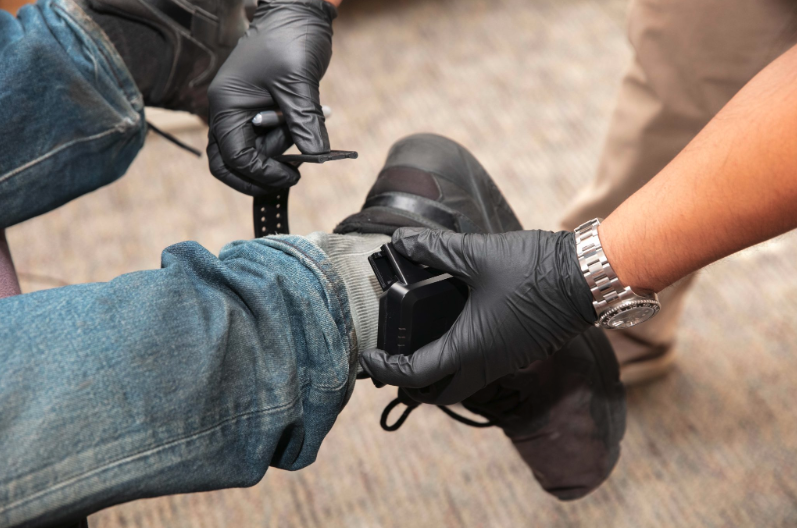
While most states allow judges to order defendants to wear ankle monitors in a variety of criminal cases, including domestic violence cases, only a handful of states actually require it.
Hawaiʻi, for example, uses electronic monitoring for some criminal defendants, but there is no requirement to issue monitors in domestic violence cases.
In 2024, Tennessee became the first state to require GPS monitoring of defendants in violent domestic abuse cases. Florida this year also passed a law establishing a pilot program in two counties ordering violent domestic abuse offenders to wear ankle monitors while on probation.
A TRO Registry In Indiana
In Indiana, temporary restraining orders are housed in a statewide, online registry. That database has helped streamline the filing process and ensure courts, police departments and members of the public across jurisdictions have instant access to information about TROs filed in the state.
The registry, which was implemented in 2009, eliminated a paper-based system that required police to pick up physical copies of TROs at courthouses before they could be served, resulting in frustrating and sometimes dangerous delays, said Mary DePrez, director of the Indiana Office of Court Technology.
Petitioners were previously asked to carry copies of their TROs with them at all times because if they needed to call police on their abuser, officers may not be aware of the TRO and wouldn’t have a quick way to look it up, she said.
After the registry was created, Indiana received a grant to purchase computers and printers for police vehicles so officers could access, print and serve TROs at any time, she said. Members of the public can also access the TRO registry and search it by name.
Perhaps most meaningful for victims was an update made in 2019 that lets people file TRO petitions completely online, said Melissa Arvin, a family violence resource attorney with the Indiana Judicial Branch.
Hawaiʻi is working on implementing a TRO e-filing process in the Third Circuit on the Big Island, though it has not yet been rolled out to the public.
Arvin said the ability to file a TRO petition from anywhere at any time — removing the need to arrange for childcare, take time off work or find transportation to court — has been life-changing for victims. The online portal takes them through a series of trauma-informed questions about their relationship to their abuser and the series of events that led to them wanting to file the petition. Victims can also upload exhibits and evidence, such as text messages, photos, videos and audio recordings.
The online question-based system makes it "much easier for that survivor to feel like they are capable of doing this themselves," Arvin said, "and getting that order themselves."

Honolulu, HI