WA Supreme Court candidates make their case as high-profile election nears
Oct 06, 2026 | 5:21 pm ET
Description
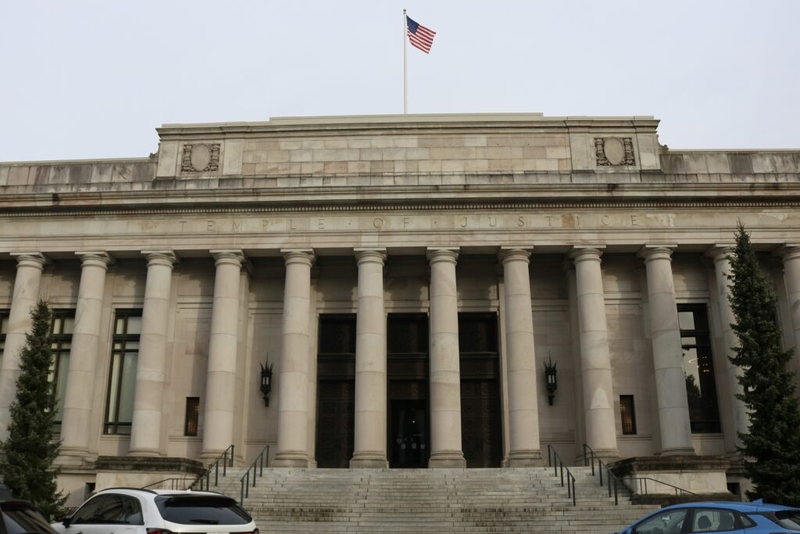
The Washington state Supreme Court building in Olympia. (Photo by Aspen Ford/Washington State Standard)
Less than a month remains until an election that will transform Washington’s state Supreme Court.
Two new justices will join the nine-member high court, and two new justices appointed by Gov. Bob Ferguson with no prior judicial experience face their first tests at the ballot box. The chief justice is also seeking another term.
It’s very rare to have a majority of the court up for election in one year.
Much of the focus on the candidates is on how they’d decide cases, including on civil and criminal matters, especially as Washington’s new high-earners income tax is set to go before the court. But the justices also set the conversation on the direction of the court system. For example, the justices last year slashed caseload limits for public defenders, and will soon consider reforms to bail bond policy.
Combined, justice candidates have raised well over $2 million for their campaigns, far more than in past election cycles when races drew far less competition and attention.
The races serve as statewide proxy battles between conservatives and liberals, with four challengers endorsed by the state Republican Party against candidates favored by Democratic leaders. Formally, the races are nonpartisan.
In recent forums in Lacey and with the King County Bar Association, the candidates listed the most pressing challenges facing the judicial system, the role of artificial intelligence in the justice system and public perception of the court, among other topics. Judicial candidates are barred from discussing legal issues that could come before the court during the campaign.
Ballots will be mailed to voters by Oct. 16. Election Day is Nov. 3.
Position 1
Justice Colleen Melody has put a heavy focus in the campaign on the work the Supreme Court does outside of hearing oral arguments and issuing decisions on cases. Currently, those issues include language interpreter shortages, immigration arrests at courthouses and limited court system accessibility.
“We need to be talking with the judges and the court administrators on the ground in the different communities to understand what barriers they’re facing and to do kind of real elbow grease solutions to find solutions to those, so that we can have a court system that can and should be the envy of the nation,” Melody said.
Tax attorney Scott Edwards, who has support from the state Republican Party, wants to be an “independent voice” with a focus on the rule of law on the court. His priority to improve the court system is to “restore trust in the Supreme Court itself.”
“We have constitutional elections for Supreme Court, I believe, because of concern about appointed justices being likely to have the same philosophy and pursue the same policy objectives as the person that appointed them, and Supreme Court justices should be responsible to the people, not to the governor,” Edwards said.
Melody joined the court upon Ferguson’s appointment at the beginning of 2026, after the retirement of Justice Mary Yu. She defended Washington’s system of selecting justices.
“I have to stand immediately for my election right after being appointed, and you get an immediate say on whether you want me or not, and that’s a much more accountable system than what happens at the federal level, where once judges are appointed, they hold their position for life and they don’t stand for election ever again,” Melody said.
Edwards also takes issue with Melody thinking so much of a justice’s work is in overseeing the state’s judicial system, beyond the Supreme Court.
“My opponent believes that half of the job is being an advocate to the legislature and an advocate for other things,” Edwards said. “Her entire career was advocating for certain constituents.”
Melody joined the court after serving as the head of the civil rights division in the state attorney general’s office. She thinks Edwards would face a “pretty steep learning curve” going from tax attorney to Supreme Court justice. He has tried cases before the court, including an unsuccessful challenge to the state’s capital gains tax.
Melody has the support of many Democratic groups.
Position 3
Much attention is on how the justices feel about adhering to legal precedent, given a nearly century-old decision from the state Supreme Court ruling a progressive income tax unconstitutional.
King County Superior Court Judge Jaime Hawk said “overturning precedent should be approached very cautiously and carefully, and has to meet those thresholds of incorrect and or wrongfully decided and harmful.” She pointed to decisions in recent years to overturn “harmful and incorrect” precedents in the wake of the racial justice movement.
Her election foe, Mason County Superior Court Judge David Stevens, pointed to the court’s Blake decision in 2021 striking down Washington’s drug criminalization law as a case where overturning precedent was done poorly, even if he agrees that state statute may not have been constitutional.
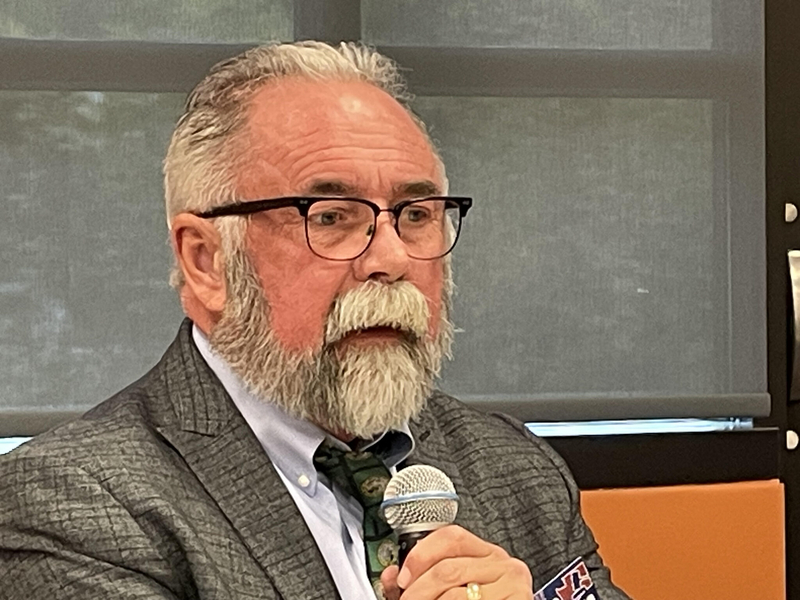
Stevens shared Edwards’ concern about appointed justices. Noting proposed changes to the bail system and juvenile cases, Stevens said he believes the current justices are “fundamentally changing the criminal justice system in Washington state, and I think this is because they’re ideologically driven.”
Hawk called for upping juror pay. Most Washington jurors are paid $10 per day. This hasn’t changed since 1959, creating a barrier to a true jury of one’s peers in local courts, she said.
Position 4
State appeals court Judge Ian Birk found himself in hot water recently for calling his opponent, King County Superior Court Judge Sean O’Donnell, a closet Republican. This led to a letter from dozens of judges calling out Birk for his partisan comments. O’Donnell says he has support from both sides of the political spectrum.
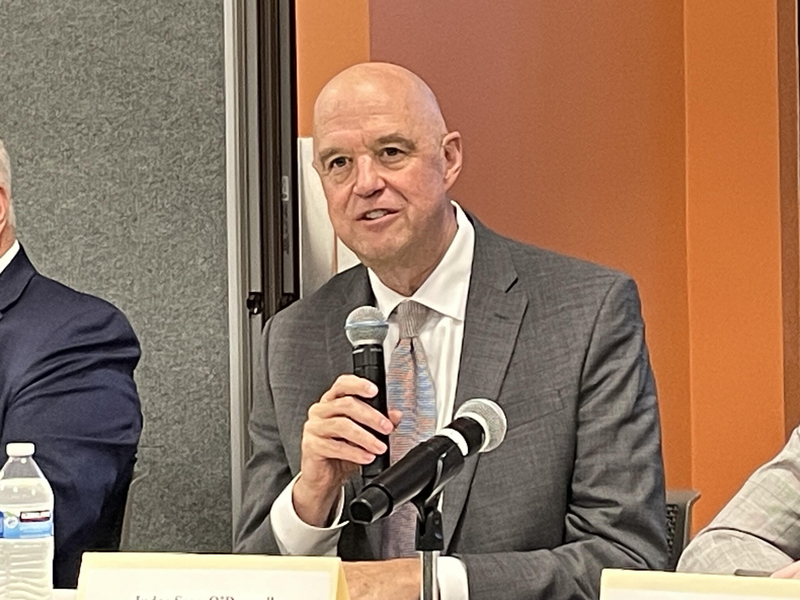
Despite the controversy, Birk said he sees the work of a jurist as “an inherently non-political thing.”
O’Donnell thinks voters have three reasons to vote for him: “My experience, my impartiality, and my ability to have a vision and work with others to get stuff done.”
More than other candidates, O’Donnell has played up the importance of the Supreme Court setting rules for the use of generative artificial intelligence for judges and lawyers. He cited a spike in litigants filing court briefs using this technology. He thinks its use should be limited.
Birk agrees AI will be a major topic of conservation for years in the legal field.
“On the other hand, we’re not close to having it generate legal work product yet because it doesn’t understand the difference between stringing together words likely to come after the ones that have already been put down versus making a cogent, coherent argument that’s rooted in law and and what the law is trying to accomplish,” he said.
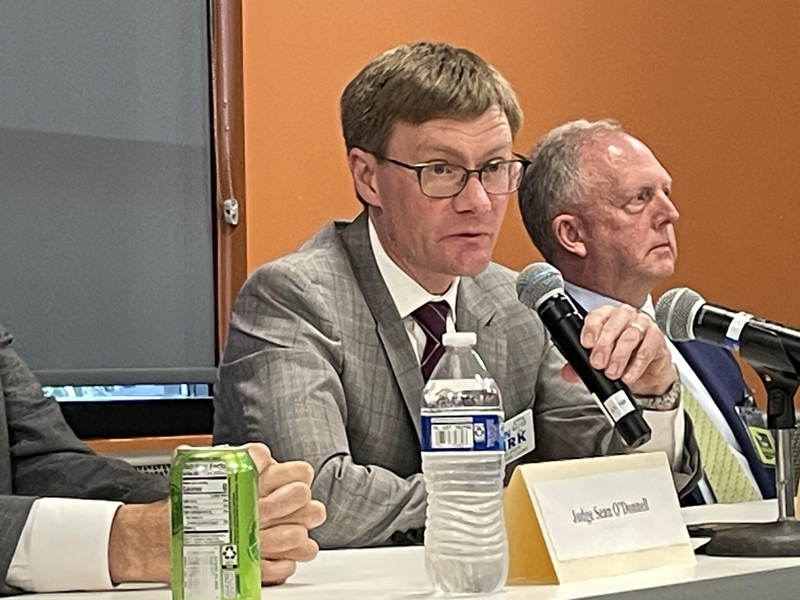
Birk and O’Donnell will meet for a debate Friday morning streamed by TVW.
The winner of this campaign will replace retiring Justice Charles Johnson.
Position 5
Justice Theo Angelis is running to retain his seat on the court for the first time. Ferguson appointed Angelis to the court this year after Justice Barbara Madsen’s retirement.
His opponent, Dave Larson, is a retired Federal Way Municipal Court judge.
Larson, like Stevens and Edwards, wants to reform the way new judges are selected. He is calling for a bipartisan Judicial Elections Commission to bring agreed-upon candidates for the governor to consider for appointment. He has support from the state Republican Party, and nearly won a campaign to join the court two years ago.
Angelis takes issue with the notion that you can tell how a justice will rule on a given issue based on who appointed them. He promised to be “an independent thinker.”
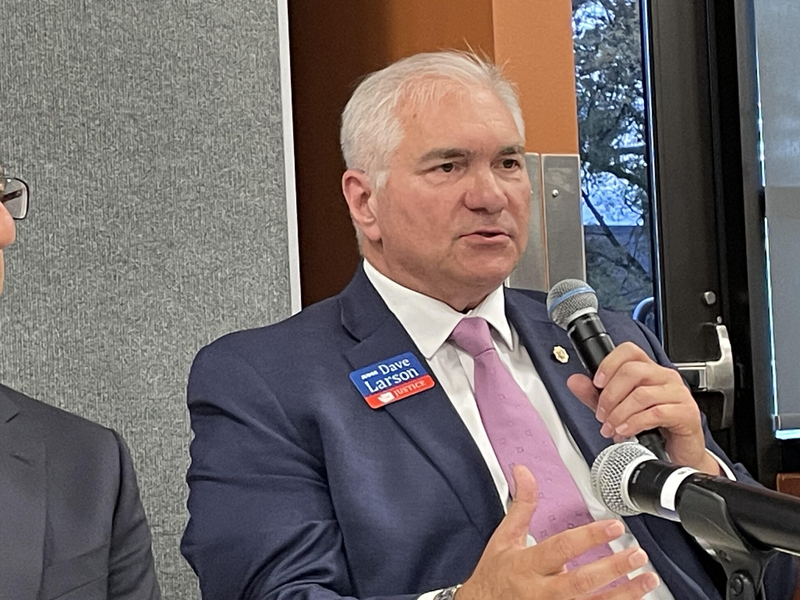
“But the reality is this: all of us have individual experiences and biases that color our thinking of issues that come before us,” he said. “If we identify the potential biases that we have, we can do a good job in counteracting them. So for every case that comes before our court, I actually make a physical list of potential biases.”
Angelis said he’s already had to rule in ways he thought were incorrect in his short time on the court, “but that’s what the law requires.”
Angelis, like Hawk, called for updating pay for jurors.
Position 7
Chief Justice Debra Stephens, who has been on the court since 2008, takes issue with critics who believe judges are motivated by ideology.
“I think some of the people who say it just comes down to ideology listen to what other people think, and they don’t necessarily read what the courts have written,” Stephens said. “In some ways, to be a judge with integrity, you have to just let the chips fall where they may in terms of that perception, and do the careful, detailed work of walking through precedent, which is what I try to do every day in writing difficult decisions.”
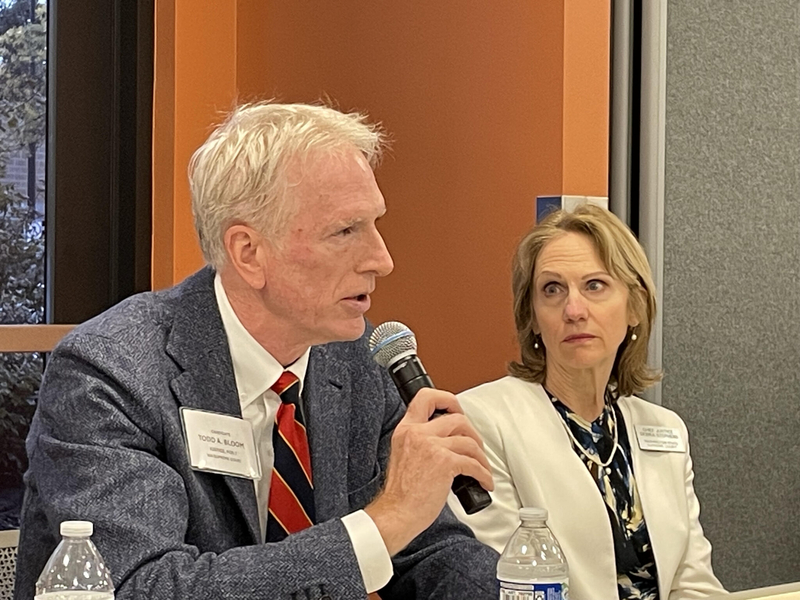
Todd Bloom, an attorney and veteran, thinks he and his opponent would reach their decisions differently.
“‘What does that constitution actually say, and what do the court cases actually say?’ Bloom said of his approach. “Instead of trying to figure out what the values are and then discern how I’m going to write the result either to support my interpretation of the values or some other policy resolve.”
Bloom has the backing of the state GOP, while Stephens has the support of all of her colleagues on the court.
Olympia, WA