Reporting shows telemarketing calls came from Oklahoma prisons — so much for rehabilitation
Sep 14, 2026 | 6:29 am ET
Description
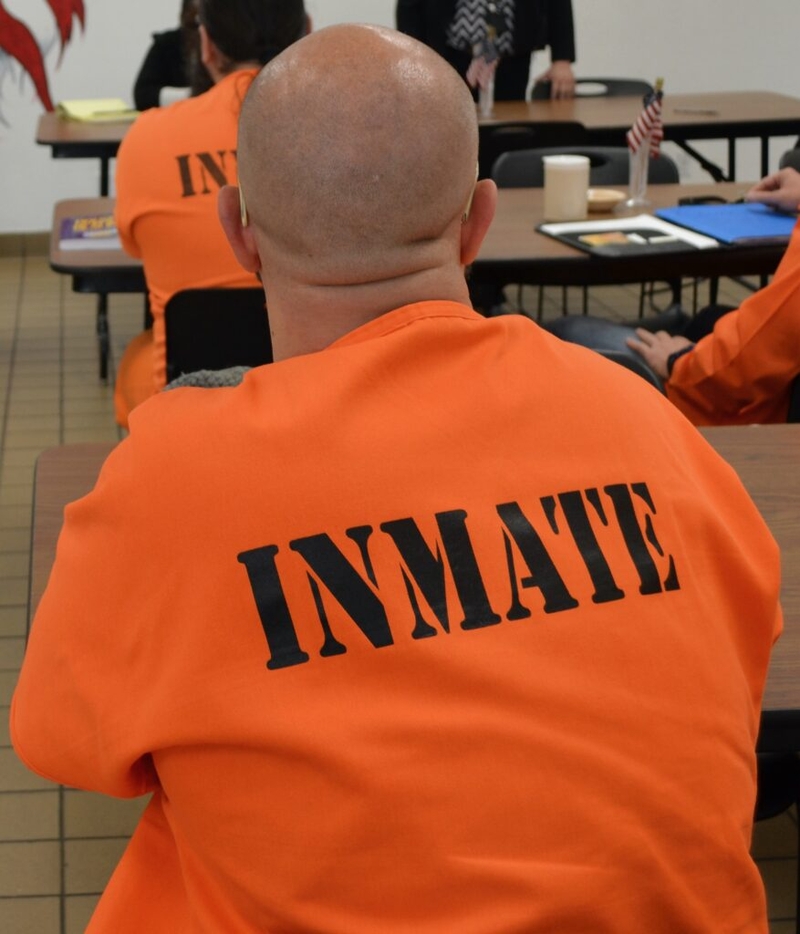
An inmate at Joseph Harp Correctional Center in Lexington is pictured on Friday, Oct. 13, 2023. (Photo by Carmen Forman/Oklahoma Voice)
Despite having my phone number on the federal Do Not Call Registry, it feels like there’s been an enormous spike in the number of telemarketers trying to sell me on everything from new roofs to insurance policies to political candidates.
Ironically – as I was writing this – my phone rang, showing a number from the Texas Panhandle area code that my phone provider flagged as a “spam risk.” Spoiler alert: This telemarketer has been using a variety of different numbers to aggressively try to convince me to give away my personal info to purchase a scammy-sounding Medicare policy.
This continued onslaught of calls is probably why I was so annoyed to read a story from nonprofit news outlet Oklahoma Watch that found the state Department of Corrections has been operating four of its own telemarketing call centers from within prison walls.
Corrections Executive Director Justin Farris signed his name on a contract obligating department inmates to make phone calls between 8 a.m. and 5 p.m. Monday through Friday that are political in nature or encourage people to change insurance providers.
Under the contract, the department guarantees incarcerated people will have access to computers and internet and that the agency will be responsible for any IT issues at these call centers that, as of Aug. 21, were operating at Oklahoma prisons in Helena, McLoud and Lexington.
In exchange for this work in “telemarketing and political polling activity,” the third-party vendor promised to pay the corrections department $10 per hour. Corrections has apparently been paying the inmates working in these call centers a measly $2 per hour — well below the minimum wage, according to Oklahoma Watch’s reporting.
Oklahoma inmates were making calls on behalf of this contractor in states like Connecticut, Kentucky, Ohio and Florida, according to Oklahoma Watch. They also waded into Oklahoma’s elections, asking about Republican gubernatorial candidates Gentner Drummond, Mike Mazzei, and Chip Keating. They also asked about Jon Echols, the GOP nominee for attorney general, and state Rep. Justin Humphrey, R-Lane. Humphrey is an outspoken critic of Farris, the corrections department leader, and ran unsuccessfully earlier this year for lieutenant governor.
At one prison, as many as 120 inmates each made up to 800 calls each day, and had access to information such as people’s names, addresses, phone numbers and even their current insurers, according to Oklahoma Watch.
When asked about their telemarketing contracts, the Corrections Department essentially said that what they’re doing is legal and the material complies with state and federal law.
But that’s not the point.
The point is Oklahoma taxpayers should not be footing the bill for more annoying telemarketing operations, particularly when the goal of incarceration is to rehabilitate and set inmates up for success when they are released back into society.
I fail to see how having them to do a job that is universally scorned is rehabilitative or the type we would say is contributing to society.
Rather than setting them up for success, we’re more likely getting them hung up on or cursed out.
This contract also raises safety issues. As part of their sentences, offenders are often restricted from contacting various people, including their victims. Yet we’re giving them a treasure trove of random people’s contact info.
Giving inmate carte blanc access to people’s information and computers has already created one really bad scenario.
In 2021, an Oklahoma inmate already serving multiple life sentences for child sexual abuse, used the computer in his prison call center to download child sexual abuse material, according to Oklahoma Watch’s reporting.
After that, Oklahoma prison call centers were shut down. But lawmakers apparently never got around to abolishing them. Now they’re back with a vengeance, targeting unsuspecting Oklahomans who would already give their right arm to stop telemarketers.
So here we are, stuck with tone-deaf prison leaders who think it’s OK to make a quick buck at the taxpayer expense.
Oklahomans expected their leaders to implement policies that make all our lives better. Using the tax dollars we pay to keep the power on at prisons to run call centers does not meet that threshold.
But let’s not forget that while operating these call centers, the Corrections Department is engaging in a very controversial process of using and profiting off of captive labor.
Nationally, inmates do not have the same labor protections as the rest of us and are more vulnerable to “labor exploitation and abuse,” according to a report published by the American Civil Liberties Union’s Oklahoma chapter.
The ACLU found that while slavery and involuntary servitude is constitutionally prohibited, inmates don’t have the right to refuse to work.
About 76% of them nationwide said they were forced to work. If they refused, they faced punishments such as being placed in solitary confinement, losing visitation privileges or missing out on the ability to reduce their time for good behavior, according to the report.
They’re also not protected by minimum wage laws.
Of those surveyed nationwide, 70% reported making so little working their prison jobs that they could not afford basic necessities. The same percentage also said they received no formal training.
What does $2 buy right now? In this economy, not much.
The incarcerated people working in Oklahoma’s call centers said they’re being punished for not meeting quotas or expectations of their supervisors, though they did not say how.
That is absolutely outrageous.
Regardless of what they were convicted of to land themselves behind bars, these are vulnerable people at the mercy of an agency that controls where they eat, sleep, are housed and exercise.
They can’t vote. They’re largely cut off from their families and the outside world.
By allowing these call centers to continue to operate, state leaders are sending their constituents a message that they think this is an appropriate way to treat inmates and use taxpayer resources.
It’s not.
The majority of those in our prisons will be released one day, and we need to give them skills to be productive and successful.
And if someone at the Corrections Department thinks call centers are a way do that, then they obviously live on a different planet than the rest of us.
Oklahoma City, OK