Parents urge NJ to mandate health insurance coverage for rare pediatric condition
Sep 14, 2026 | 7:12 am ET
Description
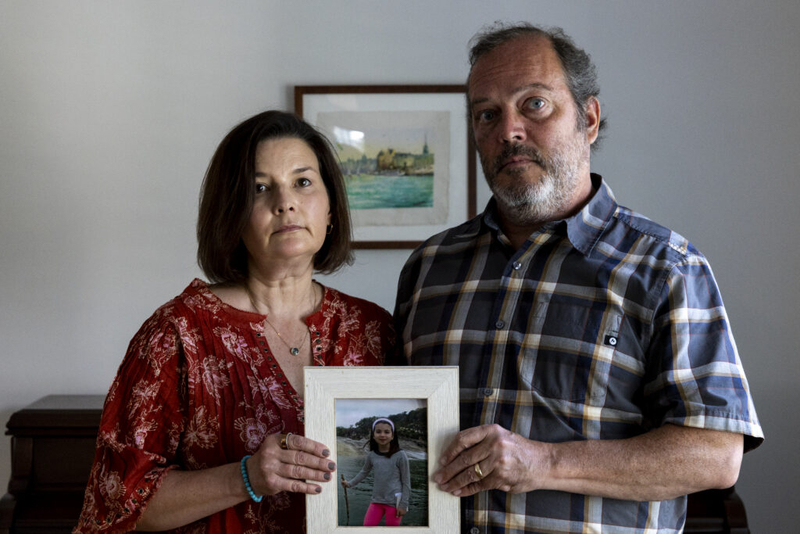
Alissa Johnson and Curt Johnson hold a photo of their daughter, Louisa or "Lulu,” in their Maplewood home on Sept. 4, 2026. Lulu died by suicide while experiencing a flare-up of a rare syndrome known as PANDAS in July 2021. (Photo by Anne-Marie Caruso/New Jersey Monitor)
Cece Moos has spent 17 years learning how to live with a rare autoimmune disorder that can attack her brain and quickly send her into a physical and emotional spiral.
It took three years to diagnose, treatments are largely experimental, and there is no cure.
For Moos, who lives in Bernardsville and is now 25, attacks can be held at bay with a simple over-the-counter antihistamine. But some patients with the condition — pediatric acute-onset neuropsychiatric syndrome, or PANS — only truly improve with more costly treatments, including plasma infusions that parents say are routinely denied by insurance companies.
Moos and her mother, Ashley Moos, are among a group of advocates urging New Jersey lawmakers to adopt legislation that would require commercial insurance companies to cover the disorder, which is thought to be triggered by exposure to a bacteria, virus, or other toxins, and PANDAS (pediatric autoimmune neuropsychiatric disorders associated with streptococcal infections), a version linked specifically to strep infections. Outbreaks come on suddenly and result in obsessive-compulsive tics and potentially deadly psychotic symptoms.
Cece Moos said her symptoms emerged one day when she was 8, following a stomach bug that swept through her classroom. Moos said she is glad knowledge of the disorders is growing, but said much more needs to be done to help families who struggle to get kids diagnosed and treated.
“It’s really validating now that this is a thing and there’s a reason for it. When you’re younger, you just kind of push it all down and don’t talk about it and it was really frightening,” Moos, who also suffers from Lyme disease and other chronic conditions, told the New Jersey Monitor.
A handful of Democratic and Republican lawmakers have signed on to support the legislation, first introduced in the fall of 2025, but it has yet to be posted for a hearing. The state Senate’s chief sponsor, Sen. James Beach (D-Camden), did not respond to a request for comment.
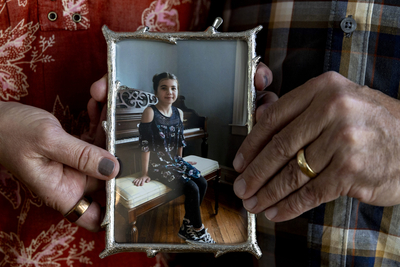
Alissa Johnson’s daughter Louisa, or Lulu, was 14 years old when she took her own life while experiencing a PANDAS flare in July 2021, an outcome experts say is not uncommon.
“There are children and families in New Jersey that are impacted by these truly devastating conditions that cannot wait,” said Johnson, who lives in Maplewood.
The family established the Louisa Adelynn Johnson Fund for Complex Disease, which advocates for awareness, research, and treatment around the disorders and other complex pediatric conditions. Johnson, a healthcare policy consultant, said bills related to these conditions have been introduced nationwide, and 17 states have adopted some form of coverage mandate.
Dr. Rosalie Greenberg, a pediatric psychiatrist in Summit, has diagnosed and helped treat patients like Cece Moos. Greenberg told the New Jersey Monitor that if proper treatment isn’t funded when needed, it will cost society more, with additional people experiencing disabilities, unable to work, and losing out on full lives.
“These kids deserve to get proper healthcare without the parents going bankrupt,” she said.
An April 2026 report from the state Mandated Health Benefits Advisory Commission, which is tasked with reviewing bills of this sort, said that cost analysis of similar legislation in other states suggests treatment for the disorder ranges from roughly $10,000 to $15,000 per patient annually, and that the diagnosis is rare. But it said scientific evidence to support the use of the most expensive treatments is “not definitely settled.”
A coverage mandate would allow patients to better access treatment, the report says, and would “potentially” reduce hospitalizations and patient costs and improve patient outcomes and quality of life for the families. But the limited evidence for treatment “may recommend against mandating coverage,” at least “without additional medical and clinical evidence,” wrote the commission, which does not take a position on bills.
As drafted, the legislation would not mandate coverage under Medicaid, which covers more than one-third of the children in the state, although the state program, known as NJ Family Care, currently covers treatment if it is considered medically necessary. The New Jersey Association of Health Plans, which represents insurance carriers, has not taken a position on the bill.

‘It’s like someone has your child hostage’
Lulu’s journey was particularly traumatic.
For two and a half years, the family shuttled between multiple specialists and children’s hospitals in several states in search of a diagnosis and treatment. Lulu also had digestive and heart issues, which made it harder to find a root cause, Johnson said.
These are common problems for families with children who might have the disorder. While it is recognized by the American Academy of Pediatrics, there is no clinical test for the condition, no medical code for the diagnosis, and plenty of skepticism within the medical community.
Some clinicians view the symptoms as traditional mental health concerns and prescribe antipsychotic medications or hospitalize patients in psychiatric facilities, an approach Johnson and other parents say is misguided.
Even attempts to get answers could set Lulu back, according to her mother. Once a reaction to the adhesive used to connect diagnostic nodes to her scalp sent Lulu into an outburst that forced clinicians to postpone the test, Johnson said, while a car trip to the doctor could leave her kicking and screaming.
Johnson said she was told by at least one clinician that Lulu had a factitious disease, a condition previously known as Munchausen syndrome, and was informed that Johnson, as the mother, had triggered the suffering “by proxy.” One hospital called child protective services, an event Johnson said remained flagged on Lulu’s clinical record long after the family was cleared of any wrongdoing.
“We have this happening to our children and sometimes we have to defend the diagnosis,” Ashley Moos said.
Greenberg, who has treated children with severe mental health issues for years, said she has repeatedly encountered psychiatric symptoms or conditions that had biological roots, often involving immune response. Clinicians have long focused on “what your mother did” or genetics, she said, but complex multisystem cases need to be viewed more broadly.
“It’s so clear that infection and the immune system are playing such an important role. Just because we don’t see it doesn’t mean it’s not there,” she said.
Cece Moos said her diagnosis sometimes impacts how she is treated when seeking care for unrelated issues.
“They see it in my chart and they’re like, ‘Oh, OK, this girl is insane and her mom is too’,” she said.
Parents said flares can include a range of symptoms, but many appear common: dilated pupils, separation anxiety, frequent urination, food issues, and refusing to go to school. Some children with the condition cry inconsolably; others pound their heads on the wall or beat their parents with fists.
Suicidality is not uncommon, and several parents said their children often threatened to jump out of a moving car.
Dylan Tanzer, a high school senior who first experienced PANDAS symptoms when she was in first grade, said she developed a preoccupation with death.
“I told my mom I wanted to be dead. And I was 6,” said the West Orange teen, now 17, whose flares subsided as she reached puberty.
Some symptoms are unique. Lulu Johnson was triggered by the smell of vinegar, her mother said. Sicklerville’s Devon Collins said her daughter Brynn, whose symptoms emerged in 2017 when she was 8, would have a meltdown if she overheard a pharmaceutical commercial on television, or if someone used any word ending in “ly.”
“It’s like someone has your child hostage, and you see them through a window, but you can’t get to them. I’ve had nightmares like that,” Collins said.
While these symptoms could also indicate bipolar disorder or other diagnoses, Greenberg and others said the disorders are distinguished by their rapid onset.
Collins said Brynn’s obsessive-compulsive disorder emerged within a week of a strange rash that developed after a bout of the flu. Tanzer said she left for camp one summer morning as a happy, eager kid and returned that afternoon as a shell of herself, with dilated pupils, OCD, and anxiety that was “through the roof.”
“I got off the camp bus a completely different person. They didn’t recognize me,” Tanzer told the New Jersey Monitor.
Within months, fear of contamination ruled her life, Tanzer said.
“If I touched my own hand, if I touched my own foot, I’d scrub my hands until they bled,” she said.

‘We had our daughter back’
Matthew Westfield, of Old Bridge, said his previously mild son Gavin suddenly developed psychiatric symptoms in February 2023 when he was 8, threatening to kill himself and harm his parents.
“Every symptom is different. Every child is different. But the common denominator is, it’s sudden. You wake up one day and it’s not your kid anymore,” Westfield said.
Gavin’s path to care was a shorter one, his father said. A trip to the emergency room led to a brief stay at a residential psychiatric program, where mental health medications provided moderate relief. Then an intake director reviewing Gavin’s case for an outpatient program suggested the family look into PANDAS.
“From there it became all luck,” Westfield said.
Once a diagnosis was confirmed, Westfield said Gavin began what many consider the first line of treatment, antiinflammatory medicine like Motrin and antibiotics. For many PANS patients, this type of treatment is enough and it often works rapidly, a turnaround Greenberg described as “miraculous.”
Cece Moos experienced a “dramatic improvement” within 48 hours of getting Motrin the first time, her mother said.
“It took my breath away. I forgot what she looked like, but we had our daughter back in the most wonderful way,” Ashley Moos recalled.
For some patients, including Gavin and Brynn, additional treatment is needed, often in the form of costly antibody transfusions that can take hours, even days. Parents said these treatments are routinely denied by insurance companies.
Westfield’s family is an exception. With a little push from his union, the family’s insurance plan covered Gavin’s care, according to Matthew Westfield, a law enforcement official. Gavin received monthly infusions over nearly two years and is largely in remission now, his father said.
“His life was saved because of it. We were lucky,” Westfield said.
When Devon Collins’ insurance refused to cover infusions, she managed to get Brynn into a clinical trial that offered a free stem-cell transfusion in 2022. Collins said it drastically improved her daughter’s life and allowed her to return to school and activities, but it didn’t last.
Collins then secured a grant that enabled Brynn to receive several rounds of successful antibody infusions. When that ran out, they purchased an Affordable Care Act policy for Brynn, which covered the treatment. But at $600 a month, the cost was too much to sustain beyond the first year, she said.
The report from the mandated benefits commission, which is overseen by the state Department of Banking and Insurance, said studies describe how this quest for a diagnosis and care can disrupt family dynamics. Parents described high out-of-pocket costs, job loss, bankruptcy, and strained marriages, while young patients experienced absenteeism and learning loss.
Cece Moos, who has not needed antibody infusions, hopes raising awareness about the disorders will prompt more coverage for treatment early on, reducing the cost of care over time. A clear diagnosis can shorten that journey to wellness, she said.
Tanzer was also able to manage her symptoms without infusions, but she said Motrin “made a life of a difference” for her. She said six years of pursuing a diagnosis and treatment took its toll on her family.
“It makes me sick knowing that there are kids that are experiencing the same thing I was, or even worse, yet I was lucky to have parents who could afford the treatment,” she said.
These days Brynn gets antibiotics and antiinflammatory drugs to keep her flares in check, but doctors believe she needs antibody infusions to overcome the condition, Collins said. Bryn is now regressing, her mother said, and cries out for the treatment.
“It’s so cruel. You think you see a light at the end of the tunnel. I’m a hard-working citizen. I pay my insurance premiums. I never really use insurance and they’re just making it impossible,” Collins said.

Trenton, NJ