Report: Youth in Durham juvenile detention now go to class, but still spend too much time in cells.
Sep 24, 2026 | 4:18 pm ET
Description
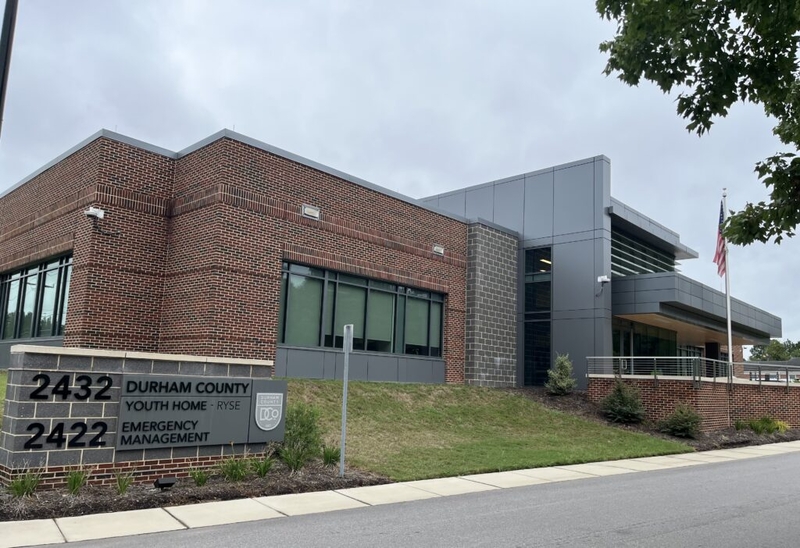
Durham County Youth Home on Sept. 24, 2026. (Photo: Lynn Bonner/NC Newsline)
The juvenile detention center in Durham no longer confines youth to a solitary cell they called “the hole” for discipline or suicide watch, Disability Rights of North Carolina reports, but youth still spend almost all day on weekends alone in their cells.
Disability Rights NC published new findings about the Durham County Youth Home on Thursday as a follow-up to its report on the state’s youth detention centers published earlier this year. The follow-up describes conditions found during monitoring visits on June 1 and Sept. 17.
The February report said youth at the Durham youth home received a maximum of 1 hour of education a day, below the required 4.6 hours.
Separately, the ACLU and the Duke Children’s Law Clinic filed complaints with the state Department of Public Instruction last winter that alleged Durham Public Schools had failed to provide students with disabilities confined to the youth with the home education services required by law.
On the Sept. 17 monitoring visit, Disability Rights found youth were out of their cells for class in the morning and afternoon. Youth reported being in class 6 hours a day since Aug. 24, when the fall semester began for traditional Durham Public Schools.
On weekends and during summer months, however, youth continue to spend most of the day confined to their cells, the report said.
An NC advocacy group reports youth in solitary confinement. The state denies it.
A reporter’s call to the youth home director Thursday morning was referred to the Durham County public relations office. That office did not respond to a telephone call or email.
The Disability Rights report questions the quality of the education provided, noting that teachers said they don’t provide direct instruction, but are there to assist students who ask for help.
Students said they received no feedback on their assignments. Special education services were minimal to nonexistent, the report said.
Among other findings:
- Recreation time at the young home was limited to 30 minutes a day, half of what state policy requires.
- Youth had inconsistent access to healthcare and mental healthcare.
- Youth reported frequent and random strip searches. “While facility leadership indicated that they had ceased the use of random strip searches following DRNC’s June 1, 2026 visit, youth provided mixed reports, with some youth reporting being inappropriately stripped searched daily following showering in the morning,” the report said.
- Youth said they don’t have much time to shower.
- Youth reported their phone calls are monitored.
Youth are detained in juvenile detention centers while they wait for decisions in juvenile court cases, while they wait for conviction or sentencing in adult court, or while they wait for spots in group homes, psychiatric residential treatment facilities, or other placements.
Raleigh, NC