Federal agencies to collaborate to ‘strengthen’ review of glyphosate
Sep 24, 2026 | 4:42 pm ET
Description
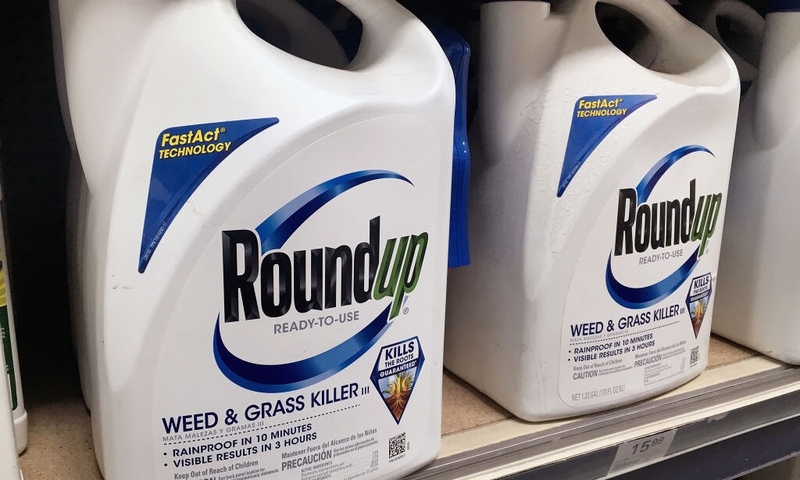
The U.S. Department of Health and Human Services plans to collaborate on research with other federal agencies as the U.S. Environmental Protection Agency evaluates the human health risks of the widely used pesticide glyphosate, used in products like Roundup. (Photo by Scott Olson/Getty Images)
The U.S. Department of Health and Human Services plans to collaborate on research with other federal agencies as the U.S. Environmental Protection Agency evaluates the human health risks of the widely used pesticide, glyphosate.
The recently announced memorandum of understanding between the two departments comes as EPA is conducting a registration review for the pesticide component and as the U.S. Supreme Court recently sided with the manufacturer of Roundup, a glyphosate-based pesticide, in lawsuits alleging the product needed a cancer warning label.
U.S. Health and Human Services Secretary Robert F. Kennedy, Jr. said in a news release that his department is bringing science to the table to “answer unresolved questions, strengthen the evidence, and give EPA the data it needs to conduct a rigorous review.”
“Americans have a right to know what the best science tells us about the chemicals they encounter in their food, workplaces, and environment,” Kennedy said. “We will ask the hard questions, demand sound science, and follow the evidence wherever it leads.”
Kennedy, in his time as an environmental lawyer, fought pesticide companies in cancer lawsuits, including Monsanto, the manufacturer of Roundup, which is now owned by Bayer. In recent months, however, Kennedy has supported initiatives from the White House to boost glyphosate production domestically. Environmental groups say Kennedy’s Make America Healthy Again report took it easy on pesticides.
The news release from HHS said the memorandum of understanding does not “predetermine or direct the outcome of EPA’s glyphosate registration review” which is slated to be completed in early 2027.
Experts from EPA and from HHS departments including the National Institute of Environmental Health Sciences, National Toxicology Program, National Cancer Institute, National Institute for Occupational Safety and Health, Centers for Disease Control and Prevention and the Food and Drug Administration will form a technical working group to “identify priority scientific questions” and coordinate research along the EPA’s review schedule.
Lee Zeldin, EPA administrator, said the agency is tasked with evaluating pesticides “against the best available science” per the Federal Insecticide, Fungicide, and Rodenticide Act, or FIFRA.
“This agreement with Secretary Kennedy and HHS gives our scientists access to research capacity at HHS that addresses potential gaps in the record,” Zeldin said. “EPA will weigh what that work produces the way we weigh any other scientific evidence. We will evaluate the relevant evidence, address important scientific questions, and show our work, providing insight into how the science informs our decisions, as we always do, to conduct the most transparent and thorough review possible.”
EPA last reviewed glyphosate in 2017 and decided the ingredient did not pose “risks of concern to human health from current uses” and determined that it was “not likely to be carcinogenic to humans.”
The EPA registration is significant because it largely dictates how the product is labeled. Lawsuits against Roundup have centered on failure to warn claims, essentially suing the company because it did not tell customers that the product could cause cancer.
Bayer, like EPA, holds that the product does not cause cancer and therefore no warning should be put on the label. The company has also lobbied at the federal and state level, along with the agriculture coalition Modern Ag Alliance, for legislation that would prevent lawsuits based on these claims, if the pesticide labels adhered to EPA guidelines.
The news release from HHS said the working group will focus on “key areas” like the toxicology of glyphosate formulas and surfactants, occupational epidemiology and human and dietary exposures to the product. Additional research of these areas, the news release said “can strengthen the evidence base available to EPA.”
The working group will also identify “consequential data gaps” that could necessitate additional research, “including emerging areas such as the microbiome.”
For the reevaluation of the product, EPA reviews new scientific literature that was published since the last registration, to ensure the product continues to meet statutory standards as science evolves. The literature gathered by the agency for the forthcoming human health risk assessment is open for public comments through Nov. 23, according to the Federal Register docket.
Materials from the HHS and EPA working group will also be made available to the public through the same docket, according to the news release from HHS.

Des Moines, IA