Rental rates and abortion laws: Dems scrutinize states vying to go first in picking a president
May 29, 2026 | 5:24 pm ET

Description
Pete Buttigieg speaks at a rally the day before the Iowa caucuses at Lincoln High School in Des Moines, on Feb. 2, 2020. (Photo by Kathie Obradovich/Iowa Capital Dispatch)
WASHINGTON — Democratic Party leaders from a dozen states traveled to Washington, D.C., at the end of May to press for their voters to cast the first ballots in the next presidential primary.
State representatives argued that diversifying the early states would ensure Democrats nominate a presidential candidate who not only holds broad appeal among the base, but can ultimately win over independent voters in swing states and the White House in November 2028.
A final decision from the Democratic National Committee’s Rules and Bylaws Committee will, however, have to contend with state laws and the officials who actually set primary dates.
Iowa and New Hampshire traditionally hold the first caucus and first primary election for presidential candidates — though South Carolina had the first DNC-sanctioned primary in 2024 — and both states argued it’s better to stay that way.
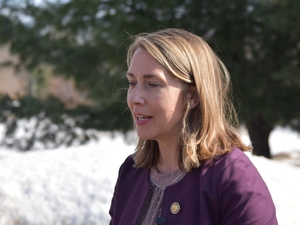
“Look, New Hampshire will make every effort it can to comply with the Rules and Bylaws Committee, but there are some factors outside of our control,” said U.S. Sen. Maggie Hassan. “Our secretary of state is required by law to schedule the New Hampshire primary before other states.”
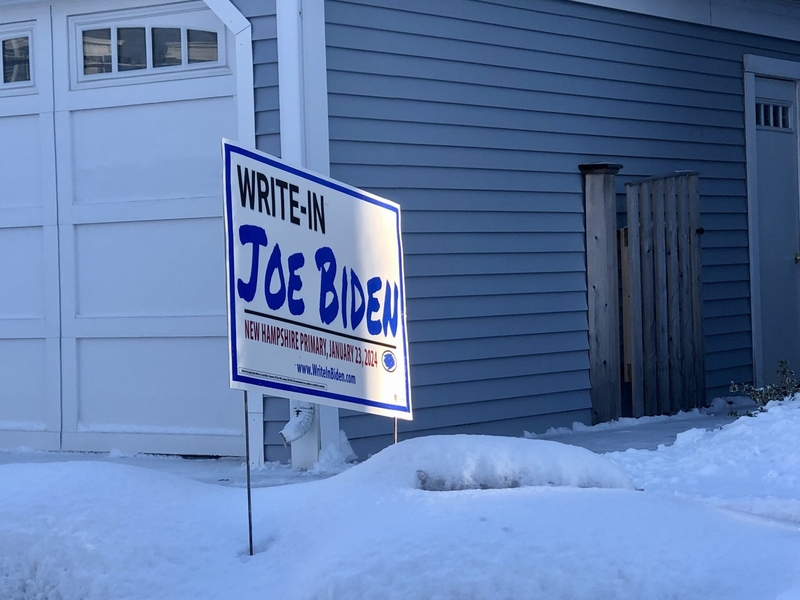
New Hampshire Democrats, she said, don’t believe their voters should pick the nominee, but would instead vet “the nominee so that they are better prepared for the states that follow, which will by definition be larger, more diverse and that’s really important too.”
“The one other thing I will add is that the Republicans are going to have the first-in-the-nation primary be New Hampshire,” Hassan added. “And there is a big vacuum when a whole bunch of Republican presidential candidates are coming into our state, highlighting local candidates who are Republicans and there isn’t the same fulsome, evenly balanced Democratic response. And I think that can put us at a disadvantage at the local level and occasionally at the federal level as well.”
Iowa Democrat Scott Brennan told panel members that state law “requires that we be a caucus and that we go before any competing process.”
Iowa Democratic Party Chair Rita Hart also noted that Republicans and the journalists who cover their campaigns will be in the state for months ahead of the GOP presidential primary.
“In 2028, no matter what your decision is regarding the nominating calendar, Iowa will be the center of politics because the Republicans will be here right along with scads of national reporters,” she said.
Members of the DNC’s Rules and Bylaws Committee asked questions throughout the two days of presentations, including what states were doing to protect voter privacy, whether states had implemented restrictions on abortion and how much rent will cost campaign staffers for a one-bedroom apartment in larger cities.
State Democratic Party members repeatedly told the committee that voters in their home states are best positioned to winnow down what is expected to be a large group of presidential candidates. Here’s some of what they argued:
South Carolina
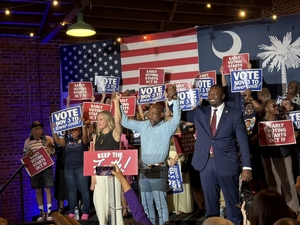
South Carolina Democratic Party Chair Christale Spain said her presentation wasn’t about keeping the state toward the front of the calendar for “nostalgia,” but “about whether the Democratic Party understands where the fight for democracy actually is.”
“This is not a routine calendar debate,” she said. “Republicans are not debating theory, they’re moving in real time to weaken voting rights, redraw maps, dilute Black political power and change the rules where they don’t like the voters' choices.”
The Democratic Party, Spain said, must ensure that Black voters “help shape the nomination from the beginning” and argued South Carolina is best positioned to do that.
“If Black voters are the backbone of the Democratic Party, then the calendar should reflect that,” she added.
Spain also called on the national party to recognize that Southern states hold crucial Democratic voters, despite the fact that region of the country typically gives its Electoral College votes to Republican presidential candidates during the general election.
“If Democrats want a long-term national majority, we cannot write off the deep South and then act surprised when the math doesn’t work,” she said.
Drawing a contrast with many of the other states, Spain noted that in South Carolina, the Democratic Party’s executive committee picks the date of its primary, not state law or the secretary of state.
New Mexico
New Mexico Gov. Michelle Lujan Grisham told the panel her state had “everything to offer” the party and its presidential candidates.
“We’re a minority-majority state,” she said. “We have demonstrated getting Democratic value-led policies on the ground in ways that no other poor state in this country’s history has done.”
The state’s economy, she said, would give Democrats the chance to dispel the notion that the two political parties offer a “binary choice” on key issues that could determine the outcome of the next presidential race.
“If you want truth and fairness, it’s got to be Democrats, but if you’re worried about jobs and if you’re working in oil and gas then you can’t vote for a Democrat. That’s just not true,” she said. “New Mexico outpaced Texas in oil and gas production last year and we have the lowest methane emissions of any state doing high-energy production. Guess what else? All of the energy to power the eastern United States is in New Mexico and what is it? It’s solar, it’s wind.”
The state would give Democratic presidential candidates the opportunity to talk about immigration and border security, which have been central to Republicans in the last several election cycles, she said.
“We can talk about public safety and the border and we can talk about energy in a way that renews our commitment to Democratic values and engages minority voters,” Lujan Grisham said, later adding that voters “want a cohesive approach to public safety, border security and fair support.”
The Trump administration’s “indiscriminate, unjust, unconstitutional deportation effort,” she said, has left voters from both political parties in the state “unhappy.”
“And it’s enough to get solid Republican voters to vote in a general election for a Democrat,” she said.
Georgia
Georgia Democratic Party Chair Charlie Bailey told the committee that having voters in the state go first during the next presidential primary would accomplish the “twin objectives of having a diverse electorate and being a battleground state.”
“No state better fits the stated goals that the DNC has for competitiveness, diversity and the accessibility that our infrastructure provides,” he said. “And our nationally recognized voter protection department has already proven its ability to guarantee fair, transparent and inclusive elections.”
Bailey told the panel that Georgia is the only state in the South with two Democratic U.S. senators and represents the party’s best chance to gain a foothold in that region.
Whether the secretary of state would actually move the primary date depends on whom voters elect to the role this November, he said.
A Democrat winning the seat would very likely schedule whatever the DNC chooses, but a Republican keeping that role would need to decide whether it’s in their party’s best interest to move the presidential primary election earlier in the year.
Michigan
Michigan Democratic Party Chair Curtis Hertel said his state’s history as a battleground in the general election and its demographics make it a strong candidate for the early window.
“There are very few states that represent the entire political spectrum of what the Democratic Party is. Michigan is one of them,” he said. “We’re the most diverse battleground state in the country. We look like America.”
Michigan, he said, would give presidential candidates a platform to talk about the party’s support for unions, wages and other cost-of-living issues.
Hertel said that every investment a Democratic presidential candidate makes in the state would be “important to winning the general election.”
North Carolina
North Carolina Democratic Party Chair Anderson Clayton said the state’s location, diversity and rural communities make it a strong choice.
“Democrats have been losing rural America. It’s no secret to anybody we have not been engaging in these communities,” she said. “And to me one of the biggest ways that we can put a priority on them again is investing in a state that, again, besides Texas, has the second-highest rural population.”
Clayton said the state also represents a chance for Democratic presidential candidates to speak with a cross-section of the party’s base.
“If you can win races in North Carolina, presidents that are battleground and battle tested here can win in other states across the country that we have not consistently won as Democrats, but we used to and we need to win back,” she said.
Nevada
Nevada U.S. Rep. Steven Horsford said the state has everything a Democratic presidential candidate needs to win both the primary and then the general election.
“Elevating a union-strong, diverse and highly competitive battleground state will lay the foundation to help Democrats win back the trust of working class voters and voters of color,” he said. “We are the working class. We are the coalition Democrats must win to win America and we represent the future of our party.”
Virginia
Former Virginia Gov. Terry McAuliffe said the purple state holds the different types of voters Democratic candidates need to hone their policy goals and their message.
“I promise you if you put Virginia early in that calendar, they are going to put every presidential candidate through the toughest set of questions,” he said. “You’re going to have to answer military questions, urban questions, rural questions. And if you can’t do that you’re not going to be successful. That’s what we want as our nominee in 2028 and we have the ability to do that.”
Democrats throughout Virginia, including those just outside Washington, D.C., whose lives were affected by the Trump administration’s cuts to the federal workforce, are well suited to ensure any nominee is ready to win a general election, he said.
Tennessee
Tennessee state Sen. London Lamar told panel members voters in that state shouldn’t be “afterthoughts” when it comes to vetting presidential candidates.
“Tennessee sits at the center of the South. We border eight states, which means our influence is not just local, not just statewide, but it's regional,” she said. “What happens in Tennessee has the power to reach across the South and shape national momentum, because we all know the South is the last battleground of this nation. And if we win the South, we take the nation every single presidential election.”
Voters in and around Memphis, she said, represent “the very people Democrats say we are fighting for — working families; Black voters; young people; communities demanding affordability, representation, justice and opportunity.”
“Memphis is one of the largest majority Black cities in America,” she added. “And African American voters remain the backbone of the Democratic Party.”
All States Newsroom content is free to republish. Read our republishing policy for more information.