Regulatory process launched for 30 more years of trans-Alaska oil pipeline operations
Aug 27, 2026 | 9:55 am ET
Description
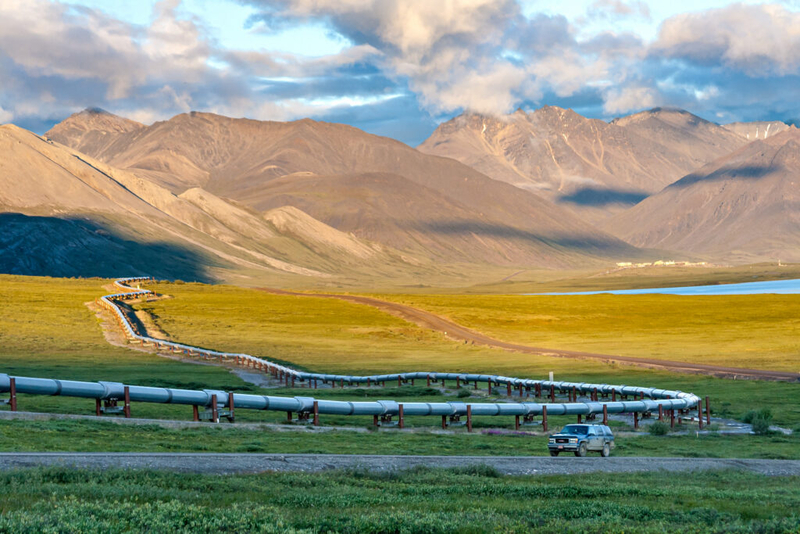
A vehicle drives past the trans-Alaska pipeline near Galbraith Lake on the Dalton Highway, Alaska. Pump Station 4 is visible in the background. Fedearl regulators are beginning the process of granting a renewed right-of-way agreement to allow 30 more years of operations. (Photo by Craig McCaa/U.S. Bureau of Land Management)
Forty-nine years after it began transporting crude oil from Prudhoe Bay, the Trans Alaska Pipeline System is due for a regulatory renewal that will allow it to keep operating on federal lands into future decades.
The U.S. Bureau of Land Management has kicked off the process to renew the right-of-way agreement for the pipeline.
About half of the territory that the 800-mile pipeline system crosses is federal land, so a federal authorization is required. The rest of the territory is state or Native-owned land; the state is also due to issue its own right-of-way renewal.
In a statement, Kevin Pendergast, the BLM’s Alaska state director, predicted a robust future for operations of the pipeline system. It will carry new oil from federal land units, including the Arctic National Wildlife Refuge, where the Trump administration has pushed for oil drilling, he said.
“Nearly 50 years after its construction, the Trans Alaska Pipeline is still an engineering marvel and only growing in its importance to Alaska’s economy and global energy markets,” Pendergast said in the statement. “We are acting now to secure the pipeline’s future as we work to unlock the energy resources of the National Petroleum Reserve in Alaska and the Coastal Plain of Arctic National Wildlife Refuge.”
The Trans Alaska Pipeline System was first authorized in 1974. It was built over the following three years.
The prior federal renewal was made final in 2003 by the administration of President George W. Bush. It was completed just prior to the scheduled 2004 expiration of the original right-of-way agreement that allowed the system to be built and operated on federal lands.
The prior BLM approval process officially kicked off in November of 2000 and involved a full environmental impact statement that evaluated subjects like the impacts of aging on the structure, long-term changes to permafrost and oil spill risks.
This time, the Trump administration is planning a much shorter review. The BLM is preparing an environmental assessment, a less-comprehensive review than an environmental impact statement.
Brenda Younkin, the Department of the Interior’s deputy assistant secretary for land and mineral management, said this renewal process will take much less time. That is in keeping with Secretary Doug Burgum’s new rules for shorter and quicker environmental reviews, she said.
“We’re optimistic about being quick,” she said on Wednesday during a panel discussion at the Alaska Oil and Gas Association’s annual conference in Anchorage. “We better, or we’re going to be reporting to the secretary why not.”
The new rules include strict timelines and page limits for study documents, she said.
The public comment period for the scoping process – the initial step in which interested parties may raise issues they believe should be considered – is only 15 days. That public comment period started on Wednesday, and ends Sep. 10
The compressed time schedule drew criticism from one environmental group.
“The oil burned from Alaska’s pipeline has come with a huge cost to our state’s climate. It’s driving declines in salmon and caribou, and contributing to mega-storms that are making communities unlivable,” Cooper Freeman, Alaska director at the Center for Biological Diversity, said in a statement.
“Alaska is facing massive climate disruption, but Trump wants to give the oil companies carte blanche to continue business as usual for the next three decades,” he said. “This process should be thorough and public, not rammed through at the behest of billionaire oil company owners.”

Juneau