Recycled glass and salt-loving bacteria are helping scientists bring back coastal cypress
Jul 16, 2026 | 6:16 pm ET
Description
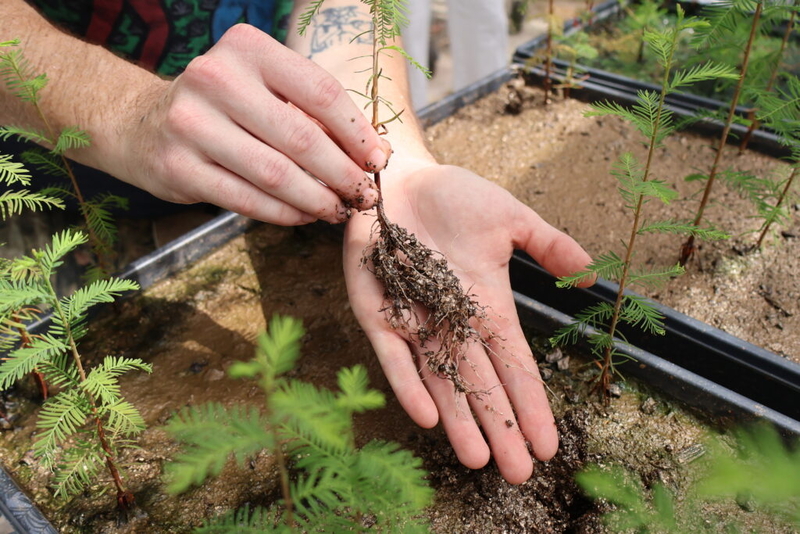
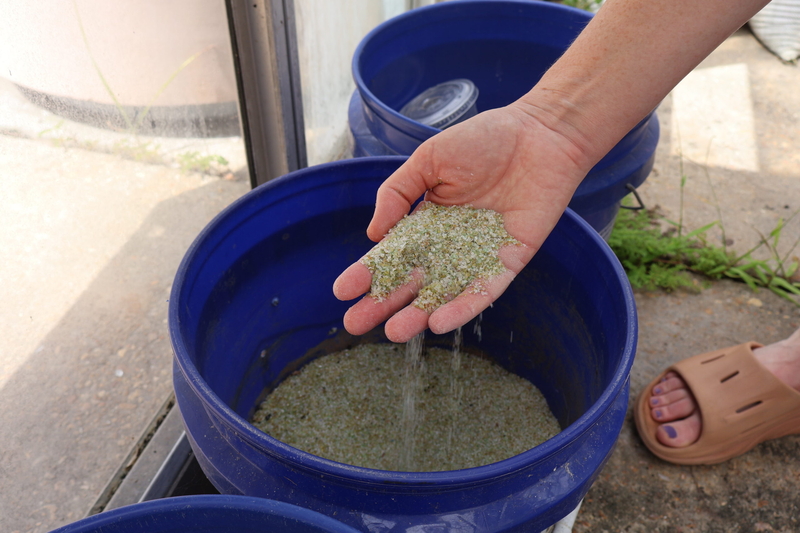
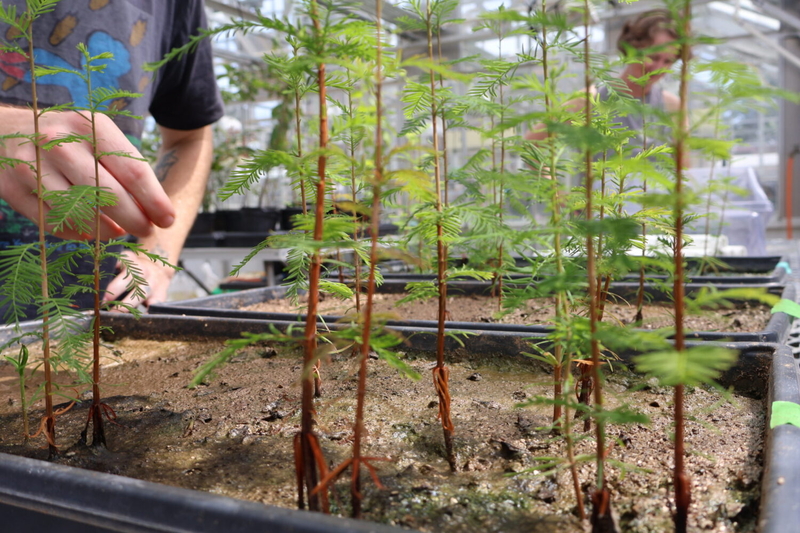
Bek Markel holds a young cypress tree. Researchers at Tulane are experimenting with glass sand and salt-tolerant bacteria to improve cypress growth in coastal restoration projects. (Elise Plunk/Louisiana Illuminator)
Tulane University researchers and the recycling facility Glass Half Full are using evolutionary relationships between bacteria, fungi and plants to grow cypress and other plant species in glass sand created from recycled bottles.
Scientists hope to build back areas of Louisiana’s coast that have been eroded with the glass sand they have developed. Wetland plants like Louisiana’s iconic bald cypress need to grow and establish themselves to keep new sand from washing away.
Not all wetland plants can grow in glass sand alone. Instead, the glass needs to be mixed with nutrient-rich Mississippi River sediment and paired with bacteria and fungi.
“It’s like a market,” said Sunshine Van Bael, professor at Tulane’s department of biology and evolutionary ecology.
Bacteria, fungi and plants trade for nutrients like phosphorus, nitrogen and carbon to mutually benefit each other’s growth, she said.
“It helped plants establish on land millions of years ago,” Van Bael added.
The newly created glass sand, when mixed with natural sediment, is able to develop that microbiome needed to make plants successful.
“River sand is going to be round and have all these micro-pores in it, and areas where microbes could be attached and nutrients could be attached to it,” said Bek Markel, research technician with Tulane’s department of biology and evolutionary ecology.
A greenhouse near the Mississippi River is at the heart of it all. Here, the steamy, sunshine-heavy room contains multitudes of plants grown in different mixes of recycled glass from New Orleans and natural sediment from Louisiana ground.
Experiments have shown that cypress trees can grow just as well in a mix of half natural, half glass soil as they can in entirely natural sediment, proving the recycled glass sand can be safely used for coastal restoration projects.
Researchers are now taking their experiments a step further by introducing bacteria with a heartier constitution to partially glass soil mixes to help cypress tolerate higher levels of salinity.
“We’re looking for salt-tolerant bacteria,” said Van Bael.
Salt water intrusion is now a key problem to factor in when working to restore the coast after impacts from rising sea levels, subsidence and fragmenting coastal marshland.
Many wetland plants don’t like salt, and are less able to grow as well or at all in places with too much of it.
“The roots of freshwater plants are going to have trouble getting oxygen in a salty environment, and then they end up dying from that stress,” said Markel. “Then they let go of the land, and it washes away.”
But bacteria in the soil that are more resistant to salt could help address that problem for Louisiana.
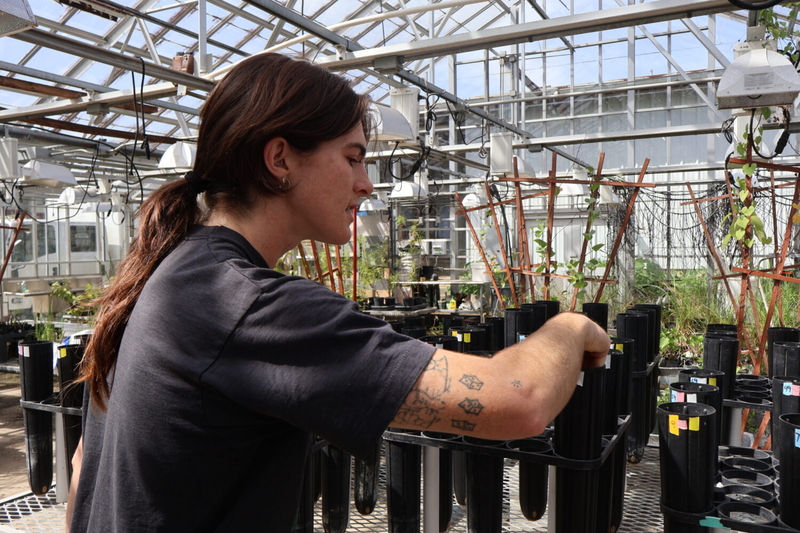
“Other studies in agriculture have shown that crops can become more salt tolerant when they’re grown along the coast if you inoculate them with salt-loving bacteria,” Van Bael said.
She and the team at Tulane are testing to see if the same principle can be applied to trees like cypress.
It’s less common to see studies looking into salt-tolerant bacteria for growing trees like cypress, said Van Bael, with most previous research even looking into growing crops with salt water to address things like drought and fresh water shortages.
Louisiana’s problems with saltwater intrusion and eroding coast need the science behind salty bacteria and trees to help rebuild lost land.
“We’ve already found and done the sequencing work on 40 to 80 different strands [of bacteria]”, said Van Bael.
Beneficial fungi growing in the soil also helps plants better establish in the newly placed sand, and the Tulane scientists have already seen success with glass sand functioning similarly to that of natural soil.
“We have multiple counts of seeing this symbiotic fungi in roots that we’re growing in glass sand,” said Markel, introduced either through the roots of the planted cypress or mixed in with the regular soil added to the glass sand.
“That shows that the glass sand can support the symbiotic relationship,” Markel said.
Baton Rouge, LA