A rare push to release Hinds County jail detainees exposes a dysfunctional system
Nov 02, 2026 | 9:00 am ET
Description
Photo courtesy of Mississippi Today
Audio articles are automated for accessibility. Humans wrote and edited the story; however, this audio has not been reviewed for accuracy and may contain errors. Read more about how we use AI to increase access to our reporting.
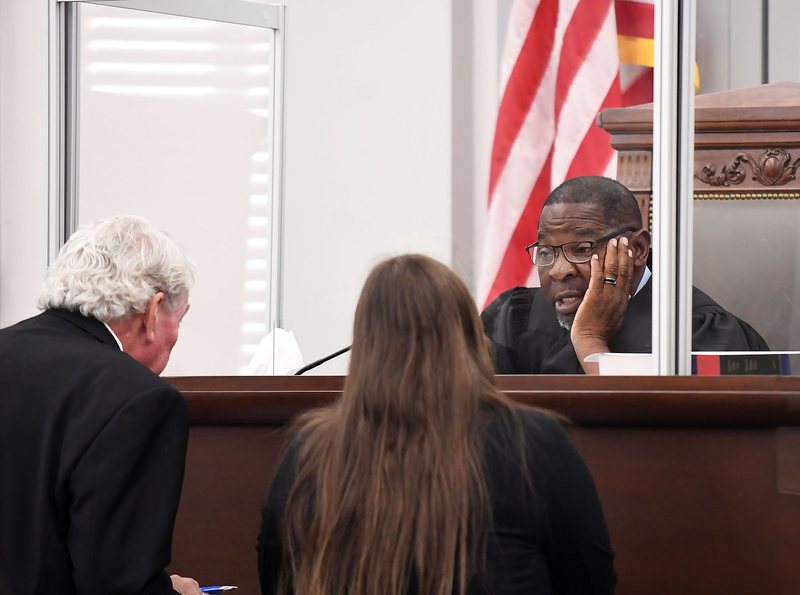
Hinds County Court Judge Johnnie McDaniels’ signature was all the district attorney and public defender needed.
It was a Friday afternoon in August when attorneys from the offices pitched the judge an unusual proposal: Release some three dozen people from the crowded Hinds County Detention Center.
Each of the detainees faced nonviolent charges, had not been indicted and had spent at least 100 days in jail.
But McDaniels wouldn’t agree – at least not immediately.
Instead, the judge would issue an order days later, declaring that crowding alone did not justify a defendant’s release. He directed the attorneys to submit requests case by case.
The attorneys would comply over the next few weeks, ultimately seeking release of 19 defendants. McDaniels would grant release to 13, according to his docket.
But hearings in September did little to cut into what was then roughly 200 people jailed without indictment. Instead, they exposed deeper failures in Hinds County’s criminal justice system: defendants remaining behind bars despite being granted release and prosecutors struggling to account for cases that had languished for months, sometimes years.
While defendants are presumed innocent and have rights to a speedy trial, prosecutors and defense attorneys rarely invoke constitutional protections during the hearings. This is because the right has effectively been abandoned in Mississippi, one of a handful of states without a fixed deadline for obtaining an indictment after an arrest.
The collaboration between prosecutors and public defenders represented a blip in Hinds County, where concerns about community safety have overshadowed the plight of defendants in the deadly detention center in Raymond.
“Now, I’ve heard of this happening on the planet earth, but not in Hinds County,” said Matt Steffey, a Mississippi Christian University School of Law professor who helped write the state rules of criminal procedure. “In fact, most of my career, what I’ve heard is the opposite: the difficulty of getting the DA to agree and the judge to set reasonable bonds.”
State Public Defender Andre de Gruy questioned why the effort was necessary. He noticed the jail population jumped last summer but did not know why: Were more people being arrested, or were prosecutors failing to move cases through the system?
“Why are nonviolent offenders sitting in jail for months?” he asked.
McDaniels, who declined to be interviewed for this article, had similar questions.
“That’s the giant elephant in the room, so to speak, as it relates to these matters,” he said during one of the hearings.
A bewildering path to freedom
Another issue: Interim Hinds County District Attorney Brad McCullouch overstated the results of his office’s release efforts, according to a Mississippi Today review of records.
In a recent interview, McCullouch said his office had secured the release of 74 people jailed without indictment on nonviolent charges – far more than the 19 defendants whose release the office sought in collaboration with the public defender.
McCullouch’s list of 74 reflects all defendants with felony charges released from jail from July 1 to Sept. 28, including 15 people facing violent charges and defendants whose release were unrelated to the DA’s efforts.
The DA acknowledged he did not know the number of people released during the same time last year. Still, he believes his office’s efforts are paying off.
“People have been coming in, but nobody has been getting out,” he said.
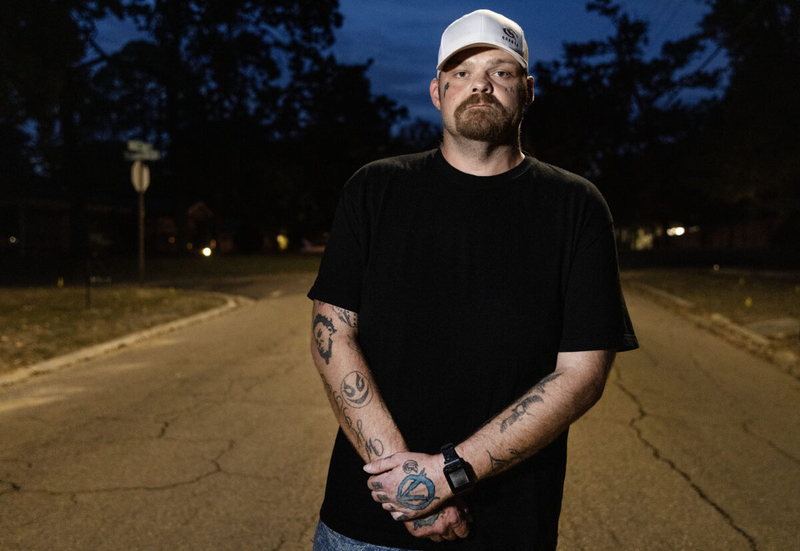
Daniel Ray Boyd Collom calls himself one of those nobodies.
Collom, 36, entered the Raymond Detention Center in October 2025 and faced charges of burglary and failure to appear.
He slept on the floor. He said other detainees carried knives and set fires that left cell blocks covered in soot.
Months went by. He lost hope of ever getting out.
Then on Friday, Aug. 28 – nearly a year after he was locked up – officers loaded Collom into a van and dropped him off on a sidewalk in downtown Jackson.
He said no one told him why he got out.
“I have no idea, no clue, not even the slightest inkling,” he said.
To Collom, his freedom seemed as bewildering as his confinement.
A backlog of cases and a promise to act
A little over a month earlier, McCullouch stood in the federal courthouse in downtown Jackson. It was the very day the governor would appoint him district attorney after former Hinds DA Jody Owens pleaded guilty to a federal corruption charge and resigned.

McCullouch made a promise to U.S. District Court Judge Carlton Reeves: He would release people facing nonviolent charges from the jail.
Conditions at the Raymond Detention Center, which the judge oversees through a long-running consent decree, were as bad as ever. Days earlier, an 18-year-old had been stomped to death, a video of his final moments going viral.
The jail was also crowded. The number of unindicted detainees had barely budged from October 2025, when the federally appointed jail receiver, Wendell France, had asked Owens to “expeditiously resolve” pending cases.
About a month after appearing before Reeves, McCullouch attempted to make good on the promise. His office asked the public defender for a list of defendants facing nonviolent charges. This yielded 60 names, from which prosecutors selected 32 candidates for release.
By the time prosecutors presented the cases to McDaniels, most of the defendants had been in jail for at least 150 days.
Charlie King, a new prosecutor leading the release effort, told the judge some of the defendants had yet to be indicted because the DA’s office couldn’t proceed until it obtained the complete investigative file, even though prosecutors have sometimes taken cases to the grand jury without one.
“In the past,” McDaniels noted, the DA “would just kind of sit around and wait until law enforcement sent the file over.”
King said he could not speak to Owens’ decisions.
“The lack of file,” King said, “is unacceptable.”
Judge presses prosecutors for answers
Once a person is arrested in Mississippi, the justice system offers few chances at freedom.
The first opportunity typically comes during an initial court appearance, when a judge decides whether to give a defendant a bond and sets an amount. If they cannot afford the amount, a defendant can ask for a lower bond after a probable cause hearing.
If those efforts fail, defendants can find themselves in a no man’s land while waiting for a grand jury to review their charges.
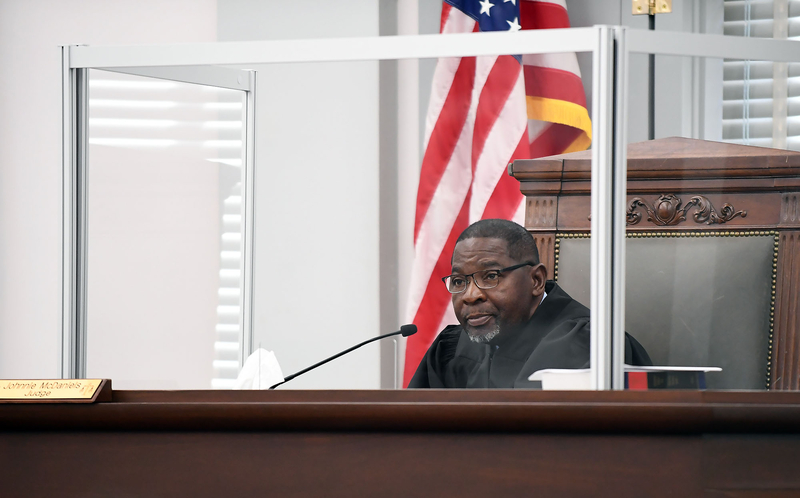
The path out usually runs through one judge: Johnnie McDaniels.
He presides over all unindicted criminal cases. His power comes from a 2023 standing order, issued by Hinds County Circuit Court Senior Judge Winston Kidd.
In evaluating requests for release, judges in Mississippi have discretion to determine if a defendant poses a danger to the community and how likely they would be to return to court.
In the first case the district attorney’s office presented from the public defenders’ list, McDaniels questioned why prosecutors wanted to release a man charged with possessing a firearm as a convicted felon.
King cited poor jail conditions.
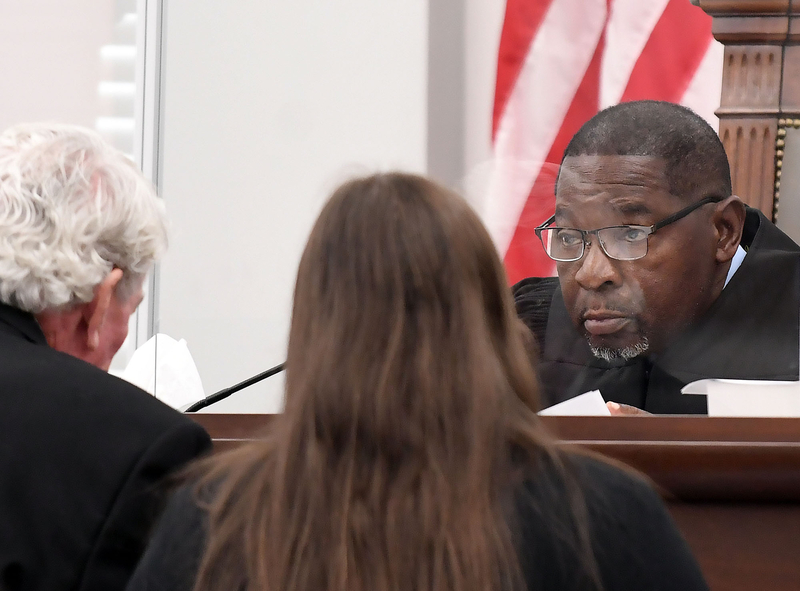
“You were in my chambers,” McDaniels, sitting behind a plexiglass barrier, told King. “I think I was pretty clear the idea of what may be happening with jail overcrowding is not going to compel this court.”
The judge asked if the DA’s office would still seek the man’s release if there weren’t an issue with jail crowding.
“I have to hear persuasive arguments, not political arguments,” McDaniels added before granting the request.
To reach his decisions, McDaniels considers not only the details of an offense but also a defendants’ ties to the community and their character.
“I’m not sure the facts of this matter,” the judge told the public defender, Ginny Kramer, after she asked him to release a 27-year-old father of two who had a job lined up cleaning cars at a showroom. Before his arrest, he had been working to earn a GED at a community college.
McDaniels wanted to know what property the man was alleged to have stolen.
In another case, McDaniels learned that a defendant who had been unindicted and in jail for nearly two years on DUI and drug charges was now in a wheelchair because he had broken his leg while incarcerated.
“He’s been through a lot while in jail,” Kramer told the judge.
McDaniels was unmoved, asserting that statistics showed people arrested for DUI had likely driven under the influence at least 40 times before being caught.
“How does the ailment,” McDaniels asked, “prevent him from driving around under the influence of alcohol?”
Release orders don’t always mean freedom
Throughout the hearings, the judge returned to the question of why the DA’s office had yet to indict defendants they now wanted released.
“It appears all the other parties … did their job,” McDaniels said after hearing the case of a woman charged with first-degree arson. “And at that point, nothing else happened.”
McCullouch acknowledged in an interview that his office needed to indict cases more quickly.

He hopes whoever wins Tuesday’s special election for district attorney will continue changes he made to the grand jury unit, including hiring a prosecutor focused on clearing unindicted cases.
That employee, Greta Kemp Martin, combs through jail logs every day to find cases that need to be indicted.
The five candidates for Hinds DA agree the backlog of unindicted cases needs to be addressed, though they differ on how best to do so.
But people keep slipping through the cracks.
Dennis Green is among them.
He has been in jail since December 2024, accused of burglary, malicious mischief and violating parole. McDaniels had ordered him released in June 2026 and then again in September, after the DA’s office brought his case back up.
A recently released defendant, 59-year-old Jerry Jefcoat, had been in jail since April 2026 on charges of failure to register as a sex offender. But the DA’s office said it couldn’t find the police officer who filed charges, preventing prosecutors from presenting the case to the grand jury.
“We are still unable to ascertain who the ‘Williams’ is that is listed as the investigator,” Martin said.
Hinds County Sheriff Tyree Jones, whose department had oversight of the jail until the federal government stripped it of control, declined to be interviewed.
The DA’s office told Mississippi Today that the judge had not denied any of its requests for release. But a review of court records showed otherwise.
McDaniels denied four motions. In three, the judge wrote the defendants had already been indicted.
Yet, court records show no indication any of the three defendants had been served with their indictments, despite remaining in county custody.
De Gruy, the state public defender, said the failure was emblematic of more breakdowns in the system.
“Presumably, the prosecutor has a copy of the indictment,” he said. “They could hand it to the bailiff, and the bailiff could serve the person. It could happen in the courtroom. I just cannot understand how people can be indicted, in jail and the indictment not served.”
De Gruy, who remains skeptical, said he had recently noticed the jail’s daily population counts declined, suggesting the DA’s office’s new approach might be producing results.
“But are you going to do it again?” he asked.
Jackson, MS