US Supreme Court to hear arguments in latest debate over LGBTQ+ protections in Colorado
Nov 02, 2026 | 6:00 am ET
Description
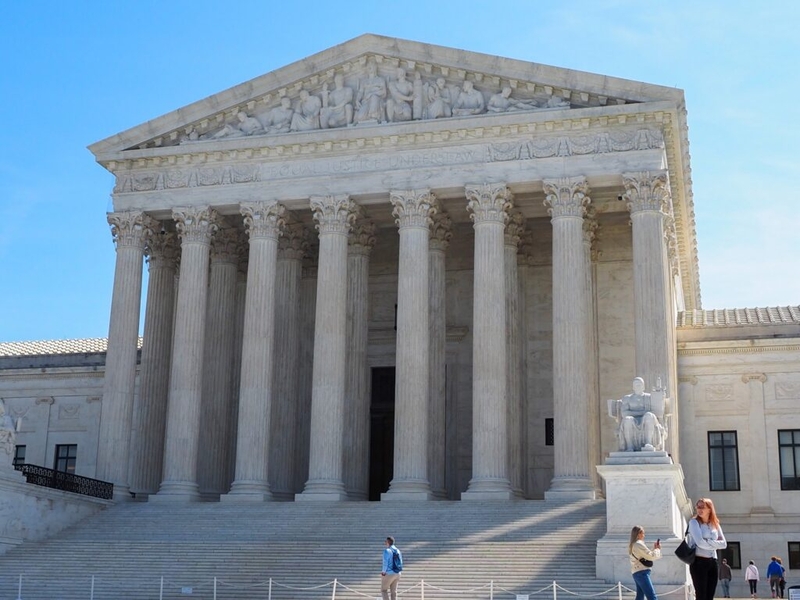
The U.S. Supreme Court on April 9, 2026. (Photo by Ashley Murray/States Newsroom)
Attorneys representing Colorado education officials and two Catholic preschools will face off at the U.S. Supreme Court Tuesday to determine if Colorado’s universal preschool program can require religious educational institutions to include LGBTQ+ children and parents.
It’s the latest in a fraught history of the nation’s highest court weighing in on the balance of state anti-discrimination protections for LGBTQ+ people and religious exemptions.
The Archdiocese of Denver and the Catholic preschools allege in a lawsuit that they were unable to participate in Colorado’s universal preschool program, known as UPK Colorado, because the state will not allow the institutions to exclude LGBTQ+ children and parents.
The St. Mary Catholic Parish in Littleton and the St. Bernadette Catholic Parish in Lakewood both operate preschool programs that were not part of UPK, because the state requires providers to accept applicants without regard to the family’s religion, sexual orientation or gender identity.
The schools applied for public funding through the universal preschool program and were denied when they requested religious exemptions from the state’s equal-opportunity requirement. They claimed their exclusion violated their rights under the free exercise clause of the First Amendment.
Becket Fund for Religious Liberty, which represents the plaintiffs in the case, says Catholic families like plaintiffs Dan and Lisa Sheley are forced to pay thousands of dollars out of pocket for Catholic preschool since their schools of choice are excluded from the program. It said enrollment in schools run by the Archdiocese of Denver have fallen by 20%, and two schools closed since the UPK program began.
Colorado's rule is simple: If you take public money to teach kids, you serve every kid.
A U.S. District Court of Colorado judge ruled in June 2024 that the UPK requirement that prohibits discrimination against LGBTQ+ families is valid. The Denver-based 10th Circuit Court of Appeals upheld the district court’s decision in October 2025, and the Supreme Court accepted the case in April. The church and schools filed the lawsuit against Lisa Roy, executive director of the Colorado Department of Early Childhood.
The Supreme Court will weigh in on aspects of a 1990 ruling in another case that raised the question of religious exemptions to state laws. The court held in Employment Division v. Smith that a person’s religious beliefs are not an automatic exemption from compliance with a law against conduct the state is free to regulate.
Dozens of organizations have filed court briefs for one or the other side of the case. Several Democratic-led states and Washington, D.C., filed a brief in support of Colorado, while Republican-led states filed a brief urging the court to overturn the lower court rulings. The Trump administration also filed a brief in support of the preschools.
Not the first Colorado discrimination case at Supreme Court
Jax Gonzalez, political director at LGBTQ+ advocacy organization One Colorado, said no school should use taxpayer dollars to turn away kids because of who their family is.
“Colorado’s rule is simple: If you take public money to teach kids, you serve every kid,” Gonzalez said. “Religious freedom matters to all of us, including LGBTQ Coloradans of faith.”
The organization did not file a brief in the case, but Gonzalez said One Colorado supports briefs that support Colorado.
More than 79 faith-based schools have taken part in the UPK program and agreed to the nondiscrimination parameters, Gonzalez said. Colorado voters approved the program to ensure a strong start for all children.
“A ruling for Colorado keeps that promise,” Gonzalez said. “A ruling against Colorado would let schools take public money and turn kids away, and it could open the door to discrimination of any protected class with taxpayer dollars in healthcare, shelters, food pantries and other services.”
The initial lawsuit made several references to past court cases related to LGBTQ+ discrimination in Colorado that made their way to the nation’s highest court. That includes a case in which the Supreme Court said a Colorado web designer does not have to make websites for same-sex couples, and another in which the court said a cake shop owner could deny a same-sex couple a wedding cake based on religious beliefs.
Most recently, the court sided with a Christian counselor against Colorado’s law that bans licensed providers from conducting “conversion therapy,” a discredited practice of trying to change a person’s sexual orientation, such as to eliminate same-sex attraction, or gender identity.
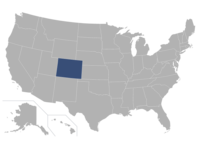
Denver, CO