Metro effort to depoliticize towing contract enables conflicts, say critics
Nov 02, 2026 | 8:00 am ET
Description
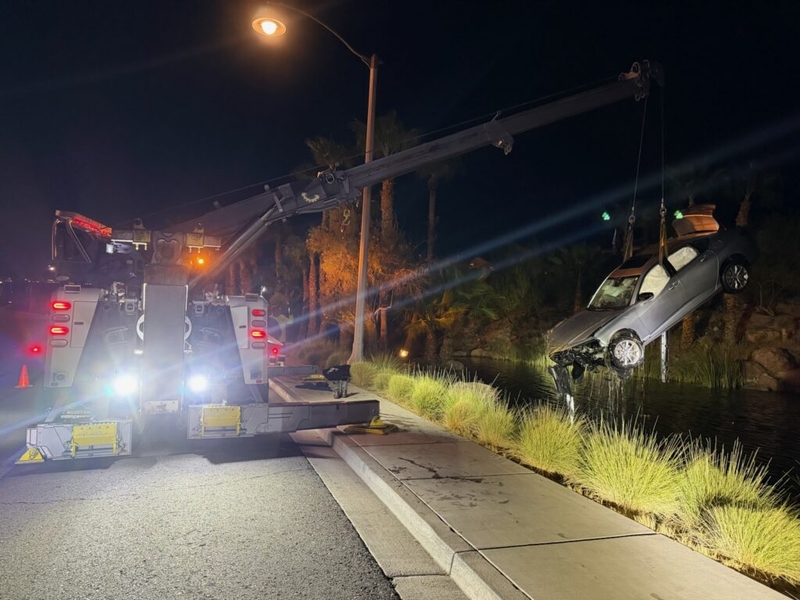
(Photo courtesy SNAP Towing)
The Las Vegas Metropolitan Police Department’s effort to stay out of the auto towing business is exposing the department to possible legal scrutiny and potentially endangering the public, say critics who contend Metro’s towing management vendor is engaged in self-dealing.
Since 2016, Metro has outsourced its towing dispatch services to Autura, a national company formerly known as AutoReturn.
Metro pays nothing. Instead, Autura tacks on a $32.50 charge to customers’ bills for every law enforcement-related tow it dispatches, and the tow companies with whom it contracts reap the lucrative vehicle storage and scrap metal income.
Tow yard storage bills can reach thousands of dollars, sometimes exceeding the value of the vehicle, which can be auctioned by the tow yard to satisfy the bill.
In 2021, Autura removed an estimated 2,000 vehicles a month from accident scenes, DUI arrests, or for parking violations.
Metro’s agreement with Autura allows the company to select tow companies and storage yards with little input from the police department.
“We are no longer in the towing business,” then-Metro Sheriff Joe Lombardo, who is now governor, told the Current in 2021, shortly after the department executed its first five-year renewal with Autura.
The arrangement was intended to eliminate the politicization of selecting vendors to be included in Metro’s towing rotation.
“Before 2016, the department did pick the tow truck companies directly, and that is exactly what made this our most politicized contract, with every operator lobbying the sheriff and this committee,” Metro Chief Financial Officer Damon Harris told Metro’s Fiscal Affairs Committee on Thursday. “Taking that choice out of our hands is the whole point.”
But instead, the jockeying for favored status has intensified.
SNAP Towing, which has been in Autura’s rotation for ten years, was eliminated in the recent renewal and replaced with Quality Towing, a company that was until recently owned by Autura.
SNAP Towing owners Van Le and Danny Thompson contend that giving Autura free reign in the selection of vendors gives the intermediary too much discretion.
Unlike government contracts, where all qualified companies are invited to bid, Autura refused to respond to SNAP’s application, Le and Thompson say.
“The fact is they wanted Quality Towing on so they had to take a company off,” Le said via email.
Autura’s five-year contract extension never came before the Fiscal Affairs Committee, which votes on Metro’s financial matters. Instead, it was approved in September by Clark County Sheriff Kevin McMahill, who is permitted to unilaterally sign off on some goods and services agreements.
“There’s concern that the sheriff’s office is placing favoritism and personal/political interests over public safety, which may be a violation of the sheriff’s number one priority in this community,” says Rick McCann, who is advocating on behalf of SNAP.
McCann contends former SNAP owner Robert Ellis, who sold the company to Le and Thompson but still owns the land, persuaded McMahill to have SNAP removed from the towing rotation, which it relies on to remain in business. Ellis, they fear, has his eye on foreclosure.
Ellis and McMahill did not respond to requests for comment.
SNAP Towing requested during public comment that the committee not approve a report on Metro’s contract renewal with Autura and hear it as a separate item. The committee did not act on that request.
SNAP executives say delegating the selection of vendors to a third party is inconsistent with Metro’s commitment to transparency and public safety.
They assert Autura is funneling business to companies in which it has a business interest. Autura is part of Vehicle Management Solutions, a company that until recently owned an interest in Quality Towing, one of the three companies servicing Autura’s contract with Metro.
“I believe LVMPD’s contract with Autura may end up causing a great deal of embarrassment by inadvertently getting Metro involved in claims of unfair trade practices and citizen consumer-related complaints,” Christine Abbott, an Arizona paralegal and investigator who is working for SNAP Towing, told the Fiscal Affairs committee.
Autura and its sister companies assert they’ve separated the technology and dispatch side of the business from towing operations. Abbott, who says the move is likely an attempt to ward off allegations of self-dealing, says she’s not buying it and notes the reportedly independent companies share addresses throughout the country.
Complaints about potential conflicts prompted Metro to add a provision to its contract that requires Autura to disclose any financial or personnel ties with the tow companies, says Harris, the CFO. If Autura doesn’t disclose conflicts, Metro “may” reject a vendor or end the contract. But it’s not required to do so.
Autura did not respond to the Current’s request for comment.
Thompson and Le say they intend to ask state lawmakers to weigh in. They seek to “strengthen the process by which the Fiscal Affairs Committee oversees Metro,” says McCann. “There’s no question in our minds that McMahill has considerable input into awarding the dispatcher contract, as well as selecting which tow companies are added after the dispatch contract is signed.”
McCann says the lack of involvement by the Fiscal Affairs Committee, which was never asked to approve the contract with Autura, demonstrates “a critical breakdown of legitimate oversight by the committee.”
Metro did not respond to requests for comment.
Las Vegas, NV