Punishment handed down to Lancaster County teens who made AI-generated nude photos of classmates
Mar 25, 2026 | 4:24 pm ET
Description
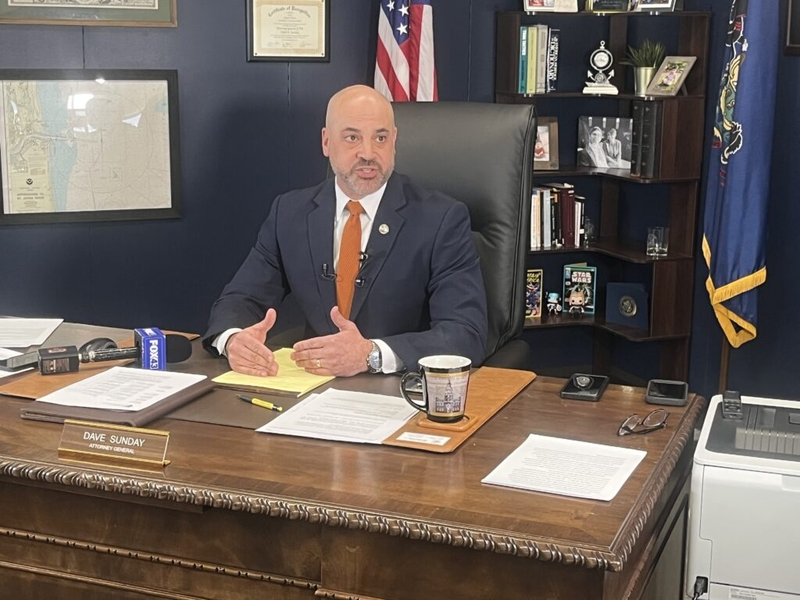
Pennsylvania Attorney General Dave Sunday said it would difficult to determine the impact of a Trump administration executive order striking state-level AI regulations during a Dec. 15, 2025 press conference. (Photo by Whitney Downard/Pennsylvania Capital-Star)
A judge sentenced two teenagers in Lancaster County to probation and community service — along with restitution — after they used artificial intelligence to generate nude images of female classmates and their friends.
County President Judge Leonard G. Brown III adjudicated both 16-year-old juveniles Wednesday for 59 felony counts for manufacturing the images of 48 female students at Lancaster Country Day School and a dozen other acquaintances, noting that neither teenager apologized in court.
A release from state Attorney General Dave Sunday said the teenagers will serve six months each on juvenile probation, perform 60 hours of community service and pay $12,000 to their victims to cover counseling costs. Additionally, they’re prohibited from any contact with them.
Dozens of victims and their families appeared in court or provided victim impact statements to Sunday’s office, reporting “mental stress along with feelings of helplessness and never knowing when the manufactured photos may appear in the future.”
“Many victims and their families articulated in court today their feelings of anxiety, depression, and devastation related to this conduct,” Sunday said in a statement. “This type of weaponization of technology is affecting the mental wellness of students across the Commonwealth and country.”
Recently, Sunday and Gov. Josh Shapiro co-hosted a roundtable with teenagers about AI use, cell phones in schools and mental health.
The release went on to say, “the juvenile justice system is designed to emphasize the rehabilitative needs of the offenders,” adding that such procedures are typically closed.
Senior Deputy Attorney General Janie Swinehart prosecuted the case on behalf of the agency’s Child Predator Section.
The high-profile crime has driven lawmakers to amend state law to keep up with the rapidly changing technology. Though possession of such child sexual abuse material is already illegal, artificial intelligence has made it easier than ever to access.
A recent effort, Senate Bill 1050, further clarified the law concerning possession by minors, requiring mandated reporters to file such incidents regardless of the age of the perpet

Harrisburg, PA