In Public Service Commission race, reorganization bill looms over candidates
Oct 16, 2026 | 6:01 am ET

Description
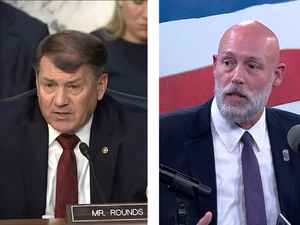
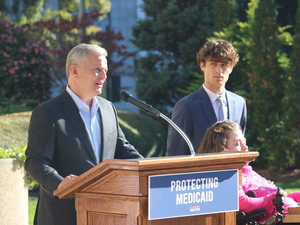
(Left to right) Republican nominee Matt Gentry faces Democratic nominee James Gordon for Alabama Public Service Commission Place 1; Democratic nominee Sheila McNeil faces Republican nominee Jim Zeigler for Alabama Public Service Commission Place 2. (Photos of Gentry, Gordon and McNeil courtesy of candidates; photo of Jim Zeigler: Anna Barrett/Alabama Reflector; photo illustration by Brian Lyman/Alabama Reflector)
The Alabama Legislature’s decision to expand the Alabama Public Service Commission forced those running to sit on the utility regulator to make some campaign adjustments.
Gov. Kay Ivey this spring signed HB 475, which expanded the PSC from three members to seven; put the PSC under the supervision of a secretary of energy to be appointed next year, and banned formal rate hearings on the state’s high residential energy prices until 2029. The move to a larger board made it significantly less likely that the PSC would get a majority calling for formal hearings on Alabama’s high residential energy prices.
James Gordon and Sheila McNeil, the Democratic nominees for Place 1 and Place 2 on the PSC, said in separate interviews that they plan to work for competitive rates and greater accountability through negotiations with their colleagues and utility companies.
“It is going to take one hell of a negotiation to get that ball across the line,” Gordon said. “But that would be my goal, to get us some relief.”
McNeil filed a federal lawsuit in May to void the law. The case remains pending.
“I am absolutely not happy with the way they changed the rules,” she said. “The way they changed the rules, I think, violates our constitutional rights, our voting rights, my due process rights, equal protection rights and separation of powers.”
Messages seeking comment were sent to Place 1 Republican nominee Matt Gentry and Place 2 nominee Jim Zeigler on Thursday. Neither of their campaign websites made specific statements about HB 475. Both candidates have said in public statements that the PSC needs to conduct oversight of public utilities.
Alabama has some of the highest residential electricity rates in the Southeast. Residents pay about 16.4 cents per kilowatt-hour for July, according to the Energy Information Administration. That is higher than the 14.61 cents on average that comparable states like Kentucky and Mississippi pay.
As originally filed by Rep. Mack Butler, R-Rainbow City, HB 475 would have required a formal rate hearing on utility prices at least once every three years. The rate case would require sworn testimony, the disclosure of finances and public input.
Alabama since 1982 has mostly used a process known as rate stabilization and equalization instead of formal rate hearings. Under RSE, utilities are effectively guaranteed a certain profit. Critics say the process makes the reasons for rate increases opaque.
Senators rewrote HB 475 to expand the number of commissioners serving on the PSC from three to seven. Gov. Kay Ivey earlier this year appointed four of the new members, who will face elections in staggered terms.
“At least immediately, because of the change from elected to at least partly appointed, there is reduction in the amount of power that the individual voter has in order to control the makeup of the Public Service Commission,” said Daniel Tait, executive director of Energy Alabama, an organization that advocates for more renewable energy.
The secretary of energy, created by the bill, will control the PSC agenda and after 2029 will have the authority to convene a rate case. A vote of five commissioners could also lead to a rate case.
“It doesn’t require regular rate cases,” said Jaclyn Brass, an attorney with the Southern Environmental Law Center, a nonprofit environmental legal advocacy organization with an office in Birmingham. “It doesn’t require you to be let into the room, into the process.”
Candidates interviewed by the Alabama Reflector said they would need to negotiate with not only their colleagues on the commission but also with utility companies to convene a rate case and to reduce utility rates, particularly for electricity.
Gordon wants to reduce the rates to 12 cents per kilowatt-hour. However, he also wants to extend the rate freeze, currently in place until 2029, to 2030.
McNeil said that discussing rates with investor-owned utilities, like Alabama Power, and reasoning with them to reduce their rates would be difficult, but that the PSC can appeal to the utility’s reasonable side.
“We can push for Alabama Power to submit to a rate case review out of good faith,” she said. “If what you are charging the citizens of Alabama is legitimate, then you should not have a problem opening up the books. And it is our job to regulate.”
McNeil also wants to review and reform the Rate Stabilization Equalization formula to ensure fairness.
“It is an opportunity for us to maybe have some way to lower utility bills through that process,” she said.
McNeil also wants to establish an advisory council to give rate payers a voice on the PSC.
Data centers have also come up in the race.
“I would like to leave it up to the vote of the citizens of a community whether or not to have a data center in a community, but that is up to the mayor and county commissions whether it is allowed,” Gordon said. “It is not the Public Service Commission’s scope to say that a data center is allowed here or there.”
Gordon also said that data centers need to provide for their own electricity to power the operations at the site. One way is to install a solar farm to feed electricity to the facility so it is not taking power from the grid.
McNeil said she wants to study the issue and take a regional approach to approve the development of data centers. She proposed creating an organization similar to that of a Metropolitan Planning Organization for data centers. An MPO brings together multiple leaders, from local elected officials and state agencies, to decide on road projects.
The organization would consider a data center’s impact on the electricity demand and water use for the site. It would also consider the demand for fire protection and the need for first responders.
Gentry’s campaign website called for transparency and community engagement on data centers but did not outline any specific policies. Ziegler said on his campaign website that he will protect ratepayers from the potential added cost of data centers and will thoroughly review rate requests.
“I will bring my experience to thoroughly review rate requests, ask detailed questions, and ensure transparency in how costs are recovered from ratepayers,” Ziegler’s site says.
- 10:20 amStory updated to correct occupation for Sheila McNeil. She is a business owner/consultant. An earlier version misstated that she was a dermatological surgeon.
Montgomery