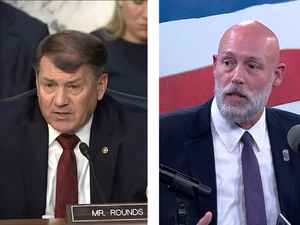
Bo French, Jon Rosenthal battle over culture, job duties in bid to regulate the oil and gas industry
Oct 17, 2026 | 6:00 am ET
Description
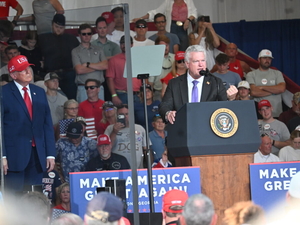
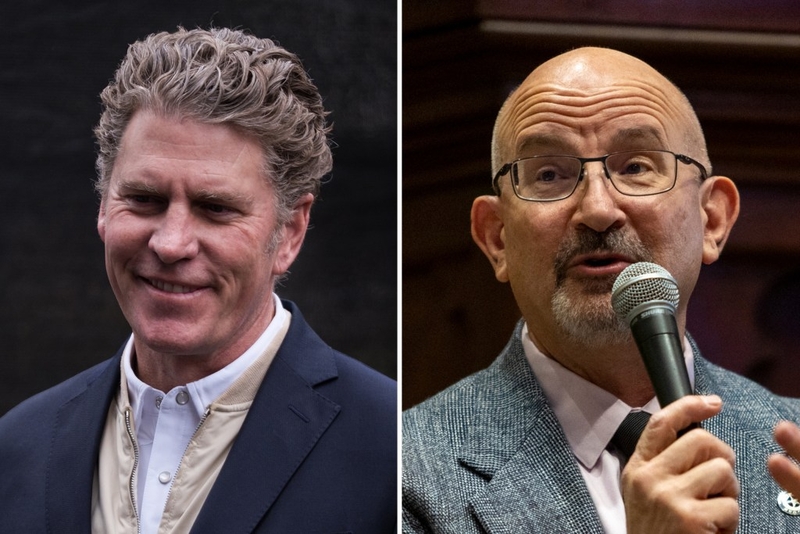
From left: Bo French and Jon Rosenthal, the Republican and Democratic nominees for Texas Railroad Commissioner. (Camilo Diaz Jr. and Leila Saidane for The Texas Tribune)
Subscribe to The Y’all — a weekly dispatch about the people, places and policies defining Texas, produced by Texas Tribune journalists living in communities across the state.
ODESSA — Jon Rosenthal planned to spend much of the summer and fall explaining the nuances of the Texas Railroad Commission, the three-member council that regulates the state’s oil and gas industry, and pitching himself to voters as the best man for the job.
Then his opponent, Bo French, posted on social media.
French, a conservative firebrand, for years raised his profile in Texas politics with incendiary — and often racist — remarks. His campaign for the under-the-radar oil and gas regulatory agency has been no different. Since he declared, French has attempted to focus the election on Chinese-owned land, diversity and inclusion and immigration policies, and LGBTQ+ issues over which the Railroad Commission has little, if any, sway.
In September, French commented on the racial makeup of the University of Texas-Austin student body, suggesting without evidence that South Asian students have robbed white students of their place in the classroom and at football games.
French’s racist remarks catapulted the race into the national spotlight, providing the best chance a Democrat has had in recent memory to crack the Republican trifecta on the commission. If Rosenthal is successful, he’ll be the first Democrat elected to the commission since the 1990s.
An oil field engineer and state lawmaker from Houston, he’s promised to pursue chronic polluters, bolster the agency’s oversight over natural gas facilities for emergency preparedness and create a fee for companies that store oil and gas wastewater underground and use the money for abandoned wells.
It’s unclear if Rosenthal has made the most of the viral moment. While cash flowed into his campaign bank account, Rosenthal’s campaign has struggled to raise the amount of money previous Democratic candidates have amassed.
And despite criticism from his own party and the oil and gas industry, French has not backed down. He’s promised to lower electricity and gas prices, further cut regulations and DEI programs, crack down on foreign ownership of oil and gas wells and promote anti-abortion policies.
The winner of Nov. 3 election will join the commission, which leads the vast state agency with a half-billion budget. There is no shortage of thorny policy questions and issues to grapple with amid a consequential time for industry. Commissioners vote on drilling permits and issue penalties for violations. They approve pipeline construction and oversee programs related to the disposal of industry wastewater.
French, 56, is not a stranger to the oil and gas industry. A Midland native, his family owns French Oil, an oil company based there.
However, he is best known for his time in Tarrant County, where he led the local Republican Party. His comments on race, gender, and other social issues have garnered rebuke from other party leaders. Lt. Gov. Dan Patrick, no liberal lion, asked him to step down from party leadership after French posted a poll online asking his followers whether “Jews” or “Muslims” pose a bigger threat to the U.S.
GOP leaders, including Patrick and Gov. Greg Abbott, openly supported fellow Republican Jim Wright during the primary. Since declaring his candidacy, French has made headlines throughout the year for his commentary. In March, he said 100 million people should be deported from the U.S., and in June, he called the U.S. Supreme Court Justices’ decision to uphold birthright citizenship, a constitutional right, traitorous.
French did not respond to requests for comment.
French has tweaked his message some, including on his campaign website. On the commission’s functions, French said that its job is to stay out of the way so the oil and gas industry can produce more oil, which he suggested would bolster Texas’s refining industry as a result.
It’s unclear how more oil would strengthen refining if a Trump administration export ban that would cut a large share of the industry’s customer base remains intact. Some experts have also said flooding the market with oil would tank oil prices, shred company profits, and threaten the Permian Basin, Texas’ biggest oil field, and its surrounding communities.
Nonetheless, French said he supports deregulating the industry. Most drilling in Texas occurs on private land, so little of it is federally regulated, and the commission rarely stands in the way of fossil fuel production.
“Texas has oil and leaders who say yes to producing it,” he wrote in one post on X, in response to Steve Hilton, a California Republican running for Governor. “That’s the whole difference at the pump. Keep it that way. Keep radicals off the Texas Railroad Commission.”
Rosenthal, a four-term state representative, would represent a minority vote on the commission that would stand in the way of his ten-point policy platform. He has pledged to target companies that regularly exceed air-pollution regulations and to impose a fee on companies that inject oil and gas wastewater underground, using the proceeds to plug orphan wells. His platform also includes administrative requirements for natural gas plants to equip their facilities to withstand extreme weather, publish the results and probe facilities passing recovery costs from harsh weather to consumers.
Rosenthal, 63, has faced unlikely odds before. When he launched his campaign to represent northwest Houston in 2018, he unseated a longtime Republican incumbent.
But in the high-profile race for railroad commissioner, he has been outraised and out-marketed, facing hundreds of thousands of dollars that right-wing donors have thrown his opponent’s way.
A career oil field engineer, Rosenthal rarely strays from industry-related topics. He often kicks events off by explaining that the agency doesn’t regulate railroads, describing the kinds of companies the commission needs to crack down on, and explaining why energy bills rise during extreme weather events.
The “Drill, Baby, Drill” Democrat, as Rosenthal calls himself, has had to take time away from the issues to address his opponent’s raucous opinions.
“I still want to focus on the issues,” Rosenthal said. “It’s always been the case that I would push back on his incendiary and racist posts. In the context of this race, it should be about the facts, but that has changed because … I get asked about (French’s comments) every day. And it has to be part of what we are all talking about. It’s become a major issue”
A long path to election night
Despite outraising French for the first time since the start of his campaign, Rosenthal, who raised nearly half a million in contributions from all but one state after the viral tweet, faces a difficult path as he attempts to court cross-over Republican voters.
And he has yet to persuade the oil and gas industry, which has also — unusually — withheld financial support for the Republican candidate.
Still, former candidates who ran for railroad commissioner on the Democratic and Republican ballot argued that French’s rhetoric and viral tweet gave Rosenthal an edge. It raised awareness about a regulatory agency that people are unfamiliar with. His fundraising, which was low most of the year, got a boost.
“The biggest challenge is getting enough people to get to know the candidate, and that’s nearly impossible without something like this happening,” said Luke Warford, a Democrat who ran for the same seat in 2022 and raised nearly a million dollars. “Having a terrible opponent is great for winning … The tweet happened at the perfect time … because it’s at the part of the season when people raise the most money.”
Sarah Stogner, who ran against Railroad Commissioner Wayne Christian and raised two million largely thanks to a single donor, said Rosenthal is running in a different political environment. Dissatisfaction with Republican performance on the Iran war and inflation could help Rosenthal argue that he is a viable alternative regardless of party affiliation.
A major poll by the University of Texas/Texas Politics Project released Wednesday shows key down-ballot Democratic candidates for statewide races holding razor-thin leads against Republicans. That same poll has Rosenthal ahead of French by a point with a three percent margin of error.
“If people start looking, the comparison is so easy,” Stogner said. “It’s the mechanical engineer or the trust fund baby.”
The two have agreed to debate in Dallas, the Dallas Press Club has said. French has not confirmed publicly or acknowledged the potential standoff, the only confirmed debate across statewide races.
Austin, TX