Public health improvements stall amid Trump’s DEI crackdown
Jul 19, 2026 | 4:00 am ET
Description
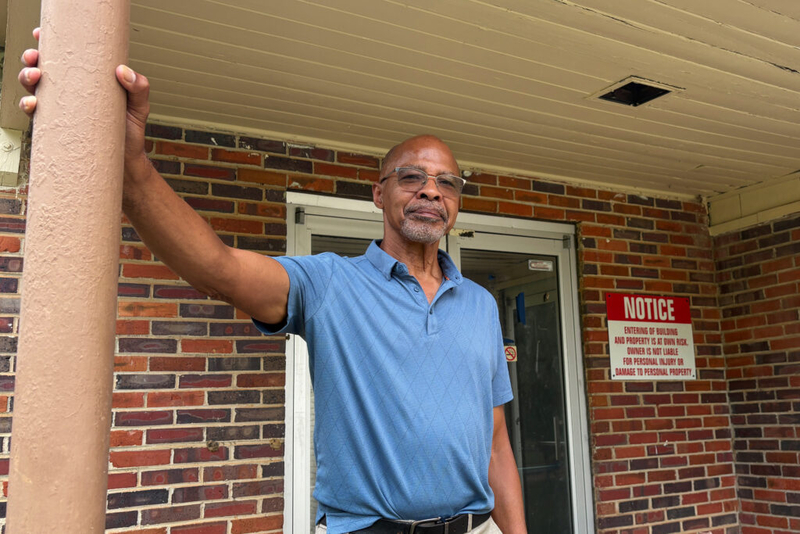
Earl Williams, former community development director of the Thomasville Community Development Corp., stands in front of a building the city hoped would be turned into a healthcare clinic in Dewey City. The predominantly Black neighborhood in Thomasville, Georgia, faces blight and health challenges. (Briah Lumpkins/KFF Health News)
THOMASVILLE, Ga. — As Earl Williams drove through a historic Black neighborhood known as Dewey City in his hometown, he hardly recognized what he saw.
Homes that once belonged to friends, family, and neighbors had siding covered in mold. Some were boarded up. Others had holes in their roofs.
Black churches once used Oquina Creek, which runs along the border of the neighborhood, to baptize their congregants. Today, fecal bacteria and other contaminants have made the water unsafe due to an aging wastewater system.
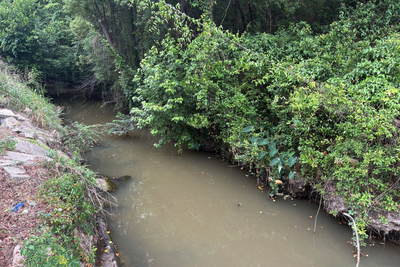
“Sometimes you get the feeling like you’re in a Third World country,” Williams said. After three decades in Washington, D.C., he returned four years ago with a mission to revitalize communities such as Dewey City, which he said are “part of what makes Thomasville, Thomasville.”
A $19.8 million Community Change Grant from the Environmental Protection Agency was supposed to shift the tides of the neighborhood Williams grew up in.
The city and the Thomasville Community Development Corp., where Williams is the former community development director, applied for the grant in 2024. It was part of a $2 billion effort initiated under the Biden administration to help disadvantaged communities address environmental health risks and create clean energy and climate resiliency projects.
But three months after winning the grant, Thomasville became one of 80 communities across the country — from Hawai‘i to Alabama to Massachusetts — to see the funding stripped as priorities shifted in Donald Trump’s second presidency.
On the first day of his second term, Trump signed an executive order titled “Ending Radical and Wasteful Government DEI Programs and Preferencing.” It stated that the Biden administration “forced illegal and immoral discrimination” through diversity, equity, and inclusion programs.
In an emailed statement, EPA spokesperson Mike Bastasch said the administration is “fully committed to being a great steward of taxpayer dollars.” He added that the “radical agenda” of DEI and environmental justice “preferencing” are not within the agency’s core mission of protecting human health and the environment.
Environmental health advocates argue, though, that the decision to cut the grants was not rooted in science. They say that equating environmental justice to DEI is an act of bad faith and that withholding the money forces disenfranchised communities to delay long-overdue updates needed to protect public health for marginalized populations.
“I unfortunately believe we’re going to see a reversal in the health profile of this country,” said Jalonne White-Newsome, an associate professor at the University of Michigan who served in the Biden administration as the first federal chief environmental justice officer.
“This current federal regime has decided that humanity and public health and justice don’t mean anything,” she said.
‘Why Us?’
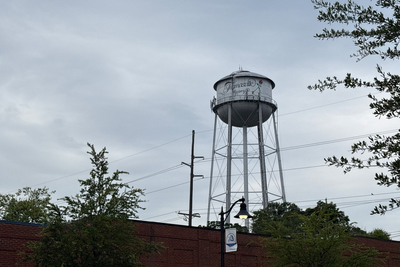
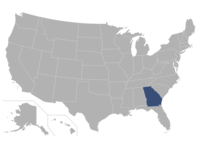
Thomasville, near Georgia’s southwestern border, is home to just over 18,600 people.
The city had hoped to improve health outcomes in neighborhoods on its southern and western sides where, according to the grant proposal, “historical redlining created a legacy of disinvestment.”
Those areas have a deep history: Dewey City, for example, was the first neighborhood in the city where Blacks could build homes after the Civil War. It’s also home to the closed Douglass High School — the first public school for Blacks in Thomasville, established in 1902.
“This place has been neglected,” said Williams, who occasionally hosts historical walks through the community. “But it’s worth bringing it back online.”
The proposed “Restoring Resiliency” project featured a plan to remove toxic substances such as mold, lead paint, and asbestos from homes, repair a nearly 82-year-old wastewater system, and convert part of a shuttered high school band room into a health clinic.
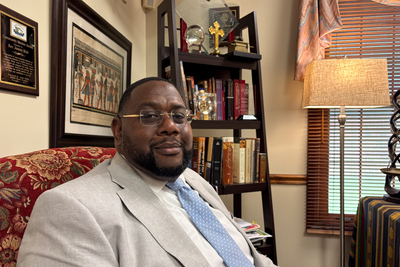
“This was a long and storied attempt to bend the arc of justice closer,” said Jeremy Rich, a Thomas County commissioner and the pastor at First Missionary Baptist Church. “Justice in healthcare. Justice in environmental impact.”
Having a clinic in the community would be a “game changer,” Rich said. During the covid pandemic, he said, older residents who rely on public transit were reluctant to go to the nearby hospital or the county health department to get vaccinated. When his church offered shots from Black nurses, he said, vaccination rates improved.
Many residents don’t have the financial means to remove mold, lead paint, and other toxic materials, said Thomasville Mayor Pro Tem Lucinda Brown. “They just have money to live with every day. That’s it,” she said. “If they can make that happen.”
The grant meant hope, and its reversal left many asking, “Why us?” Williams said.
In the EPA’s May 2025 letter announcing the grant termination, it said Thomasville’s project promoted “initiatives that conflict with the Agency’s policy of prioritizing merit, fairness, and excellence.” The grant was “inconsistent with, and no longer effectuates, Agency priorities,” the letter said.
Environmental justice projects are rooted in science, not DEI, said Jillian Blanchard, the senior vice president of climate change and environmental justice at Lawyers for Good Government, a national nonprofit that provides pro bono legal assistance in focus areas such as health equity, immigration, and environmental health.
“Where is the water dirty? Where is the air unclean?” she said. “That is where the money should go.”
In June of last year, nearly two dozen communities and organizations around the country filed a class-action lawsuit to get the Community Change Grants reinstated. The lawsuit argued that the projects — such as efforts to create energy-efficient housing in Kalamazoo, Michigan, and empower Houston residents in the pollution permitting process — were vital.
The case was dismissed by a federal district judge in 2025 but is being appealed.
Thomasville was not named in that lawsuit. But the city did appeal the EPA’s decision on its project with the support of Blanchard’s group. The city and the EPA continue to dispute the issue.
This March, the EPA’s deputy inspector general, which serves as an independent watchdog for the agency, released a report concluding that the process for determining the awardees was fair.
Such federal funding is needed because large-scale change is difficult for small municipalities to achieve without getting stuck with high-interest loans, Blanchard said.
“It’s next to impossible,” she said. “That’s one of the reasons the things haven’t been done.”
‘It’s Not Over’
The city of Thomasville has found other ways to make some improvements in the meantime. With the help of a nearly $3 million federal Community Development Block Grant from the Department of Housing and Urban Development, it made repairs to portions of Dewey City’s sewer, water, and drainage systems.
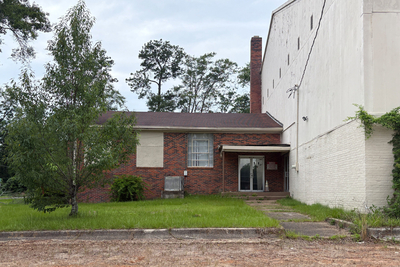
The Thomasville Community Development Corp. has begun building affordable housing in Dewey City and intends to convert a portion of the closed Douglass school into apartments for seniors.
The corporation has also applied for $764,000 in congressional funds through the office of Sen. Jon Ossoff (D-Ga.) that it hopes to use to construct a community health clinic in Dewey City. Decisions on these funding requests will be made this fall.
“It’s not over,” said Williams, whose legacy in Thomasville runs deep. At the center of what locals call The Bottom — a two-block stretch of downtown where independent Black and other minority-owned businesses once thrived — is a plaque honoring his father, Earl Williams Jr., the city’s first Black mayor.
As he peered at his father’s memorial on a muggy afternoon, he reaffirmed his intentions.
“There’s more work to be done, and I’m able,” he said. “I like pouring into the community.”
But he has little hope the initial grant will be restored under the current administration.
“That was our shot. We didn’t do anything to miss it,” he said. “We just did it during the wrong period of time.”
KFF Health News is a national newsroom that produces in-depth journalism about health issues and is one of the core operating programs at KFF — the independent source for health policy research, polling, and journalism.
- 4:21 pmThis story was updated to correct Earl Williams' title. He is the former community development director.
Atlanta, GA