Protests didn’t stop the Dakota Access Pipeline. A decade later, tribal leaders still see an impact.
Sep 17, 2026 | 6:01 pm ET
Description
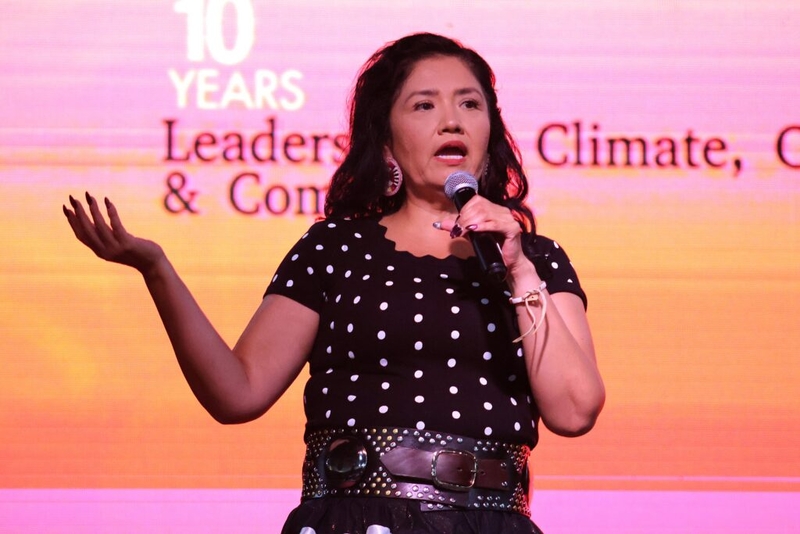
Standing Rock Sioux Tribal Council Representative-at-Large Nola Taken Alive gives a speech on Sept. 17, 2026, at Fort Yates, North Dakota. (Photo Jack Dura/North Dakota Monitor)
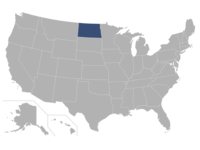
FORT YATES, N.D. – Protests against the Dakota Access oil pipeline left a ripple effect for Indigenous people to stand up for their communities, Standing Rock Sioux tribal leaders said Thursday at a renewable energy event that included reflections on the demonstrations a decade ago.
Indigenized Energy hosted the first People of the Sun event at the Prairie Knights Casino on the Standing Rock Reservation. The nonprofit champions solar and renewable energy and tribal energy sovereignty. Thousands of people gathered in southern North Dakota in 2016 and 2017 to protest the multistate pipeline opposed by the Standing Rock Sioux Tribe as a threat to its water supply.
“The oil is still flowing. The pipeline hasn’t been shut down, but there’s something really powerful that has happened, even more powerful than that, is of course the world has been awoken,” Nola Taken Alive, Standing Rock Sioux Tribal Council representative-at-large, told the audience.
The demonstrations played out near the project’s Missouri River crossing, sometimes in chaotic brushes with law enforcement before authorities cleared the camps in 2017. Protesters said the pipeline project trampled Indigenous rights, ignored environmental concerns and destroyed sacred sites, claims pipeline developer Energy Transfer has long denied.
Hundreds of arrests resulted as the protests unfolded over roughly six months, though many of the charges were later dismissed. Other court cases still linger in connection with the protests, including lawsuits between pipeline developer Energy Transfer and environmental group Greenpeace.
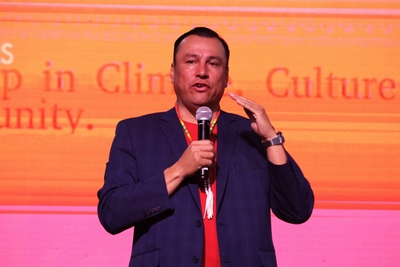
Indigenized Energy founder and CEO Cody Two Bears said he wanted the first event to be held in a “frontline community that has been through the atrocities of extraction, the atrocities of dealing with people that have come in and devastated our lands, our water, our earth.”
Inflation, rising energy costs and federal cuts have hit tribal communities hard, he said. Indigenous communities are “being forced to have to deal with energy systems that we don’t particularly agree with,” he said. “It’s our job to change that.”
A video highlighted the Buffalo Sun project, in which Indigenized Energy installed solar panels to power the buffalo barn of Wozu, a tribal food and culture effort founded by Dave Archambault II, who was tribal chairman during the protests.
Standing Rock has a renewable energy entity called SAGE Development Authority that formed in 2020, not as a result of the protests. SAGE is a primarily grant-driven project developer that handles energy grants and projects, founder and project director Fawn Wasin Zi said. SAGE has explored solar, wind, geothermal, green hydrogen and electric vehicles, CEO Joseph McNeil said.
SAGE stands for Strategic Advancement Goals for the Environment.
“My goal is just to diversify our energy sources, which just has a compounding effect. Then our economy starts to diversify and jobs are being built to accommodate that economy, so I just think it’s a win-win for everyone,” Wasin Zi said.
SAGE does have projects stemming from the protest movement, she said. One is a cultural interpretive center planned to be completed in 2035. The museum will house cultural artifacts and resources and share oral histories.
“It serves that purpose as a regenerative way for us to reinforce our culture, our language where we can teach ourselves and then others,” McNeil said.
He recalled how Standing Rock community members took care of youth and others who stood against the pipeline, opening their homes and resources to “these people who were putting their lives and bodies on the line to watch for our future.”
Kendrick Eagle was 23 in fall 2016 and living in Bismarck-Mandan when his mother said he should go see the camps. The camps were “an outstanding place to be,” where people readily offered gas money and food, he said.
“It was surreal to see all these people in my fishing spot, actually,” said Eagle, who grew up in that area. Ten years later, he is the Cannonball representative on the council.
In the event of a spill, “the people I represent literally would be the first affected by this pipeline,” Eagle said.

Thursday’s event also recognized tribal citizens with awards for advancing renewable energy projects, and included a tribal energy issues panel moderated by actor Shailene Woodley. She participated in the protests a decade ago and was arrested.
Taken Alive recognized Woodley for “using her platform” to highlight youth activists and bring “this injustice to the forefront” in 2016.
Pipeline protesters were put down and ridiculed 10 years ago, she said. Now, opponents of large-scale data centers in North Dakota are “going to need our help,” Taken Alive said.
“Now, it’s like they’re singing the same tune of what we were saying, now that it’s going to impact their back door, their backyard,” she said.
The bigger lesson from the protests is worldwide awareness of “the injustices that are happening with our environment” and the history of the federal government’s treatment of Native people, she said.
“It’s not the fact that we haven’t won. There’s a bigger win here, and it’s about the protection for other tribes. It’s about the protection for others’ backyards,” Taken Alive said.
Reach North Dakota Monitor reporter Jack Dura at [email protected].
Bismarck, ND