Deep Fission releases safety design agreement for Kansas nuclear pilot project
Sep 17, 2026 | 3:23 pm ET
Description
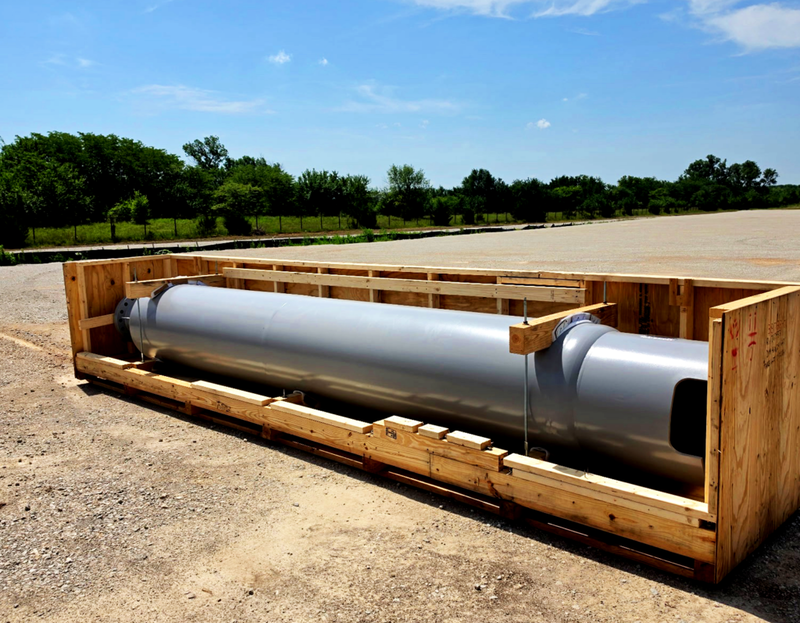
Deep Fission, which is building a nuclear reactor in Parsons, Kansas, fabricated and tested a prototype reactor canister. The testing determined the canister met requirements for structural integrity and leak tightness, the company said on its website. (Photo by Deep Fission)
TOPEKA — The company building a nuclear reactor one mile underground in Parsons made its federally approved safety report available to the public Monday.
The U.S. Department of Energy approved Deep Fission Inc.’s safety design for its Gravity nuclear reactor in July. The company publicly shared the report, with only a few small redactions that relate to security, a news release said.
“We’re publishing our full (Nuclear Safety Design Agreement) because we think the public deserves to see the actual safety case behind this reactor, not just our word that DOE reviewed one,” said Liz Muller, CEO and co-founder, in a news release. “A project with this kind of ambition should be built in the open, and we hope more of the industry joins us in doing that.”
The reactor, which is a pilot project revolving around placing a small nuclear reactor in a one-mile deep bore hole, will be located at the Parsons Great Plains Industrial Park. Area residents have objected to the innovative and untested design, raising concerns about its safety.
Marjorie Reynolds founded Prairie Dog Alliance, a local advocacy group asking for transparency and regulations around the site’s development. She said their concerns extend to plans throughout the life of the reactor, such as understanding what will be done with spent nuclear material.
“At some point in time, they’re going to have to store nuclear material above ground because we do not have a national repository for nuclear waste,” Reynolds said.
She pointed to Burlington’s Wolf Creek nuclear generating station, which stores spent nuclear material on site. The Kansas Department of Health and Environment runs an environmental radiation surveillance program that checks Wolf Creek storage “to ensure there are no radioactive materials in excess of technical specifications released to the environment,” a state website said.
The 81-page agreement for the Gravity reactor creates a safety and regulatory framework with the U.S. Department of Energy, encompassing design requirements, safety analysis approach, regulatory process and key safety decisions, said Deep Fission spokesman Michael Padovano in an email to Kansas Reflector.
The Energy Department’s approval was an early regulatory milestone for the project, he said.
“It means DOE has accepted the framework Deep Fission will use to advance the reactor’s design and safety analysis through the next stages of the Reactor Pilot Program,” Padovano said. “It does not authorize operation of the reactor, which will require additional safety reviews and approvals.”
Deep Fission worked with the Energy Department in a review process to develop the agreement, and Energy Department input was integrated through revisions, he said.
“The reactor design is not final, and Deep Fission will continue refining it as the project moves through preliminary and final design,” Padovano said.
The Parsons project is moving through design stages, safety analysis and regulatory review, he said. Further Energy Department approval will be needed.
The Deep Fission project is part of the Energy Department’s Reactor Pilot Program, which created a new pathway to advance nuclear reactors through commercial licensing.
“The program aims to leverage a DOE’s authority to expedite the research and development of advanced nuclear reactor technologies with the larger goal of reaching criticality for at least three advanced nuclear reactor concepts located outside of the national laboratories by July 4, 2026,” said an Energy Department page about the program.
Topeka, KS