Proposal to hold AI data centers accountable to energy ratepayers clears first committee
Jan 20, 2026 | 2:48 pm ET
Description
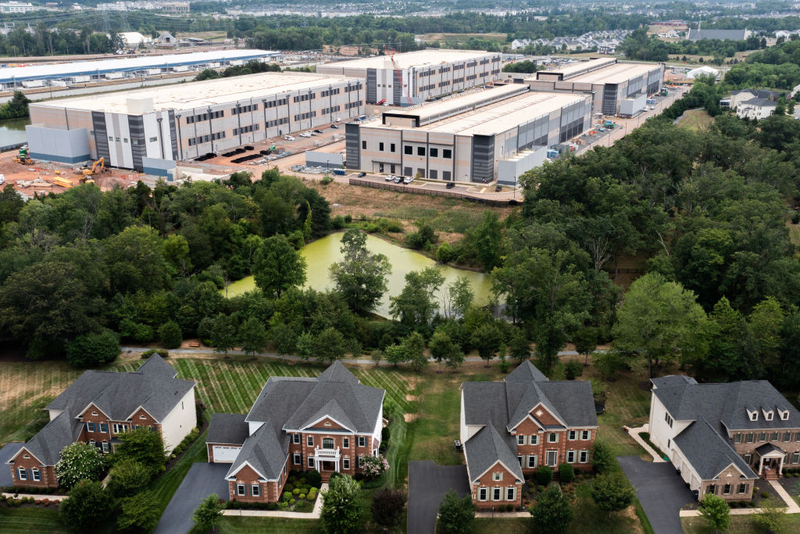
An aerial view shows a data center situated near single-family homes in Stone Ridge, Va., last year. Local communities around the country are seeking more input on where and how data centers are built. (Photo by Nathan Howard/Getty Images)
A measure (SB 484) revising state law regarding regulation of large-scale data centers and certain other large electricity users received its first hearing in a legislative committee in Tallahassee on Tuesday.
The proposal, introduced by Sen. Bryan Avila, R-Miami Springs, is the first bill in the Florida Legislature to address concerns about the intense energy demand by Artificial Intelligence (AI) data centers.
Data centers’ projected electricity demand in 2030 has been set at to up to 130 gigawatts, which would represent close to 12% of total U.S. annual demand, according to the Environmental and Energy Study Institute.
Avila’s bill would require the Public Service Commission (PSC) to develop minimum large load tariff requirements for public electric utilities to reasonably ensure that big customers (such as large data centers) pay for their own cost of service and that the general body of ratepayers do not bear the risk of non-payment of such costs.
It specifies that agencies may not enter into non-disclosure agreements or other contract language restricting disclosure of information about a potential data center development to the public.
And it continues to maintains authority of local governments to exercise their powers of comprehensive planning and land development regulations granted by law with respect to large-load customers.
The proposal was greeted favorably by representatives of consumer advocacy groups.
“We have nearly 150,000 members across the state, and we’re very concerned about undue burdens on them as ratepayers,” said Heaven Campbell, Florida director of Solar United Neighbors (SUN) Action. “I believe that we have to figure this out before the damage is done.”
However, some organizations believe the measure goes too far in regulating the emerging industry.
“Florida can either welcome billions in capital investment into high-wage jobs and substantial tax revenue, or we can erect barriers that send these projects to Texas, Georgia, and North Carolina,” warned Turner Loesel, a policy analyst with the James Madison Institute.
His organization believes ratepayer protections “matter,” he said, but contended that several provisions in the bill go “beyond consumer protections” and threaten to place Florida behind other states in competition for such projects.
“Other states are rolling out the red carpet, while we roll out the red tape,” he said.
FOMO
Sen. Jason Brodeur, R-Sanford, said he appreciated parts of the bill that would protect local governments when it comes to water use, but argued the Legislature must encourage data centers to be located in Florida.
“It’s not like we can say, ‘We don’t like this.’ This will go to Georgia, and we will never recover,” he warned — adding that with the state’s military bases and university system, “there are umpteen uses for having these centers located in Florida.”
The measure ultimately passed unanimously in the Senate Regulated Industries Committee.
A related measure (SB 1118), which would provide an exemption from public records disclosure for information relating to the plans, intentions, or interest of a person to locate a data center for 12 months, also was approved, though Sen. Jason Pizzo, independent from Sunny Isles Beach, voted no.
“This really, really puts local officials in a tough spot about what they are and are not allowed to say and talk about,” he said.
Committee Chair Jennifer Bradley, R-Fleming Island, said she agreed with Sen. Pizzo’s remarks but opted to support the bill at its first committee stop. “I do think these provisions are a little broad in terms of for local governments,” she said.
Avila vowed to work on tightening the language as the bill advances through committees. It would become law on the same day that SB 484 would take effect, which would be July 1, 2026.
Tallahassee, FL