Proposal to give SC Board of Education final say over book challenges opposed
Apr 10, 2024 | 8:11 pm ET
Description
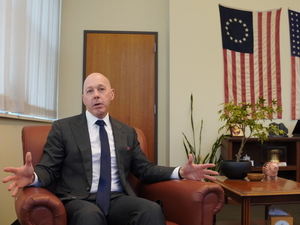
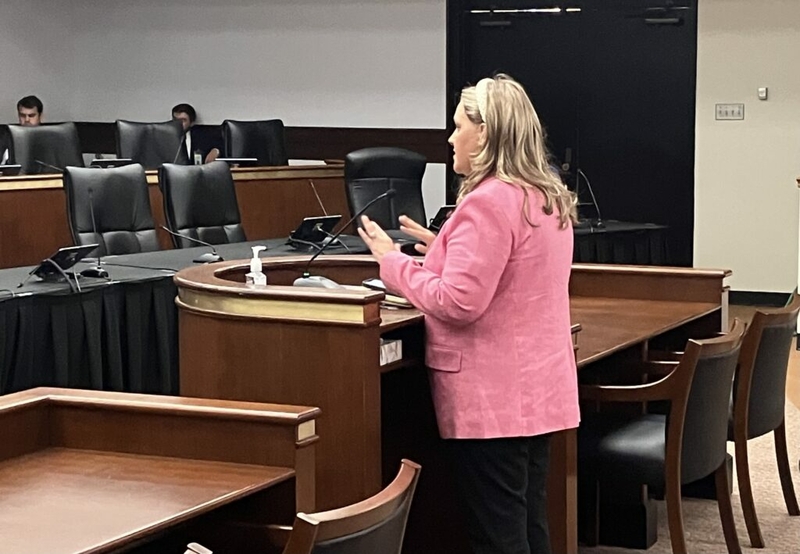
Rebecca Blackburn Hines, chair of the Lexington-Richland School District Five Board, testifies Wednesday, April 11, 2024, during a subcommittee hearing on a proposed regulation to create a statewide procedure for book challenges. (Abraham Kenmore/SC Daily Gazette)
COLUMBIA — A proposal creating a statewide process for challenging books in South Carolina’s public schools and giving the State School Board final say over parents’ complaints is done for the year.
A House subcommittee debated Wednesday a regulation approved in February by the South Carolina Board of Education, which declares that “sexual conduct” can’t be in library books, textbooks or any other classroom materials.
And it mandates a uniform complaint process for parents who think their school is in violation. Decisions by local school boards could be appealed to the state for a final ruling.
But the rules, which opponents worry could result in even literary classics being removed, won’t take effect unless the Legislature approves them.
Rep. Jeff Bradley, chairman of the House Regulations Committee, said legislators need more input before deciding what to do. The regular session ends in a month. The House panel could take it up again after the 2025 session starts in January.
The state board could also withdraw the regulations, make changes and resubmit them for the next session.
An attorney for the Department of Education argued the proposal has nothing to do with book bans, but rather regulates the materials that can be bought for students to use.
“The review of instructional materials in our public schools throughout the state is governed by a patchwork quilt of 80 or more different policies,” Miles Coleman, an attorney for the agency, told legislators.
He said the state board revised the regulation based on testimony at its meetings before submitting it for legislative review.
Parents and advocates for educators and civil liberty groups, however, said the rules still go too far.
“I worry that the overly broad language could end up catching a larger net of material than what the department is trying to address in this regulation,” said Patrick Kelly, a high school teacher and lobbyist for the Palmetto State Teachers Association.
Others testifying against the proposal’s definition of “sexual conduct” included Joshua Malkin, an attorney for the American Civil Liberties Union’s South Carolina chapter.
It could mean books such as “The Catcher in the Rye,” “Beloved,” “The Scarlet Letter,” and classics by William Shakespeare “would be banned for all students across South Carolina,” he said.
Coleman countered that the Board of Education was trying to keep it simple to avoid lengthy debates among lawyers about what did or did not meet standards.
“It’s simple enough that it’s not going to get bogged down,” he told legislators.
Others opposed taking the control away from local school officials.
School districts that already have a review and complaint process should be able to keep their policies, said Ryan Bailey with the state Association of School Administrators.
At least one school board member liked the proposal, however.
“I am very much in favor of this regulation. I think that it’s very important that we have a simple process to deal with books across all districts,” said Rebecca Blackburn Hines, chairwoman of the Lexington-Richland Five school board.
She recounted her own experience of reviewing a book that was challenged in her district.
“The parent had read the book and did read out passages,” she said. “The book material that was read at a school board meeting was so egregious that YouTube censored the passage.”
Columbia