Preservationists hope SC battlefield’s designation as endangered will boost attention
Jun 08, 2026 | 5:22 pm ET
Description
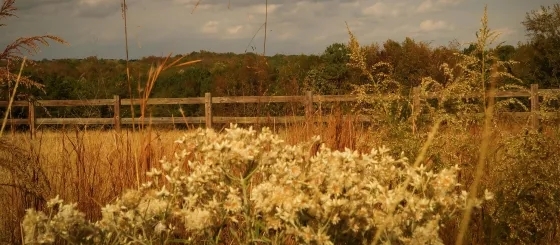
Hanging Rock Battlefield was one of the nation's 11 most endangered historic places, according to a national preservation nonprofit. (Photo by Brian Keeley Photography/Provided by American Battlefield Trust)
COLUMBIA — As South Carolina grows, a battlefield in Lancaster County is among historic places across the country most at risk of being lost forever, according to a national historic preservation group.
Hanging Rock Battlefield in Heath Springs is one of America’s 11 most endangered historical places, according to the National Trust for Historic Preservation.
The designation came with a $25,000 grant to help preserve each site and national attention that can help bolster work in an area, said Catherine Noyes, who oversees the Liberty Trail program for the American Battlefield Trust.
This year, in honor of the nation’s 250th birthday, the trust selected places that represented the nation’s founding ideal of equality. While the Declaration of Independence states “all men are created equal,” the Constitution initially guaranteed rights only to white men. The list highlights the work done to expand the Founding Fathers’ promise to everyone.
Of the 11 selections, only Hanging Rock Battlefield had direct ties to the Revolutionary War.
Others on the list included Alabama’s Ben Moore Hotel, a gathering place for Civil Rights leaders; New York’s Stonewall National Monument, once a gay bar where LGBTQ people demonstrated following a police raid; and Michigan’s Detroit Association of Women’s Clubs, the longtime headquarters for the influential women’s rights organization.
Founding Mothers’ Day recognizes SC women’s contributions to The Revolution
Some places end up on the list because of imminent threats to their futures.
That’s not the case for Hanging Rock Battlefield, which has no specific development planned for the so-far unprotected acreage.
But as the population around Charlotte, North Carolina, grows, leading to more sprawl in surrounding rural areas, the possibility of people buying and building on the approximately 270 privately owned acres becomes more likely, said Molly Fortune, head of the SC250 Commission, which is responsible for organizing the state’s celebration of the country’s birthday.
Preservationists want to be proactive instead of waiting for a more direct threat, Fortune said.
“Let’s start talking about it now, before it becomes, ‘We should have done something sooner,’” Fortune said.
SC250 and the American Battlefield Trust, along with grants from the state-funded Conservation Bank, have helped buy about 330 of the battlefield’s total estimated 600 acres over the past decade. A portion of the land is open to the public, under the state parks department’s operation, including a trail looping three-quarters of a mile with signs describing important parts of the battle.
“We’ve been able to make a lot of progress at the site, but there’s still a lot left to do,” Noyes said.
Hanging Rock isn’t one of the more famous battles during the Revolutionary War, which makes preservation more difficult, Noyes said. Convincing people to save a place is more challenging when they don’t even realize it exists, she said.
On Aug. 6, 1780, troops led by Gen. Thomas Sumter, known as the “Fighting Gamecock,” attacked a British encampment near Hanging Rock, named after a boulder propped over a nearby creek. Although the Americans eventually retreated, they considered the attack a victory, killing 25 British troops, wounding 175 others and pillaging valuable supplies.
The battle set the stage for other Patriot victories down the line, including the South Carolina battles of Kings Mountain and Cowpens, which helped build the momentum leading to the British surrender in Yorktown the following year, Fortune said.
How a Revolutionary War battle in SC helped name two Navy ships, a festival and a book
Also present at the Battle of Hanging Rock was 13-year-old Andrew Jackson, who cared for the soldiers’ horses and would go on to become the nation’s seventh president.
Understanding the Battle of Hanging Rock is important to understanding everything that came after, including the eventual British defeat, Fortune said. Losing a significant historical spot like that is like tearing pages out of a favorite novel, she said.
“Your 500-page book that tells the full and complete story, if you’re not careful, becomes a 20-page book, and it has no context anymore,” Fortune said.
The battlefield’s inclusion on the nonprofit’s annual list can help get the word out, bringing more attention to the battlefield, Fortune and Noyes said. They hope more exposure will lead to more donations, which will in turn allow them to buy more land, build more trails and conduct research to learn more about happened on the site, Fortune said.
“It’s one of those pieces that we have to have,” she said. “It’s not just the story of a battle. It’s a story of the people and the unique place that it is.”
The $25,000 grant — included for the first time this year in honor of the 250th anniversary — will go toward building more signs showing people where different parts of the battle took place, Noyes said.
The American Battlefield Trust has online tours of the battlefield, but people better understand the history when they actually go there, Noyes said.
She wants the land to become an outdoor classroom of sorts, where people of all ages can visit and envision how the soldiers felt fighting on that terrain.
“There’s no substitute for putting your feet on the ground, walking in the footsteps of the people who were there and experiencing that history in that place,” Noyes said.
This is the 11th time a South Carolina location has landed on the list.
Charleston’s historic neighborhoods were one of the locations selected in 2023, as a proposed development at Union Pier threatened to tear down historic houses. Mount Pleasant’s Snee Farm, a plantation once owned by Revolutionary War hero and former Gov. Charles Pinckney, appeared on the first iteration of the list in 1988.
National Trust for Historic Preservation’s list of America’s 11 most endangered historic places
- The Ben Moore Hotel in Montgomery, Alabama
- Tule Lake Segregation Center in Modoc County, California
- Angel Island Immigration Station in Tiburon, California
- Swansea Friends Meeting House in Somerset, Massachusetts
- Detroit Association of Women’s Clubs in Detroit, Michigan
- Greater Chaco Cultural Landscape in New Mexico, Colorado, Arizona and Utah
- Women’s Rights National Historic Park in Seneca Falls, New York
- Stonewall National Monument in New York, New York
- The President’s House Site in Philadelphia, Pennsylvania
- Hanging Rock Revolutionary War Battlefield in Heath Springs, South Carolina
- El Corazón Sagrado de la Iglesia de Jesús in Ruidosa, Texas

Columbia