SC law bans recreational sales of nitrous oxide, or ‘whippets’
Jun 12, 2026 | 1:49 pm ET

Description
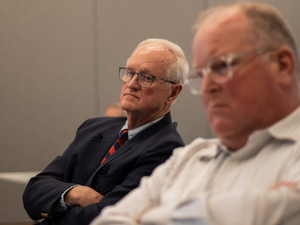
Left to right, Sen. Russell Ott, D-St. Matthews; Sen. Ed Sutton, D-Charleston; and Senate Judiciary Chairman Luke Rankin, R-Myrtle Beach, talk in Senate chambers on Tuesday, Jan. 13, 2026. Sutton was the lead sponsor on a bill Ott co-sponsored to ban sales of nitrous oxide. (Photo by Jessica Holdman/SC Daily Gazette)
COLUMBIA — Recreational sales of nitrous oxide, which some people inhale to get high, are illegal in South Carolina under a new law.
Nitrous oxide, which is used in doctor’s offices and kitchens, has a long history of use as a recreational inhalant. But that went to new levels in recent years when social media videos showed children inhaling flavored versions of the gas from colorful canisters, said Sen. Russell Ott, a co-sponsor.
“The hope is to try to keep some of these products out of the hands of our kids,” the St. Matthews Democrat told the SC Daily Gazette on Friday.
Both the House and Senate unanimously passed the bill, which took effect when Gov. Henry McMaster signed it into law May 18.
Nitrous oxide has legitimate uses. Also called laughing gas, nitrous oxide is a sedative used for dental and medical procedures, often breathed through a mask or nosepiece. The gas is also what turns liquid cream into whipped cream inside a canister, which led to the inhalant being known as “whippets.” And mechanics sometimes use nitrous oxide for car repairs.
Senators advance bill restricting sales of ‘whippets’ following pleas for help
Outside of those purposes, though, anyone selling the inhalant can face increasing fines and potential jail time for each sale made. A first offense could lead to $1,000 and six months in jail, and three sales or more could mean up to $10,000 in fines and three years in jail for each offense.
Under the law, people using nitrous oxide for automobile fixes must buy the product from a licensed car repair shop. Medical use outside of a doctor’s office or veterinary clinic requires a prescription. And home chefs can buy only nonrefillable cartridges containing up to 8 grams of the gas, which is typically the amount found in a can of whipped cream.
Flavored versions of nitrous oxide, which comes in varieties such as cotton candy, vanilla cupcake and strawberry cream, are banned without exception. There’s no reason to sell flavored nitrous oxide except to inhale while getting high, bill sponsor Sen. Ed Sutton, a Charleston Democrat, said earlier this year as the bill advanced in the Senate.
Large tanks, some with 3,000 grams of nitrous oxide each, are marketed online as convenient for large-scale restaurant and catering uses.
But under the law, online stores must verify customers are at least 18 years old before selling them any sort of nitrous oxide product, including the canisters commonly used for cooking.
People, especially teens, finding unregulated ways of getting high are not new, Ott said. But in recent years, the internet has made it easier to learn about and buy potentially harmful drugs, he said.
“Over the last 20 to 30 years, if kids were going to buy drugs, it was clandestine,” Ott said. “But increasingly today, it’s out in front of everyone.”
A 2024 social media trend that showed young people inhaling nitrous oxide on TikTok, YouTube and X drew millions of views. Popular brands that showed up in social media posts said their products were meant for cooking, not inhaling, but that didn’t stop young people from using them to get high.
Inhaling nitrous oxide can cause people to suffocate, lose consciousness or experience psychiatric issues, such as delusions and hallucinations. Regular usage can cause chronic damage to a person’s spinal cord or brain, according to warnings from the U.S. Food and Drug Administration.
In extreme cases, inhaling nitrous oxide can be fatal.
While it’s good that a law is in place to make it harder for children and teens to get their hands on nitrous oxide, other unregulated substances will likely take its place on the market, Ott said.
Legislators are always trying to keep up with the latest trends and new, often dangerous drugs hitting the market without any regulation in place, he said.
“It’s kind of like Whac-A-Mole,” Ott said. “You try to deal with one particular substance and another pops up.”
Ott spearheaded a push to ban anyone under the age of 21 from buying kratom, a drug that can act as either a sedative or a stimulant depending on dosage. An effort to take last year’s law a step further, prohibiting anyone from buying versions of the leaf-derived substance that includes harmful chemicals and synthetic forms of the substance, failed to make it across the finish line this year.
SC won’t put more restrictions on psychoactive herb this year, but effort will continue
Ott said to expect that debate to return next year, echoing a similar sentiment from other legislators who felt a need to act but wanted to make sure they struck the right balance in regulating a substance some say helped them kick other addictions.
Still up in the air is a bill that would regulate the sale of drinks and edibles infused with hemp-derived THC. Although marijuana remains illegal in the state, a loophole in the 2018 federal farm bill formed an industry for products that technically fall below the legally allowed concentration of the substance while giving users a high.
A committee made up of senators and House members will attempt to form a compromise between the chambers’ widely varying versions. The committee has not yet the next meeting.
The introduction of those drugs to the market in recent years shows legislators need to stay on top of substances created with evolving technology, sold through legal loopholes or popularized on social media, Ott said.
“We’re going to continue to try and prevent our youth from having access to these types of drugs,” Ott said. “That’s the bottom line.”
Columbia