Powerful NC House lawmaker advances bill to end property tax break for future solar projects
Jul 01, 2026 | 8:00 am ET
Description
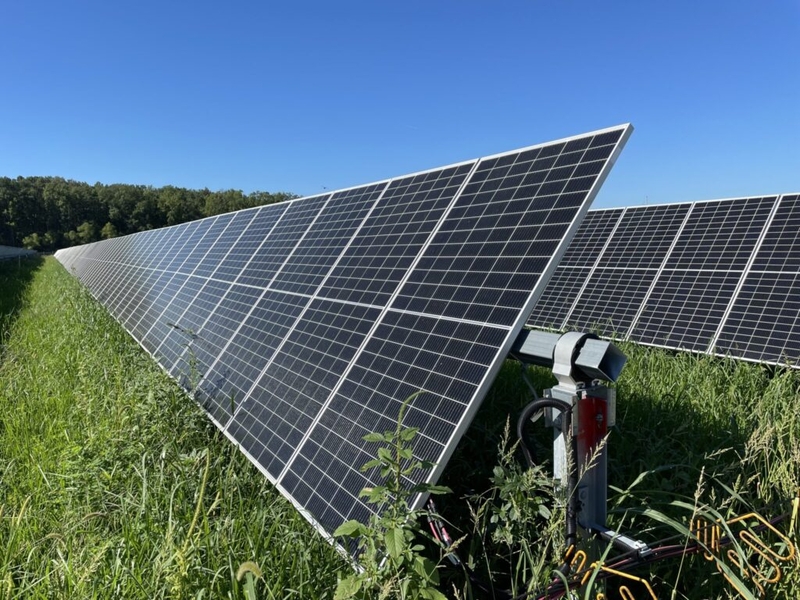
Solar array (Photo: Robert Zullo/ States Newsroom)
A proposal to repeal tax breaks for data centers has been turned into a bill that would end tax breaks for solar energy instead.
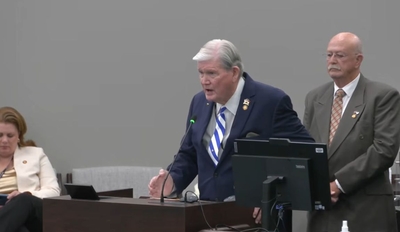
Rep. Jimmy Dixon (R-Wayne), presenting his rewrite of House Bill 1213, told members of the House Finance Committee Tuesday that it was time for North Carolina to dial back the longstanding property tax break for solar energy systems.
“The solar industry in North Carolina has matured greatly over the last 16 years. It’s gone through some of its teenage years and now is becoming an adult and should act on its own as an adult,” said Dixon.
Current state law excludes 80% of the value of a solar energy system from local property taxes. That’s been a sore spot for some county officials who are looking for ways to bring in more revenue. H1213 would end that tax break for new solar energy electric systems installed after July 1, 2027. Equipment installed before that date would keep the tax break.
Rep. Eric Ager (D-Buncombe) told members it would be a mistake to repeal a tax abatement that has benefited both the solar industry and farmers.
“There are lots of folks who are looking for new and innovative ways to make money off their farmland,” said Ager. “It’s a challenge to make money and I know a lot of folks in our communities across the state who are putting up solar panels and raising sheep underneath and really doing this mixed farmland/agri-voltaic endeavor that continues to develop.”
Rep. Deb Butler (D-New Hanover) said less than 1% of N.C. farmland is occupied by solar panels, and the farmers contacting her office view the tax abatement as a valuable tool.
“At a time when we have extraordinary electric demand coming, why would we want to take anything off the grid? We need everything we can get on the grid,” Butler told her colleagues.
Dixon said when the solar industry lobbied for the tax exemption 15 years ago, they pledged the solar systems would only be placed on low quality, less productive farmland. But just this week, Dixon said a neighbor who had signed a contract with a solar company told him that was not the case.
“He tried his best to get the company to accept the unproductive property, but it turned out to be his very best farmland that was closer to the grid, closer to connection in order for him to be able to get the contract,” Dixon explained.
Dixon has claimed for years that solar is taking up too much of the state’s best farmland, despite studies that show that it’s taking up less farmland than golf courses and housing developments.
Joy Hicks, policy director for the North Carolina Association of County Commissioners, said House Bill 1213 would satisfy one of the top goals of the association’s nearly 600 elected county commissioners.
“We’re not talking about the land, we’re talking about the exemption on equipment of for-profit companies,” said Hicks. “We are forgoing about $40 million dollars statewide, but the bulk of that is happening in tier one counties, which traditionally have the highest property tax rates.”
Hicks said repealing the property tax exclusion would benefit rural Eastern North Carolina.
But others urged lawmakers to reconsider, including Martin County farmer Ken Gurganus, who leases land to a solar company.
“Fertilizer prices alone are up 80% since March of this year due to the crisis in the Middle East. Fuel prices have put a stranglehold on us,” he told committee members.
Gurganus said the installment check provided by the solar company he leases land to helps his family farm stay afloat.
“That money will not go into a trust fund or a vacation, it will go direct deposit into our account where we pay daily bills that we incur on the farm each and every day,” said Gurganus.
Greg Gebhardt with Cypress Creek Energy also asked lawmakers to scuttle the bill, saying his firm has entered into contracts that won’t be completed by July 2027, but also can’t easily be adjusted for the tax change.
“Changing that tax structure moves the goal post and puts these projects at risk,” Gebhardt, a former Republican candidate for lieutenant governor, told the panel. “We need every electron we can get on the grid these days, especially in weeks like this with 100-degree temperatures.”
Dixon’s bill advanced on a 12-8 vote and heads next to the House Energy Committee.
Raleigh, NC