A Pennsylvania jury found the nation’s leading skill game maker liable for a store clerk’s murder
Nov 17, 2025 | 5:40 am ET

Description
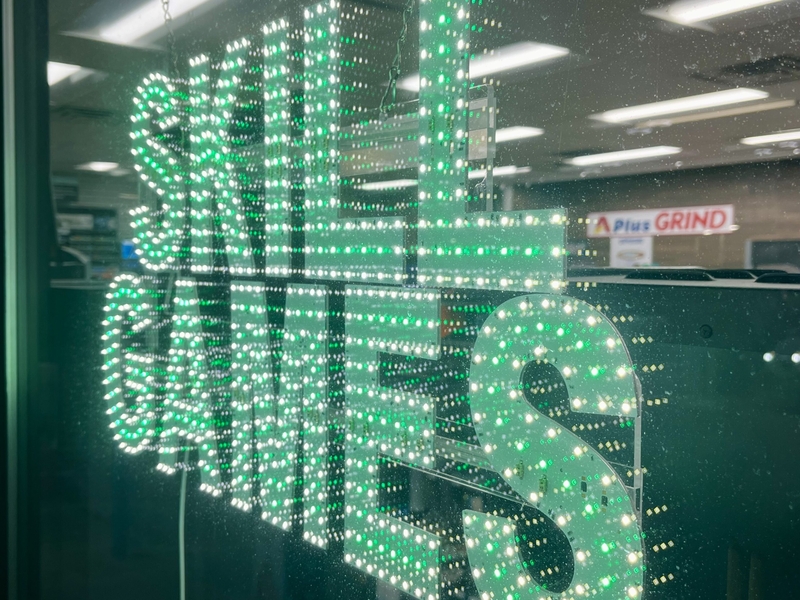
Skills games sit in a travel plaza along the Pennsylvania Turnpike near Somerset on October 14, 2025. (Photo by Jessica Kourkounis for the Pennsylvania Capital-Star)
After long and difficult state budget negotiations ended without a plan to tax or regulate gambling devices that exist in a legal gray area, the leading maker of skill games across the nation is back in the public spotlight in Pennsylvania.
A Philadelphia jury recently returned a $15.3 million verdict in connection with the 2020 murder of a convenience store clerk against the software company and game maker that produce Pennsylvania Skill games
Lawyers for Ashokkumar Patel’s estate argued his death during a robbery was attributable, in part, to the companies’ negligence in ignoring safety and security practices to protect their all-cash gambling operations.
Patel’s fatal shooting in a broom closet at the Hazleton convenience store where he worked has been held out as evidence of the need to regulate slot machine-like games, which can be found in social clubs, taverns, gas stations and other businesses across the commonwealth.

The verdict against Georgia-based Pace-O-Matic and the Lycoming County business that builds the Pennsylvania Skill game machines came as the companies prepared to defend their business model before the state Supreme Court.
On Thursday, the high court will hear arguments in an appeal by the Pennsylvania Office of the Attorney General asserting that skill machines are functionally no different from casino slot machines and should be regulated under existing state law.
A lower state court upheld findings that because skill machines incorporate games that allow players to win back money they have lost, they’re not illegal under the commonwealth’s gaming laws.
The attorney general’s office argues skill machines are recreations of traditional slot machines.
“They spin, play, and pay just like the modern electronic slot machines found in casinos today,” the office said in a court filing, adding the Commonwealth Court found they’re not slot machines because they include a “hidden” second game in which a player can win back their last bet plus a bonus of 20 cents, at most. The skill element is difficult to find and so long and tedious that few players use it, the attorney general’s office claims.
If allowed to stand, the Commonwealth Court’s en banc decision, stemming from a Pennsylvania State Police raid on a Dauphin County bar, could have a sweeping impact, the attorney general’s office said.
“These machines are proliferating across the state, in bars, in convenience stores, and even in casino-style gambling halls – all without any special licensing, regulation, or taxation. And under the lower court’s ruling that these slot machines are not slot machines, they could be placed anywhere at all, even in middle school cafeterias,” the office said in its brief.
State lawmakers have proposed legislation to regulate skill games, which they, and casino operators, say have no safeguards against children or problem gamblers using them and are a catalyst for crime in the communities where they’re placed.
Despite Gov. Josh Shapiro’s call in his February budget address to regulate and tax the machines as a badly needed new revenue stream, the state budget package passed Wednesday, 135 days late, without legislation to address skill games.
As the June 30 budget deadline approached earlier this year, lawmakers pitched competing proposals. Shapiro proposed a 52% tax on the games’ gross revenue. Sen. Gene Yaw (R-Lycoming), whose district is home to Pennsylvania Skill game builder Miele Manufacturing, called for a 16% tax. Senate Republican leaders, meanwhile, pitched a compromise 35% tax.
Pace-O-Matic pressured lawmakers to back its preferred legislation, Yaw’s 16% tax. But the debate turned ugly as Pace-O-Matic accused Senate Republicans of threatening the company’s lobbying firm. And an out-of-state super PAC distributed flyers targeting senators who backed regulation legislation, Spotlight PA reported in June. A spokesperson for Pace-O-Matic told Spotlight it had nothing to do with the flyers.
Asked about the absence of skill machine legislation in the budget package signed into law this week, Senate Majority Leader Joe Pittman (R-Indiana) and President Pro Tempore Kim Ward (R-Westmoreland) said they recognized the need for regulation, but expressed frustration with the intensity of disagreements on the issue.
“I believe there is some bipartisan interest in figuring this out,” Pittman said. “However, this building has a long history of going through gaming debates, and they are very complex and very tedious, very difficult.”
Ward added that she was angered by what she described as bullying by the skill games industry.
“The only people that aren’t going to like this budget are special interests. But we get threatened all the time by some of these interests,” Ward said. “We don’t do well being bullied. And I think a lot of these gaming interests have done nothing but try to bully us. … In the end, we’re not going to stand for that.”
Yaw told the Capital-Star he sees the regulatory scheme he proposed, along with the 16% tax and a $500 per machine state fee, as a jobs bill.
“Gov. Shapiro’s proposal at 50 some percent is going to kill the industry and it’s not going to generate any revenue, any income for the commonwealth,” Yaw said. “The power to tax is the power to destroy and taking at the rate that has been discussed will kill the industry.”
In addition to 200 jobs in his district, skill machines benefit thousands of workers across the state in bars, stores and clubs where the machines are located, because those businesses share in the revenue, he said.
“If any other senator came to me and said I have an issue in my district and it involves 200 jobs I would help with that,” Yaw said.
Others lawmakers simply want the machines gone.
Sen. Amanda Cappalletti (D-Delaware) in 2023 sponsored a bill that would ban skill games outright. In a hearing in August of that year, witnesses said skill games are part and parcel of nuisance businesses in their communities, such as stop-and-go shops that sell liquor by the shot without liquor licenses. Others said the cash-based gambling machines were a magnet for crime.
That was the focus of the case attorneys Robert Zimmerman and John Lang presented on behalf of the murdered Hazleton convenience store clerk’s estate.
Pace-O-Matic and Miele said in a statement Patel’s death is tragic and a terrible loss for his family. But spokesperson Michael Barley said the companies maintain they are not connected in any way to the actions of Patel’s killer.
Although the jury apportioned only 20% of the liability between Pace-O-Matic and Miele, they plan to appeal what Barley described as numerous irregularities in the case. The remaining liability was attributed 55% to the gunman and 25% to the store’s owner, which settled out of court.
“The decisions rendered in this case set a dangerous precedent by establishing responsibility and liability for criminal activity with businesses that offer any product, service or software license at a location where a crime has occurred — even when there is little to no connection to the crime,” Barley said.
Patel, 50, was working at the Choice Food Mart to send money back to his family in India. The store had several skill machines manufactured by Pace-O-Matic and Miele and other makers.
“Unlike casinos that have to follow extremely strict safety measures, where they have armed guards, state police on site, double-locked cashier cages … they are in convenience stores with none of those safety measures,” Zimmerman said in his opening statement. “The clerks in these stores have to handle thousands of dollars in cash to pay out the bettors and pay out collectors from the defendants’ enterprise.”
Patel’s killer Jafet Rodriguez, who is now serving a life sentence, had lost about $6,700 playing the games in Patel’s store and knew that the store kept large amounts of money on hand, Zimmerman said.
After Rodriguez was threatened by a drug dealer to whom he owed money, Rodriguez drove to the store where he pushed Patel into the closet and shot him in the neck, severing Patel’s tongue, which left him unable to call for help.
“Jafet Rodriguez had one goal. He had one target. He went for one thing. He didn’t go for the cash register money. There was a key right in the cash register, didn’t bother. He went for the betting cash, just the betting cash,” Zimmerman said. “And the people at the bottom paid the ultimate price.”
Harrisburg, PA