PEIA finance board proposes premium increases for fiscal year 2027
Oct 23, 2025 | 4:30 pm ET

Description
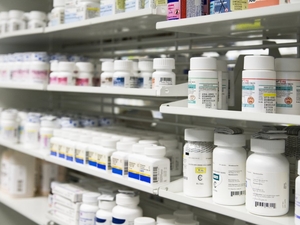
The Public Employees Insurance Agency is proposing increasing premiums again for the 2027 fiscal year. (Photo by Lori Kersey/West Virginia Watch)
West Virginia’s public employees would see their health insurance costs increase yet again next year under a proposal outlined Thursday.
The finance board of the West Virginia Public Employees Insurance Agency on Thursday proposed the following increases for fiscal year 2027, which begins in July:
- For state employees: a 3% aggregate premium increase for employees and employers, a $200 increase in the average family’s spousal surcharge, and a $2.50 increase of the employer administrative fee.
- For non-state employees, a 3% aggregate premium increase for employers and employees. The administrative fee would increase by $2.50. Non-state employers would also be required to have at least 50% of their employees enrolled in a PEIA health plan.
- For both Medicare and non-Medicare retirees, a 3% premium increase. PEIA would also designate $30 million of fiscal year 2025 investment gain for the retiree premium stabilization reserve.
More details on the proposed increases are available in the board presentation from Thursday.
The proposal comes after state workers employees have seen health insurance increases over the last few years.
In July, PEIA premiums went up by 14% for state employees and by 16% for local government employees. Out-of-pocket and copay costs also went up. The agency also raised premiums by 12% for retirees.
PEIA leaders have said that the rising cost of health care — particularly inflation on prescription GLP-1 drugs that treat obesity and diabetes — are a major driver of the rate increases.
Speaking to the finance board Thursday, PEIA director Brent Wolfingbarger pointed out that 96.7% of PEIA revenue goes to PEIA claim payments and capitation, and the agency has low overhead.
He referenced a report from the firm BDO that indicated that the sharp rate increases that public workers have had in recent years had been caused in large part because between the years 2018- 2022, rates had been frozen.
“If you look at that graph, you can see that there’s a much sharper, steep curve at the end of the period where we were required to increase premiums because we had failed to keep pace with rising premium levels,” he said, pointing to a presentation.
He also noted that PEIA is required by law to charge a spousal surcharge equal to the total actuarial value of the plan for PEIA spouses who have the option of health insurance through an employer but choose to enroll in a PEIA plan.
“Our agency is obligated to estimate what the actuarial value of the health care expenses that our employee spouses will incur, and pass that on to the employees,” he said. “That is not something that we have discretion over. It is something that is an obligation established for us in the code.”
Dale Lee, president of Education West Virginia, a teachers’ union, pointed out that public employees are not to blame for premiums being stagnant from 2018 and 2022. Gov. Jim Justice had pledged to keep rates flat.
“It was the governor at that time saying that increases will not happen on his watch,” Lee said. “And that necessitated then in 2021 a 24.5% premium increase on employees. And I would much rather have small increments along the way than to have no increases [and] all of a sudden, a huge increase. So while that’s an accurate statement, it wasn’t our fault.”
Lee said he would push lawmakers to make the spousal surcharge based on a percentage rather than a flat fee.
“Because the custodian, making $22,000 a year, whose spouse works at Go-Mart, is paid a much higher percentage on the spousal surcharge than the superintendent of a county, making $180,000 a year,” Lee said.
He added that the Legislature, not the finance board, is responsible for improving PEIA.
“I’m trying to deflect early some of the anger that’s going to be at the finance board at these public hearings,” Lee said. “Because changes can be made, but you all don’t have the ability to make those changes. You have to deal with what you’re given. The ability to make the changes comes from the Legislature. And if we want to express concern or anger or frustration, that’s where we need to express that.”
The increases for retirees are equal to about $4 million, which the Legislature could “easily” find to prevent a cost increase, Lee said.
The PEIA board finance is planning public hearings about the rate increases across the state in November. They are scheduled for 6 p.m. on the following dates:
- The Highlands Event Center in Wheeling on Nov. 3
- The Beckley-Raleigh Convention Center on Nov. 6
- Holiday Inn in Martinsburg on Nov. 10
- The Culture Center in Charleston on Nov. 13
- Virtual meeting via Google Meet on Nov. 20
Registration for each meeting will begin at 5:30 p.m. More information on the public hearings is available at the PEIA website.
The board is expected to vote on the proposals at its meeting Dec. 4.
Charleston, WV