Part-time higher ed students set to lose access to some federal loans
Jun 30, 2026 | 5:00 am ET
Description
Photo courtesy of CT Mirror
Much has already been reported about the sweeping changes 2025’s One Big Beautiful Bill Act made to federal financial aid. But one lesser-known provision may soon put college degrees out of reach for many nontraditional students.
Until now, students enrolled part time at colleges and universities have qualified for the same direct federal student loans as full-time students. That changes on July 1: From that point on, part-time students will only be eligible for loans proportional to the number of credits they take.
In other words, if a student is only taking 50% of a full course load, that student only gets 50% of a full loan.
“When I talk to people outside higher education, they say, ‘Well, doesn’t that make sense?’” said Goodwin University president Mark Scheinberg. “There’s a sort of logic to it on the face of it, until you see how it actually operates.”
The problem, Sheinberg said, is that most part-time students aren’t taking a reduced course load by choice. They may be working a job, dealing with health challenges or taking care of children. It’s a situation he’s seen many times: Goodwin, a private university which primarily serves nontraditional students, estimates 82% of its student body attends part-time.

“When you’re in that situation, your cost of education isn’t tuition. Tuition ends up being the smaller part of it. The cost of education is your cost of additional transportation. It’s your cost of getting daycare for your kids. It’s your cost of paying for your apartment,” Scheinberg said.
That means many part-time students still need that full loan amount. Without it, Scheinberg and others warn, they’ll either have to abandon their dreams of a new degree or take on private loans.
Private loans require finding someone else to cosign (agreeing to pay the loan back if the primary borrower doesn’t) and many have higher interest rates. Alternatively, students may have to take on a balance with the school itself, which could end in collections.
Jason Callico, director of financial aid and scholarships at Southern Connecticut State University, echoed Scheinberg’s concerns.
Just because you take fewer credits “doesn’t necessarily mean that all your costs are going down with that,” Callico said. For example, “your transportation is probably going to be about the same … your miscellaneous expenses, whether it’s your housing if you’re living off campus, your food.”
In other words, the cost of education doesn’t scale with credits, but loans now do. That can create a mismatch that didn’t exist before.
Callico is a first-generation college graduate and was a part-time student for his final semester of college. “I was working part time and it just didn’t feel right with my class schedule, so I [could] only take six hours at the time,” he said.
Had he not had full access to federal student loans, he said, his life would be very different.
“I would have had to … get a cosigner for a private loan to help pay with rent — as hard as that is to say,” Callico said. “I would have been graduating later, so that means I probably would have gotten the job that I got after graduation way later. Or not at all.”
He’s not the only one.

Life after cancer
For two decades, Melvis McMillan was a manual laborer and the sole breadwinner in a household with his wife and, eventually, their four boys. That changed in 2021 when he was diagnosed with cancer.
McMillan left his job as a driver for a delivery company and stopped working. He split his time between home and medical appointments, while his wife volunteered at her church. After a while, they got word they would lose access to federal food assistance, known as SNAP, if they both remained unemployed.
That meant his wife either had to get a job or return to school. Having been out of the workforce for almost 20 years, she chose school. McMillan decided he’d enroll, too.
“I jumped on board because I was just at home, not doing anything, just going through my treatments, going to the hospital each week,” McMillan said.
McMillan enrolled at Goodwin as a part-time student because much of his time was still taken up driving from Hartford to New Haven and back for medical appointments. “Doing that a couple times a week, that kind of took a toll where I wasn’t mentally ready to take a full course load,” he said.
Attending part time also meant he could get used to taking classes again. His last experience with school prior to Goodwin was in 1996.
McMillan’s wife used training grants available to her as a SNAP recipient to pay for school, but McMillan had to rely on a combination of Pell Grants (scholarships for low-income students) and federal student loans. He said the latter were crucial.
“I wouldn’t be able to go to school if I did not have the student loans. I just wouldn’t be,” McMillan said. “I wouldn’t have had that money.”
It wasn’t like they got more than they needed from his loans, McMillan said. On the off chance there was a bit of loan money left over, it went toward the next year’s books. McMillan’s disability payments helped cover household costs; friends pitched in to help with his medical expenses.
With the loans, McMillan was able to finish his associate’s degree. He’s now studying for his bachelor’s and considering an MBA, though because of the change to federal student loans, he’d probably have to do so as a full-time student. That’s the only way he’d have enough money.
Fortunately for McMillan, his medical appointments aren’t as frequent these days, and he’s more comfortable with schoolwork. He thinks he’s now at a point where he could manage a full-time course load. That wasn’t the case when he started, though.
He said he suspects the new rule will be a major obstacle to future part-time students. “They probably have to cut back from work, but you don’t want to do that because that affects the home life. So there might be a lot of people who don’t go to school because of that,” McMillan said.

Pursuing a new career
Kemba Francis graduated from college at a bad time.
It was 2009, and the global financial crisis had upended the job market. She eventually found work in customer service, but it didn’t offer the earning potential or job security she thought a degree would secure.
So, in 2018, she went back to school to become a licensed practical nurse, while continuing to work to support herself and her three boys. She picked up part-time jobs where she could to help cover daily expenses like gas and food.
“Everything is a priority. Kids are a priority. Household is a priority. … Getting your schoolwork done is a priority,” Francis said. “It was definitely tough.”
Nevertheless, she finished the program and got a job as an LPN. And she started studying for yet another degree, a Bachelor of Science in nursing at Goodwin.
Because Francis had already used federal student loans for her first run through higher education, she qualified for a lower amount this time around. That meant she needed a combination of federal and private student loans. She was able to find a cosigner for the latter, but she doubts everyone could manage to do the same.
And she kept working the whole time — anywhere from 16 to 24 hours a week. “Whatever [shifts] I could, I would just pick up,” Francis recalled.
A typical week involved three days in class and clinicals — hands-on training sessions — and two days at her job. Weekends were devoted to her kids. Her two best friends, she said, were coffee and the calendar on her phone, “because if I didn’t put it in my calendar and set that reminder, I would forget it.”
Francis said she never even considered going to school full time.
“I still have my daily living expenses. I have my car, I need gas, I need to eat, clothes, expenses like buying my scrubs, my textbooks and things like that,” she said. Full-time school wouldn’t have been feasible, she said.
Had her federal loans been limited further, she’s not sure she would have been able to afford the bachelor’s program.

Seeking other ways to keep students in school
With 82% of its students enrolled part time, Goodwin is particularly sensitive to the new student loan change. Scheinberg said the school’s initial estimates put the total losses for itself and the University of Bridgeport — which it owns — at $7 million. That’s over 1,000 students lost.
“We were stunned,” Scheinberg said.
He said Goodwin also estimated losses of around $20 million for the state universities. (Southern CT State’s Callico didn’t have precise numbers but guessed around 20% of students at his school are part-time.)
Returning students will be allowed to use their previous aid package, meaning Goodwin won’t feel the full financial impact of the change in the coming academic year. But new students will have to grapple with the reduced federal loan availability right away.
Meanwhile, Goodwin has been trying to find other ways to keep its programs financially viable for incoming part-time students.
Scheinberg said he spoke with lawmakers about the problem during the recent legislative session, but they were preoccupied with the Grad PLUS program, another federal loan program that also ends July 1. Grad PLUS loans covered the full cost of a graduate degree, beyond whatever basic student loans paid for; a new state program will now provide the same support to graduate students Connecticut, but there’s nothing yet to offset the loss of direct federal loans for part-time students.
Goodwin has also been talking directly with financial institutions about creating a new “shadow” student loan program — but questions remain about how to make that pencil out.
“If a school like ours has an 8% default rate, we’re going to assume there’s still going to be an 8% default rate,” Scheinberg said. “So there’s going to be some loss there and we have to figure out how to address that.”
Goodwin has also made changes within some of its departments, creating new one- or two-credit seminars that may allow students to marginally increase their enrollment — and thus qualify for a bigger loan — while further building out their academic profile.
Scheinberg said one of those new seminars is a financial literacy course. This was something Goodwin already offered students, but now it’s a formal class that counts for one credit. Another new seminar came from an existing study course nursing students took to prepare for the NCLEX exam, a requirement for licensure.
Scheinberg emphasized that reconfiguring these services into seminars is a big lift. “It’s so much grief, and it’s taken so many of my departments — if we didn’t have to do it, if we weren’t, you know, back against the wall … it’s the last thing we’d want to do,” he said. Scheinberg said he still expects Goodwin to lose students in the upcoming academic year.
Ultimately, Scheinberg said he’s frustrated over what appear to be contradictory priorities contained in the new law.
On the one hand, he said, the federal government wants to double down on Pell Grants and degrees it hopes will translate into high-paying jobs in shorthanded industries.
On the other hand, it’s stripping funding from part-time students, who Scheinberg said are essential to filling those very jobs. Recent high school graduates enrolling in a traditional full-time program won’t cut it.
To solve America’s workforce shortage, “you have to take those people who didn’t have a chance to go to college or dropped out early,” Scheinberg said. “But they’re going to be doing it part-time. It’s just what it is.”
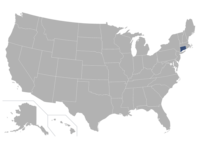
Hartford, CT