Pa. zoning, permitting process named as barriers to homebuilding
May 21, 2026 | 5:08 pm ET
Description
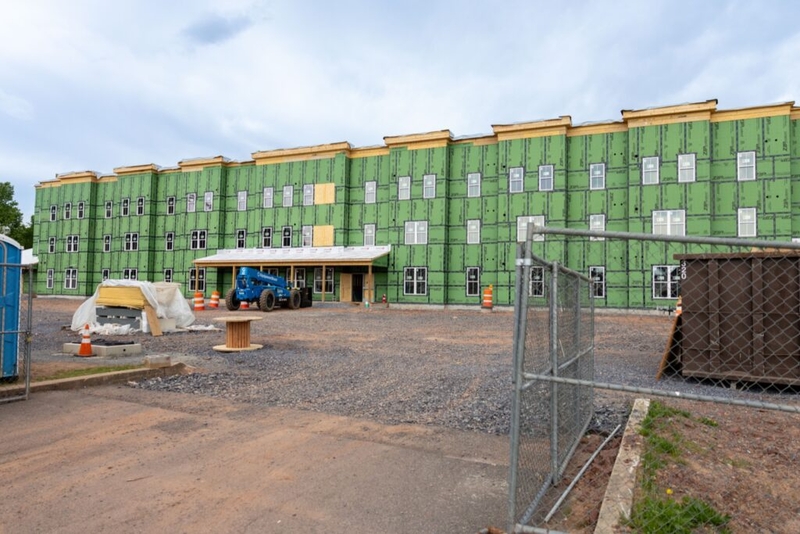
New construction underway along Misty Ridge in Gettysburg, Adams County. Homebuilding remains a challenge for Pennsylvania's construction industry, who identified permitting and zoning as two barriers. (Photo by PACast)
Across the political spectrum, Pennsylvania’s leaders have repeatedly identified the ongoing housing shortage as one of the biggest hurdles for the commonwealth’s economic growth.
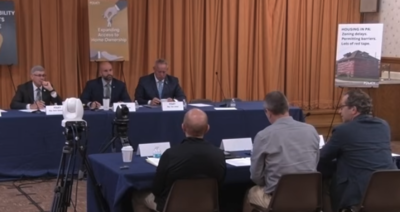
A recent study from George Mason University’s Mercatus Center specifically identifies state and local regulations as a factor adding “time, cost and uncertainty” to the homebuilding process, which were the topic of a Thursday hearing before state House Republicans.
“Housing prices are rising, inventory remains tight and the cost of building new homes has increased significantly over the last decade,” said Rep. David Rowe (R-Union). “And part of that challenge is supply, but a lot of it is also the process.”
The state’s more than 2,600 municipalities each have different zoning rules and permitting requirements, adding to a process that put Pennsylvania near the bottom of a national ranking for new homes built between 2017 and 2023.
According to Pew, which created the list, housing costs — including rent — rose faster in the commonwealth than in New York City and its suburbs, though the overall price tag is still lower. Outside of single-family homes, zoning restrictions on denser options like apartments, townhomes and accessory dwelling units were identified as a hurdle.
House Democrats have advanced their own measures tackling the issue, sending some proposals to senators earlier this month for further consideration. Republicans, on the other hand, have lasered in on regulatory hurdles.
“It’s not like you’re going to put a tiny home in everyone’s backyard,” said Rep. Tom Jones (R-Lancaster). “We can allow for it … but there are so many other factors that are going to come into play.”
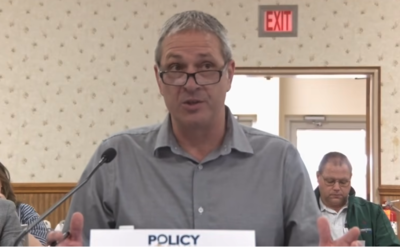
Builder Randy Hess, the president of Lancaster-based Hess Homes, LLC, identified problems with getting “approvals from up to 11 regulatory bodies,” saying “if a project is approved in under two years, that is currently considered a win on the development side.”
A focus on stormwater infrastructure
And while Hess pointed to consultant use at the municipality level as an added cost burden, he said navigating stormwater management was more costly for homebuilding.
“In some cases, storm water infrastructure costs exceed that of all core utility and paving costs combined,” he continued.
The U.S. Environmental Protection Agency identifies stormwater runoff as “a major cause of water pollution in urban areas,” describing the need for engineered collection systems to discharge water and prevent flooding on surfaces like roads and parking lots. In Pennsylvania, the Department of Environmental Protection (DEP) oversees state laws related to stormwater management, attempting to control the amount of pollution sent into the commonwealth’s rivers and lakes.
Critics say that DEP has the option to waive permits for projects up to five acres if certain requirements are met under federal law, but instead has a lower threshold of one acre. Meeting permitting requirements can take months and cost more than $35,000, according to a legislative memo seeking to implement the five-acre minimum.
Hess said requiring each site to meet water quality standards, rather than at a common offsite location, pushed costs up, making it prohibitively expensive to build.
“I’ve been a fairly harsh critic of DEP over the stormwater management requirements,” he added. “We all want water quality. There are ways to do it much more efficiently that I think DEP should examine, rather than trying to achieve their water quality standards on site — which I would argue (have a) minimal, if any, environmental benefit.”
He went on to praise the agency’s floodplain restoration program, which he described as a replacement for traditional stormwater management for some projects. After completing his first one, he called himself “a huge fan” of the alternative.
Reducing “overly burdensome construction regulations” and reforming permitting, including stormwater oversight, is a pillar of the commonwealth’s new Housing Action Plan, and DEP has been a target for fast tracking its processing.
Last year, a concentrated effort reduced the agency’s permit backlog to zero, and leaders launched the Streamlining Permits for Economic Expansion and Development (SPEED) program to reduce waits. The first approved SPEED permit for a new housing development in York was approved in November and took 51 days, according to the agency.
That 51-day period included 30 days for public comment and was “less than half the time” allotted for reviewing a specific type of stormwater management permit.
More challenges ahead for homebuilding
Long term, builders identified staff recruitment as a concern.
“The biggest bottleneck that I see … is being able to have construction expertise — general contractors, subcontractors — while maintaining the goal of attainability for these structures,” said Mario Mascioli, owner of Acorn Built Homes.
Acorn Built Homes specializes in additions and accessory dwelling units, which Pew notes are either forbidden or made cost prohibitive in Pennsylvania by local zoning rules. Lehigh County, for example, has a 1,000 square-foot minimum while Cambria County’s limit is 800 square feet.
Standard models can be as small as 240 square feet, Mascioli added, or as large as 1,200 square feet, depending on a number of factors.
Mascioli said he got more than 200 inquiries per month, but that his company could grow “if the regulatory environment were more pragmatically favorable.”
But the state, and the rest of the country, has a shortage of construction workers — one in five workers are over the age of 55, and the percentage of aging professionals is increasing. Nationwide, the crackdown on undocumented immigration has hurt the industry, with more than 126,000 people leaving the field between 2024 and 2025.
A 2022 statistic from the National Association of Home Builders found that immigrants made up 9% of Pennsylvania’s construction labor force.
To reverse the trend, the state and smaller communities have made a dedicated effort to shore up technical and trades education, but demand for workers is only growing.
“We’ve seen some progress, but is it really enough to make a dent?” Hess wondered.
Harrisburg, PA