Pa. Supreme Court ruling curbs Philly district attorney, adds state attorney general oversight
Jun 18, 2026 | 4:42 pm ET
Description
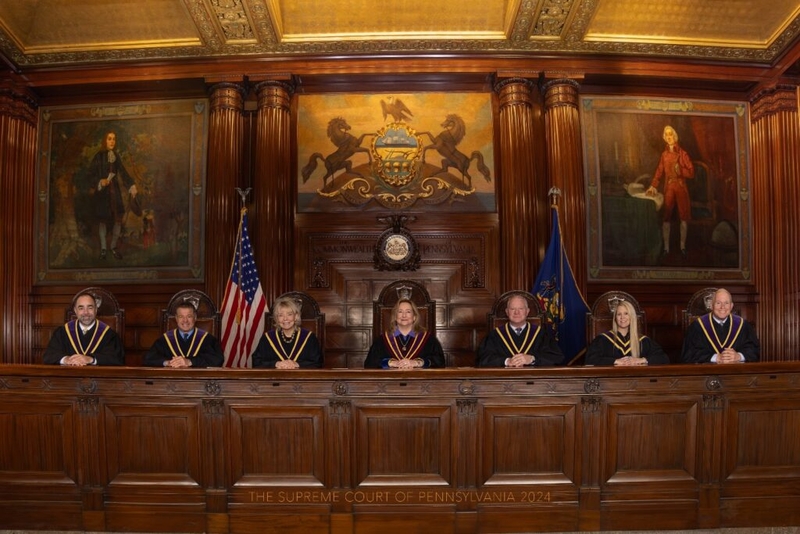
The Pennsylvania Supreme Court. (Jen Barker Worley/ Administrative Office of Pennsylvania Courts)
The Pennsylvania Supreme Court rebuked progressive Philadelphia District Attorney Larry Krasner in a closely split ruling on Tuesday, saying his office misled a court tasked with reviewing criminal convictions and sentences when it argued in favor of a new trial.
Future cases submitted by Krasner’s office under the Post Conviction Relief Act (PCRA) will be subject to the scrutiny of state Attorney General Dave Sunday, singling the office out for an additional layer of review not required in other counties.
The 4-3 majority opinion took issue with the way the Philadelphia District Attorney’s Office approached the cases, faulting the county for perceived issues in a ruling authored by Justice Kevin Dougherty.
“These circumstances, troubling as they are, would not warrant a remedy beyond reversal of the PCRA court’s order in this particular case if they were confined to this one case. Unfortunately, they aren’t,” said Dougherty. “There have been numerous instances of untrustworthy concessions, lack of candor, misrepresentations of fact, lack of adequate investigation, and avoidance of hearings.”
Justices Sallie Updyke Mundy, P. Kevin Brobson and Daniel D. McCaffery joined the opinion. Justice Christine Donohue filed a concurring and dissenting opinion joined by Chief Justice Debra Todd. Justice David N. Wecht filed a dissenting opinion.
Because of these actions, the court said convicted murderer Lavar Brown, of Philadelphia, was “erroneous(ly)” granted a new trial. Justices said the case wasn’t an outlier, but rather a trend with “problems poised to continue.”
In a two-minute video statement, Krasner asserted that, “Reform can be scary to those who need it.”
“Like all other social justice movements, (criminal justice reform) follows a pattern. First, they ignore you … then they laugh at you,” said Krasner. “And they fight you. And we have been fighting for eight-and-a-half years.”
Krasner was first elected in 2017. He argued that office policies have added to safety, freedom and democracy in the commonwealth’s largest city, noting that homicides are at a historic low.
“The Pennsylvania Supreme Court, in a close decision … decided that when this office supports the defense’s position that someone deserves a new trial or they deserve to get out of custody, that we need to have the Attorney General’s Office looking over our shoulder,” Krasner continued. “It doesn’t help democracy. It doesn’t help safety. It doesn’t help freedom. But that’s okay, because we know where we are. We are in the fight, and once we get past the fight, we all win.”
More from the ruling
Brown was part of a group that robbed a Rite Aid twice in January 2003, according to the case summary. The first was unsuccessful. During the next, in which $2,200 was taken, manager Michael Richardson was killed by another person — though the extent of Brown’s involvement is unclear.
He is not the one who pulled that trigger, but was later convicted of shooting Robert Crawford in a targeted attack multiple times in the back in December 2003.
Brown was tried and convicted of second degree murder for Richardson’s death, known as felony murder, in which a person who participates in a crime that results in death can be held responsible even if they didn’t actually kill or intend to kill. That conviction was one of the aggravating circumstances that prosecutors successfully claimed supported a death sentence for Crawford’s killing.
Philly DA Krasner not alone among progressive prosecutors fighting GOP attacks
Reviewing old cases has been a priority for Krasner, which he cast as “correcting the mistakes of the past” in a way that builds trust with the people of Philadelphia. In particular, he has focused on capital murder convictions — “confessing error” in old cases pursued by his predecessors and arguing in favor of life sentences over the death penalty.
The Office of Attorney General criticized this move, saying that “none” of the cases “has ever resulted in the arrest and prosecution of a new perpetrator.” Many were either dismissed or negotiated pleas to reduced charges.
“Our communities deserve a fair and just process for post-conviction review that adheres to the rule of law. We are hopeful that the Richardson and Crawford families are heartened with this ruling from the Pennsylvania Supreme Court and thank them for their advocacy for their loved ones,” Sunday said in a statement.
Sunday argued in support of the families in Brown’s filing before the PCRA court and in favor of creating a “check” on Philadelphia’s system.
The 109-page ruling then details several other concession cases taken up by Krasner and their outcomes, saying that, “It is only in Philadelphia County that there has been a pronounced, documented pattern of highly problematic prosecutorial concessions.”
“Unfortunately, the (District Attorney Office)’s problematic concession in this case may not be dismissed as a troubling one-off,” continued the majority. “(It) does not concede relief only in cases in which it believes the defendant is actually innocent. As in this case, the DAO also concedes relief when it is convinced the defendant is guilty.”
Donohue, in a separate opinion, “questions whether the involvement of the (Office of Attorney General) will foster reliable results,” noting that “many” former prosecutors with the Philadelphia office joined the state after Krasner’s election.
These attorneys have “a potential bias in favor of upholding convictions they procured,” she noted.
The trio of dissenting justices all appeared to wonder if the ruling would violate the separation of powers, a claim refuted by the majority.

Harrisburg, PA