Oregonians using SNAP benefits most frequently listed big grocery, retail companies as employer
May 28, 2026 | 9:00 am ET
Description
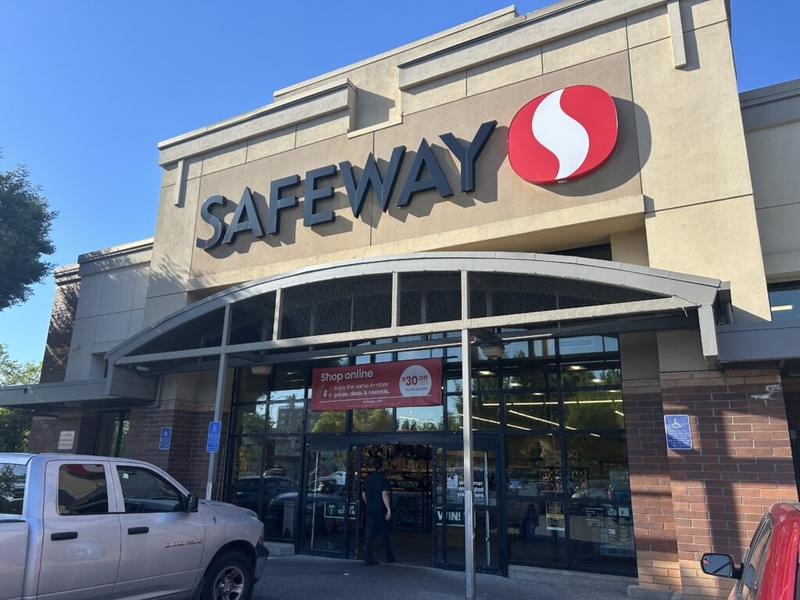
A Safeway grocery store in Salem on May 12, 2026. Safeway and its parent company Albertsons were listed more than any other company on SNAP recipients' income verification forms.
Oregonians who received federal aid to pay for their groceries last year frequently reported working for the nation’s largest grocery and retail corporations, according to a Capital Chronicle analysis of Supplemental Nutrition Assistance Program data from the Oregon Department of Human Services.
The data, taken from SNAP income verification forms, shows that tens of thousands of employees of major national and multinational corporations — and some government agencies, public schools and colleges — rely on the public assistance program for low-income Americans to cover their food costs.
The Capital Chronicle requested data showing the number of times companies were listed on SNAP income verification forms between January 2025 and December 2025, for any company listed at least 25 times. The list included 1,000 companies collectively listed more than 100,000 times.
One in five of those most commonly listed employers was a major grocer and retailer, with Safeway and its parent company Albertsons the most listed, followed by Walmart and online retail giant Amazon.
SNAP in Oregon by the numbers:
- One in six Oregonians uses federal SNAP food and nutrition assistance to pay for groceries. Roughly one-quarter are children and one-fifth are 65 and older.
- The average individual receives $183 in food assistance each month, and the average household gets $313 per month.
- Oregon’s SNAP income limits are the highest allowed by the U.S. Department of Agriculture, which sets the eligibility threshold at 200% or less of the federal poverty limit. This means an Oregonian making about $32,000 or less each year, or a family of four with income around $66,000 or less annually, are eligible.
The top listed companies financially benefitted in the billions from President Donald Trump’s 2017 corporate and income tax cuts that were recently renewed in a massive tax and spending cut law congressional Republicans passed and Trump signed last summer. The 2025 law also included new corporate tax subsidies, allowing businesses to deduct upfront from their taxes 100% of the costs of new equipment, real estate and research and development.
Because of those cuts, Walmart’s effective income tax rate is about half of what it was ten years ago, according to the left-leaning think tank Institute on Taxation and Economic Policy. And Amazon in 2025 paid an effective federal income tax rate of less than 1.5% on its U.S. income, avoiding about $17.5 billion of federal taxes it would have otherwise had to pay, according to the institute.
That same GOP megalaw included the steepest federal funding cuts to the SNAP program in its history — $186 billion over 10 years.
In an opinion essay in The Hill defending the cuts in April, Brooke Rollins, head of the U.S. Department of Agriculture, which administers the federal program, wrote that SNAP since its inception has “all too often drifted from its original purpose. Instead of offering a temporary hand up, it has turned into a handout that threatens to trap Americans in a vicious cycle of government dependence.”
Under the new SNAP eligibility rules, recipients up to age 64 are required to file paperwork each month proving they’ve worked, volunteered or participated in work training for at least 80 hours. Recipients caring for dependents under 14 are exempt from monthly reporting requirements, but have to report any changes to their income.
At Oregon’s minimum wage of $15.05 per hour, even someone working a full 40-hour week at minimum wage is eligible for SNAP benefits.
Since the 2025 law took effect, nearly 47,000 Oregonians who previously had SNAP benefits no longer have them, according to combined data from the state’s human services department and the U.S. Department of Agriculture, and the state expects more than 300,000 SNAP recipients could eventually be impacted by the changes.
Top employers listed
Besides Safeway/Albertsons, Walmart and Amazon, other top employers listed in income verification forms include Fred Meyer and its parent company Kroger, and the Oregon Department of Human Services itself.
The agency provides pay to thousands of the roughly 50,000 home care workers in the state who are technically employed by the person they are caring for, and who make an average of $21.25 an hour, according to agency spokesperson Jake Sunderland. In-home care company New Horizon and its parent company Altru Home Care is also among the top employers listed by SNAP recipients.
Amanda Dalton, president of the Northwest Grocery Retail Association, said in an email that many Oregon grocery employees work part-time or seasonally, and that many are members of large unions that provide health and retirement benefits.
“For these reasons, SNAP participation should not be viewed as a simple measure of employer wage levels alone, but rather as a reflection of how public assistance programs are structured to support working households across a range of businesses,” she said.
Jimmy Carter, a spokesperson for Walmart, said in an email that on average the company pays its Oregon employees $20.51 per hour, and that nationwide about 40% of its workforce is under the age of 30 and 90% of Walmart jobs don’t require a college degree. He said most hourly employees are promoted within their first nine months of work, and most of the company’s salaried management staff started as hourly employees.
“We’re proud to be one of the country’s largest pathways to opportunity. Some associates begin on public assistance, and we’re part of the solution by providing them with training, stable jobs and room to grow so they can build better lives,” Carter said.
Eileen Hards, a spokesperson for Amazon, said in an email that nationwide the company’s average pay is “among the best in the industry” at double the federal minimum wage of $7.25 an hour — a figure that Congress has not increased in 17 years.
“As we’ve said for years, what really needs to happen is a significant and large increase in the federal minimum wage — that would be a big boost for American families,” Hards said.
She added that because the company is one of the largest private employers in the country, it may show up on many SNAP applications across states, but still make up a small percentage of workers using SNAP in each state.
Fast food
Sixteen fast food companies were listed as an employer more than 100 times on SNAP income verification forms in 2025. Combined, they were listed more than 7,800 times as a SNAP recipient’s employer, and McDonald’s was listed most — more than 1,700 times.
More than 1,200 Oregonians who received SNAP benefits last year listed their employer as one of 13 fast food companies owned by the Atlanta-based private equity firm Roark Capital, which manages more than $40 billion worth of assets, according to its website. Those assets include Inspire Brands, one of the largest restaurant franchise operators in the country with a portfolio that includes Subway, Jimmy John’s, Arby’s and Carl’s Jr.
Schools and universities
More than 50 Oregon school districts were listed more than 25 times on SNAP employer verification forms in 2025, and more than 400 times in the state’s two largest school districts: Portland Public Schools and Salem-Keizer.
Two public Oregon universities are also among the top ten employers listed on the 2025 SNAP income verification forms. That’s due in large part to students who have part-time, on-campus jobs and meet SNAP eligibility requirements, according to Rob Odom, vice president of marketing and university relations at Oregon State, which was listed as an employer on SNAP forms more than 2,300 times.
College students are eligible for SNAP if they work an average of 20 hours a week and earn as an individual $2,609 or less per month; $3,525 per month in a two-person household and $5,359 per month in a four-person household.
More than 7,000 OSU students work a part-time job for the university, Odom said, and employment is capped at a maximum of 24 hours per week for most students during the academic year.
“As a public land grant university, OSU is committed to access, affordability, student success and fair employment practices,” he said.
Salem, OR