Opioid settlement money aims to battle addiction in rural Kentucky
Jun 19, 2026 | 5:30 am ET
Description
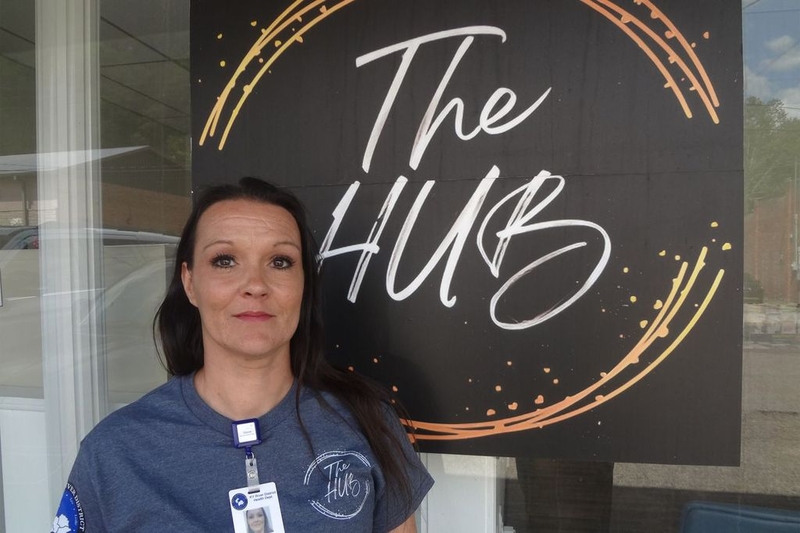
Jamie Madden found solid footing for her recovery from addiction at The Hub, a community center in
Whitesburg, Kentucky, that offers services ranging from peer support to canned food and sterile
syringes. (Taylor Sisk for KFF Health News)
WHITESBURG, Ky. — Drugs and the consequences of addiction are woven into the fabric of Jamie Madden’s life.
Her earliest memory is of standing on the passenger seat of her dad’s car as a toddler, wearing a peach-colored blouse, while he drove from their Kentucky home to Florida to pick up drugs. On a stop for a burger, she met Ronald McDonald.
“I grew up with the impression that that’s how you paid your bills,” Madden said. “That’s how your kids got things.”
By 16, she was addicted to pain pills. By 30, methamphetamine. She lost custody of two children and gave up two more for adoption at birth. She served time in the county jail and state prison.
Pregnant again at 40, Madden resolved to stop using. It was then that she learned of The Hub in Whitesburg, a town of 1,575 residents, her hometown.
Over the past two years, the state of Kentucky has sent hundreds of thousands of opioid settlement dollars to the rural eastern region of the state to help minimize the ramifications of drug misuse. The Hub, a program that oversees a network of community centers offering a range of services from recovery peer support to canned food to sterile syringes, is part of that effort.
In April, Kentucky Attorney General Russell Coleman announced $320,000 would be awarded to the Kentucky River District Health Department’s Hub initiative. There are now Hubs in four rural eastern Kentucky counties — Knott, Lee, Letcher, and Owsley— all of which are among the nation’s most impoverished — addressing substance use disorders, housing, hunger, employment, and other challenges. The program also operates The Hub on Wheels, which provides services throughout the district.
In 2025, The Hub received $545,000 from the same source, facilitating expansion from two to five counties. (The fifth Hub will be in Perry County.) The new $320,000 is a two-year grant to develop a program to help women who’ve been incarcerated reintegrate into society.
Both grants are from Kentucky’s approximately $1 billion share of the $57.8 billion for state and local governments from the settlement reached with pharmaceutical companies to resolve litigation for their role in fueling the opioid overdose crisis.
Madden believes investment in harm reduction services is money well spent. She’s witnessed them work in her own life. She’s found solid footing for recovery at The Hub.
But the Trump administration is cutting federal funding for such efforts, disputing their benefits. A July 24 executive order told programs across the country that they could no longer expect federal funding. The order stipulated that discretionary grants issued by the Substance Abuse and Mental Health Services Administration should not be spent on “so-called ‘harm reduction’” efforts, claiming they “only facilitate illegal drug use and its attendant harm.”
Advocates for these services in this rural region, which cast its ballots for President Donald Trump in all three elections, beg to differ.
Meeting folks where they live
Whitesburg — home to a lively cultural scene, including Appalshop, a media, arts, and education center — is a town residents are fiercely proud to call home. The Hub is housed in a storefront on Main Street, neighboring City Hall, Hazard Coffee Company, Cut-Away Barber & Beauty Shop, and the fire station. Like the other Hubs, it provides a range of services targeted to the needs of the community.
The inaugural Hub, launched in 2022 in Beattyville, the Lee County seat, two hours northwest of Whitesburg, offers breakfast and lunch, a food pantry, a clothing closet, a laundry room, and a computer lab. Also: naloxone, a medication that can quickly reverse an opioid overdose; drug test strips; hepatitis C treatment; sterile syringes; and wound care.
The program’s motto is “Meeting you where you are but not leaving you there!” It’s founded on the principles of harm reduction. Harm reduction services are designed to minimize the effects of drug use, keep people safe, and treat them with respect, until they might be ready to enter recovery. The support includes housing, food, healthcare, and overdose prevention tools.
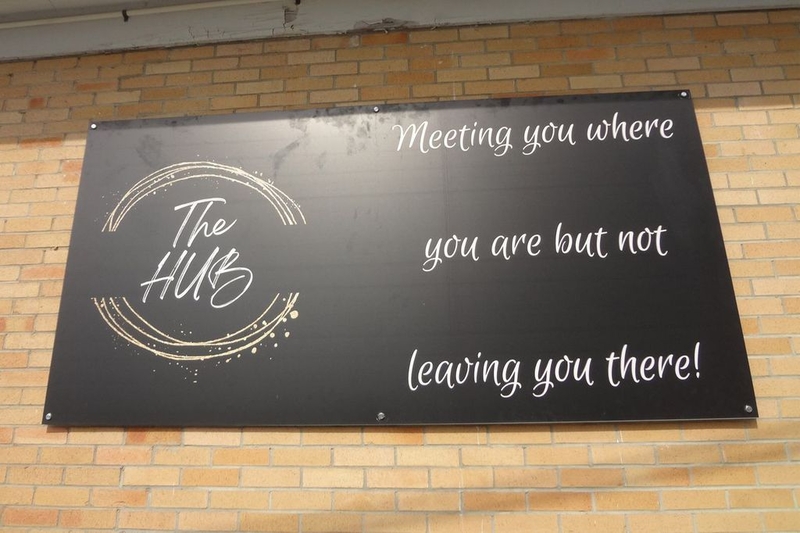
is founded on the principles of harm reduction. Support includes housing, food, healthcare,
and overdose prevention tools. (Taylor Sisk for KFF Health News)
JoAnn Fraley is Kentucky River’s harm reduction program coordinator and its Hub initiative director. “In order for anybody to sustain recovery, they have to have financial stability, they have to have transportation, and they have to have a home,” she said. “We try to fill those gaps.”
While critics suggest that exchanging clean syringes for used ones abets drug use, research published in the Journal of Substance Use and Addiction Treatment indicates that people who participate in syringe services programs are more likely than those who don’t to reduce their injection-drug use or stop using drugs altogether, and that they are more likely to enter and remain in treatment. According to the Centers for Disease Control and Prevention, syringe services programs also reduce the spread of HIV and hepatitis C by about half.
In 2025, Kentucky River’s Hub model was named one of 19 public health best practices award winners by the National Association of County and City Health Officials.
“What jazzes me about it is it’s a community approach to harm reduction,” said Lauren Carr, who advises the Kentucky Association of Counties on how best to utilize opioid settlement funds. “Whether that’s feeding a hungry stomach, or putting clothes on somebody’s back, or giving them clean [syringes], you’re meeting that person’s needs.”
“It can be that lifeline,” Carr said.
Paying back for good
Becky Todd, who leads the Beattyville Hub’s team, is a community health worker and peer support specialist. In April 2024, she was released from jail, having served multiple sentences on drug-related charges. She walked 3 miles from jail to The Hub with nowhere else to go. She’s working toward her bachelor’s degree in social work at Eastern Kentucky University.
“I could not have done it without this place,” Todd said. “It’s my saving grace.”
Amber McDaniel recalls the first time she entered the Hub, after more than a decade of addiction, having lost her home, her kids, and her family’s support. “I didn’t know where to turn, didn’t know what to do,” she said. “I mean, I was about to lose my mind.” She’s now a Hub staff member through AmeriCorps.
Hannah Stamper was placed in foster care and began using meth at 14. She was drawn to dealing drugs because “I loved for people to need me.” She’s now on staff as a member of Recovery Corps, a program that trains AmeriCorps members to work in the recovery field. “People today need me in a good way, and I love that.”
Fraley has witnessed a transition in Lee County. A half-dozen years ago, conversations in public meetings about addiction and homelessness were strained “because nobody wanted to talk about it or acknowledge it.”
The community sees The Hub’s impact, she said, “and now they’re, like, ‘Whoa. We love you.’”
Scott Lockard, the district’s public health director, said a combination of data and anecdotal observations substantiates the initiative’s success, including an increase in the number of people entering treatment and a decline in reported communicable diseases.
“I’ve been in public health for 36 years, and it’s one of the most effective interventions I’ve seen,” Lockard said.
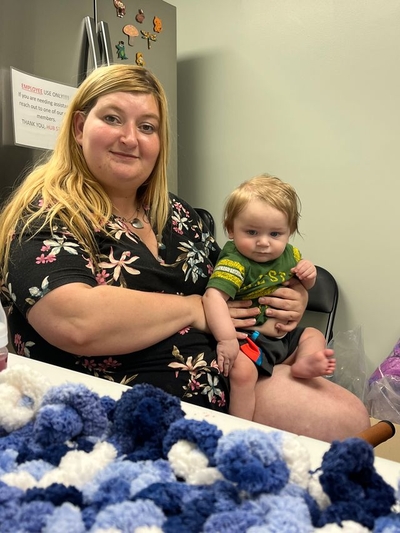
her son, Hunter. (Taylor Sisk for KFF Health News)
The Kentucky River team worked to educate the community about the potential outcomes of the Hub model, and Fraley said there was little resistance, just concern that the money be well spent. She said the planning has always included people who have lived with addiction.
“Their voice needs to be at every table,” she said.
Lockard agrees. To ensure the community is investing this money wisely, he said, “we’ll talk to those people who are experiencing the problem, find out what they think would help them best, and then look for those evidence-based interventions.”
Jannie Gatlin and Mandy Parker, who both are in recovery, attended a recent crafting class at the Whitesburg Hub. Gatlin, who started taking fentanyl in Colorado after her first son died at 2 months old of a digestive disorder, comes almost every day with her toddler, Hunter.
Parker was prescribed opioids for pain from a kidney disorder. When those pills became less available, she turned to street drugs. “That’s just the nature of the beast,” she said.
She believes The Hub is helping break the stigma of substance use disorder in her community. When people see “real change happening,” she said, there’s a ripple effect. “It makes a difference.”
She appreciates that The Hub is here on Main Street — right, she firmly believes, where it should be.
KFF Health News is a national newsroom that produces in-depth journalism about health issues and is one of the core operating programs at KFF — the independent source for health policy research, polling, and journalism.
Frankfort