One-year moratorium on solar farms fails on Alabama Senate procedural rule
Apr 08, 2026 | 7:59 am ET
Description
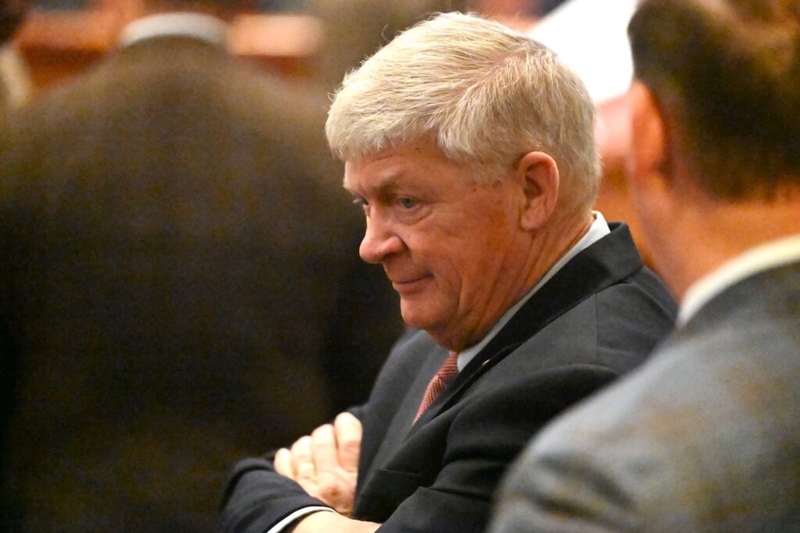
Sen. Greg Albritton, R-Atmore, stands in the Alabama Senate on April 2, 2026 at the Alabama Statehouse in Montgomery, Alabama. The Senate on Tuesday passed, but did not send to the House, a bill that would stall Mobile and Baldwin County solar farm developments for one year. (Brian Lyman/Alabama Reflector)
The Alabama Senate on Tuesday passed a bill prohibiting the construction and operation of new solar facilities for one year, but could not get it past a late-session procedural hurdle.
SB 354, sponsored by Sen. Greg Albritton, R-Atmore, would have prohibited such construction and operation for a year after the enactment of the bill.
The legislation comes amid ongoing controversy over a solar farm project in Stockton, an unincorporated area of Baldwin County. Silicon Ranch, a renewable energy company based in Nashville, wants to construct solar panels on 2,000 acres of a 4,500-acre parcel of unzoned property, but the project has drawn criticism from residents over its impact on the local area.
Albritton said that the issue that inspired the bill also included residents not knowing about a public hearing regarding the construction of a solar facility.
“The purpose of that is so that we can look as a state and find out why the residents were unaware of this production and this construction that was going to take place until it was a done deal,” Albritton said. “There’s some other way that we need to find to make sure that the residents are aware of what’s going to happen in their community.”
The Senate passed the bill 27-4 with two amendments. However, after the 26th legislative day, unanimous consent is required to transmit a bill originating in the Senate to the House. Multiple senators objected to transmission, keeping it in the upper chamber.
“It’s not stopping the industry. It is not restricting the industry. It is simply changing looking at a way to find another process that we could be more open,” Albritton said.
An amendment from Senate Minority Leader Bobby Singleton, D-Greensboro, removed statewide application from the bill, narrowing the application to any solar facilities in Mobile and Baldwin counties. It would also require a 30-day notice for a public hearing before construction can begin.
“There’s been a lot of solar projects all over Black Belt, so I just want to address some of the concerns that we’ve been receiving,” Sen. Robert Stewart, D-Selma, said on the Senate floor. “I know our solar development lag compared to other states, and so we want to make sure that as a state, it’s important that we don’t have policies that will sort of limit ourselves.”
The amendment would have also prohibited local governments from creating any regulations more stringent than the bill during the year-long moratorium. The amendment passed 33-0.
An amendment from Sen. Josh Carnley, R-Enterprise, added carbon dioxide storage facilities to the same one year prohibition, despite Albritton’s objections that the amendment added a new section to the bill. SB 266, sponsored by Carnley, is a local constitutional amendment for Covington County that prohibits people from injecting and storing carbon dioxide in underground wells in the county.
The bill passed the Senate in February, but has not moved in the House.
“I really sympathize with you, and I understand that, and we’re at the point in session where I’m running out of options,” Carnley said. “It’s not what we wanted, but at this point, I’m just trying to get anything.”
The amendment passed 17-12.
Montgomery