South Dakota wildlife officials offer hunting license refunds as deer disease reports continue
Oct 11, 2026 | 7:00 am ET
Description
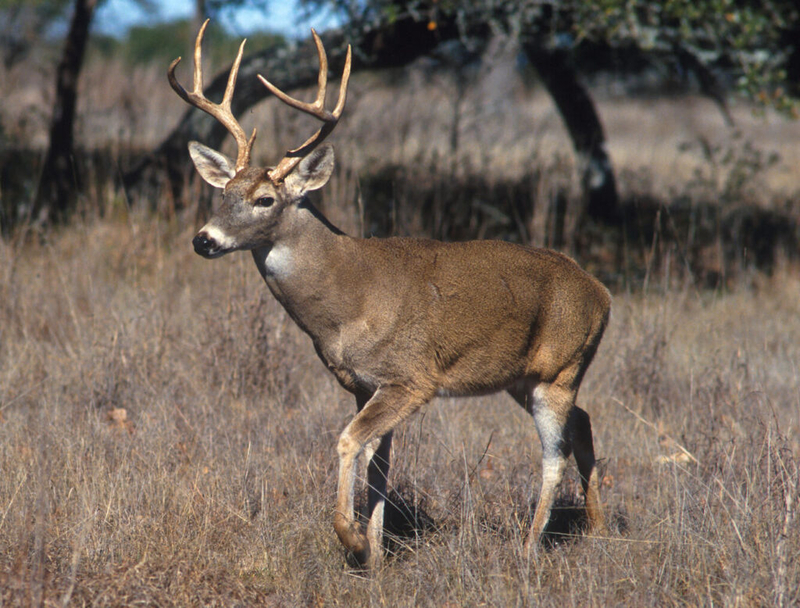
A male white-tailed deer roams a field. South Dakota is adjusting deer-hunting policies as a disease affects deer populations. (Courtesy U.S. Department of Agriculture)
Reports of deer deaths from a viral disease have spiked as hunters take to the fields in South Dakota, and state wildlife officials are reducing some hunting opportunities and offering hunting-license refunds to protect deer numbers.
Epizootic hemorrhagic disease is a viral illness spread by tiny biting midges typically found along muddy shorelines. In South Dakota, the disease primarily impacts white-tailed deer, according to Game, Fish and Parks Senior Wildlife Biologist Byron Buckley.
“Because white-tailed deer generally inhabit the areas where these midges currently are,” he told the Game, Fish and Parks Commission on Thursday in Pierre.
Mule deer, bighorn sheep, elk and pronghorn can also be infected. The department says the disease usually affects deer herds in late summer or early fall. Warm conditions can extend the period when the insects are active, while a hard freeze generally kills them off, bringing a seasonal outbreak to an end.
State commission replaces controversial wildlife predator bounty with new programs
Buckley said weather strongly influences outbreaks. This year’s outbreak started in July and continued as South Dakota experienced an unusually warm, dry September with some heavy rain.
Retired Game, Fish and Parks lead biologist George Vandel said those conditions — drier dry periods and wetter wet periods — can create the environment where midges thrive best: muddy areas that are sometimes covered by water and sometimes exposed to the air.
During the commission’s monthly meeting, Buckley said the department now has about 407 reports this year of dead deer due to the illness: 376 suspected cases and 31-lab-confirmed. During the commission’s Sept. 10-11 meeting, the count was 196, he said. Though he said it’s not unusual for a spike in reports to come in during that timeframe.
“So a lot of our reports have come from the month of October,” Buckley said. “Now, that could be because we are seeing the disease a lot more or that there’s just a lot more people on the landscape.”
Waterfowl, grouse, dove and archery deer hunting seasons all began in September.
The number of reported cases for 2026 is slightly higher than the total reported for all of 2025, according to the state’s EHD map, though Buckley described this year’s numbers as roughly comparable to the previous two years.
The state has taken several steps to limit deer hunting in outbreak-affected areas, aiming to give deer populations a better chance to recover. The department removed mentored and youth deer licenses in nine southeastern South Dakota counties where outbreaks have affected deer in the past two years. It also removed 62 unsold licenses, two in McPherson County and 60 in Dewey County. The state changed statewide archery license rules, which previously allowed hunters to take any deer, to buck-only licenses.
Buckley said the department is now offering a further option: Hunters holding deer licenses in 16 counties along the Missouri River corridor can voluntarily return their licenses for a full refund.
Wildlife Division Director Tom Kirschenmann said the department may add counties as more October reports arrive.
“We’re trying to be somewhat strategic about it, but we’re also trying to be proactive about where we offer this up,” Kirschenmann said.
The department asks people to report sick or dead deer via methods listed at gfp.sd.gov/contactus. Buckley said officials enter reports into a system that updates the department’s public online map.

Pierre, SD